Escola Paulista de Medicina, Universidade Federal de São Paulo, São Paulo, SP, Brazil.
Faculdade de Ciências Médicas da Santa Casa de São Paulo, São Paulo, SP, Brazil.
Einstein (Sao Paulo). 2022 Oct 24;20:eRC0076. doi: 10.31744/einstein_journal/2022RC0076. eCollection 2022.
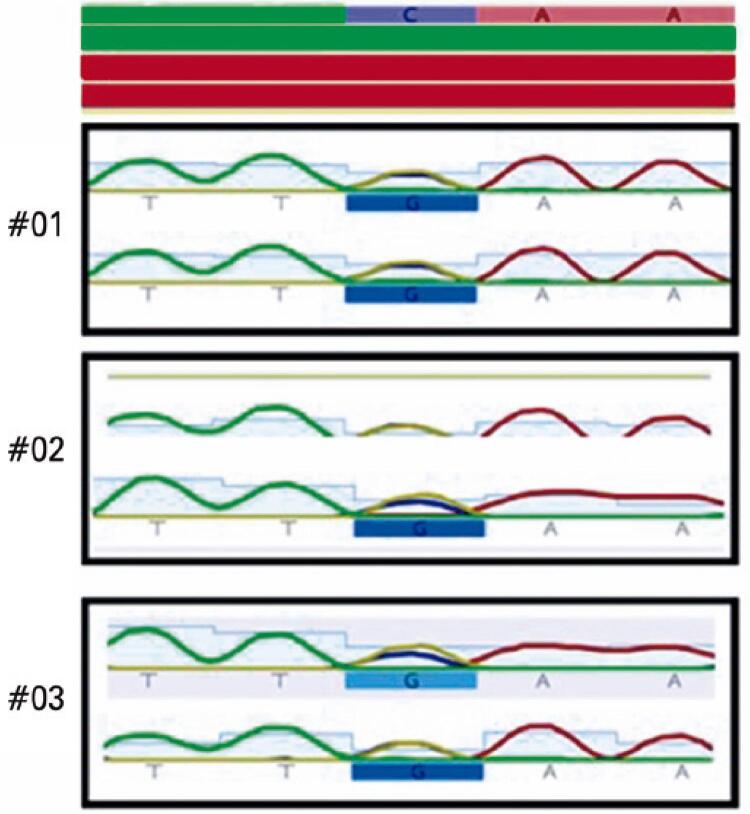
Hereditary hyperferritinemia-cataract syndrome is a rare autosomal dominant disease caused by a genetic mutation in the iron responsive element in the 5' untranslated region of the ferritin light chain gene. Hereditary hyperferritinemia-cataract syndrome is characterized by elevated serum ferritin levels and bilateral cataract development early in life and may be misdiagnosed as hemochromatosis. This case report describes a Brazilian family with a clinical diagnosis of hereditary hyperferritinemia-cataract syndrome, which was submitted to ferritin light chain gene sequencing. The genetic mutation c.-164C>G was identified in the 5' untranslated region. In conclusion, genetic testing can be used for accurate diagnosis of hereditary hyperferritinemia-cataract syndrome to avoid misdiagnosis of hemochromatosis, other diseases associated with iron overload or ophthalmic diseases.
遗传性铁蛋白血症-白内障综合征是一种罕见的常染色体显性遗传病,由铁蛋白轻链基因 5'非翻译区铁反应元件的基因突变引起。遗传性铁蛋白血症-白内障综合征的特征是血清铁蛋白水平升高,双侧白内障在生命早期发生,并可能被误诊为血色病。本病例报告描述了一个巴西家族,临床诊断为遗传性铁蛋白血症-白内障综合征,该家族接受了铁蛋白轻链基因测序。在 5'非翻译区发现了遗传突变 c.-164C>G。总之,基因检测可用于遗传性铁蛋白血症-白内障综合征的准确诊断,以避免误诊为血色病、其他与铁过载相关的疾病或眼部疾病。