Department of Agriculture, Food and Environment, University of Pisa, 56124 Pisa, Italy.
Interdepartmental Research Center Nutrafood "Nutraceuticals and Food for Health", University of Pisa, 56124 Pisa, Italy.
Toxins (Basel). 2022 Sep 26;14(10):668. doi: 10.3390/toxins14100668.
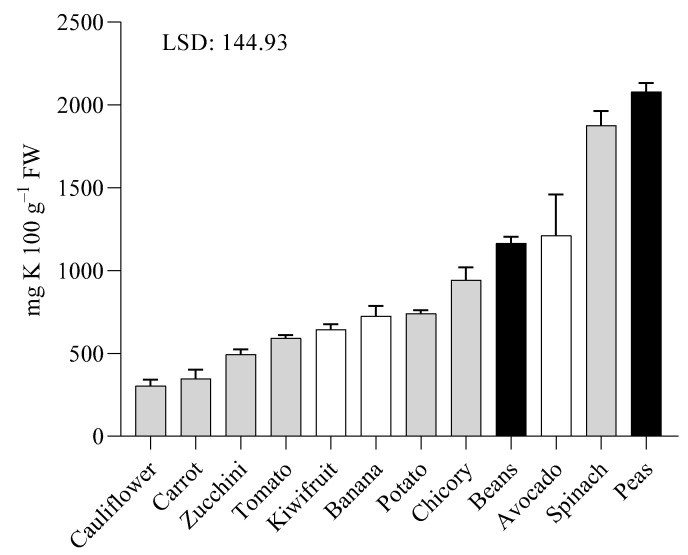
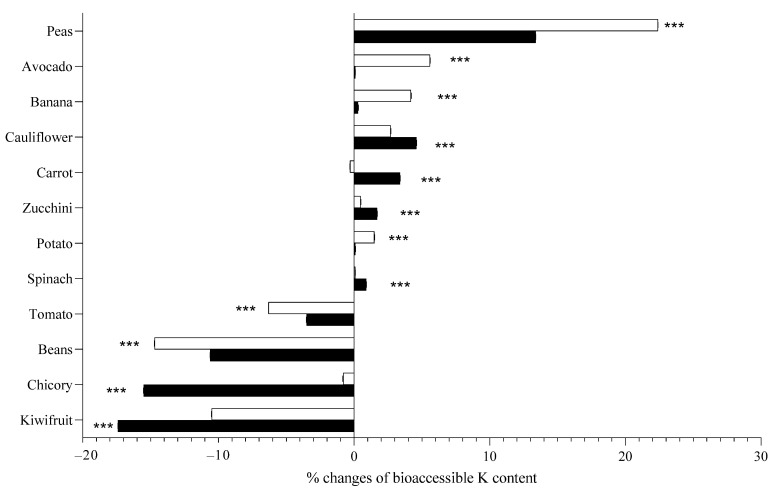
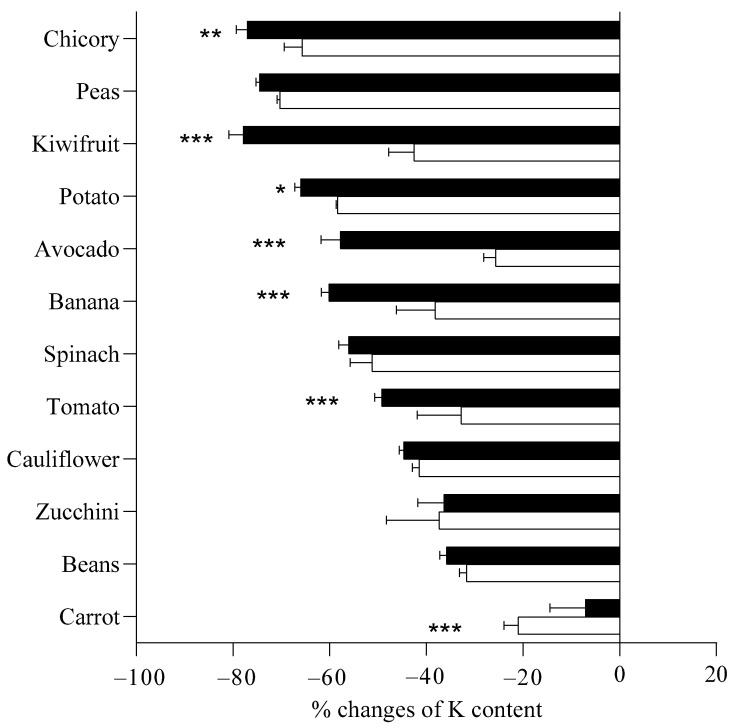
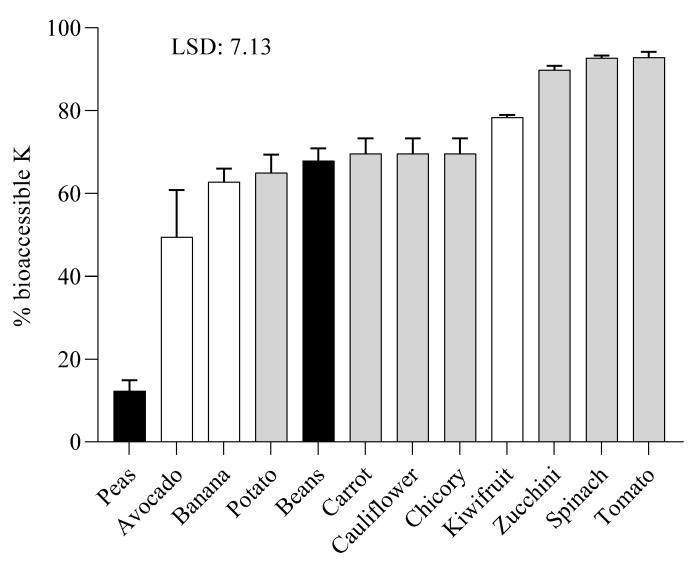
Hyperkalemia is a major concern in chronic kidney disease and in end-stage renal disease, representing a predictor of hospitalization and mortality. To prevent and treat hyperkalemia, dietary management is of great clinical interest. Currently, the growing use of plant-based diets causes an increasing concern about potassium load in renal patients. The aim of this study was to assess the bioaccessibility of potassium in vegetables, concerning all aspects of the plants (fruit, flower, root, tuber, leaf and seed) and to what extent different boiling techniques affect potassium content and bioaccessibility of plant-based foods. Bioaccessibility was evaluated by an in vitro digestion methodology, resembling human gastro-intestinal tract. Potassium content was higher in seeds and leaves, despite it not being possible to define a common "rule" according to the type of organ, namely seed, leaf or fruit. Boiling reduced potassium content in all vegetables excluding carrot, zucchini, and cauliflower; boiling starting from cold water contributed to a greater reduction of the potassium content in potato, peas, and beans. Bioaccessibility after in vitro digestion ranged from 12 (peas) to 93% (tomato) regardless of species and organs. Higher bioaccessibility was found in spinach, chicory, zucchini, tomato, kiwi, and cauliflower, and lower bioaccessibility in peas. Potassium from leaf resulted in the highest bioaccessibility after digestion; as a whole potassium bioaccessibility in the fruits and vegetables studied was 67% on average, with differences in relation to the different organs and species. Further, considering the method of boiling to reduce potassium content, these data indicate that the effective potassium load from plant-based foods may be lower than originally expected. This supports the clinical advices to maintain a wide use of plant-based food in the management of renal patients.
高钾血症是慢性肾脏病和终末期肾病的主要关注点,是住院和死亡的预测因素。为了预防和治疗高钾血症,饮食管理具有重要的临床意义。目前,植物性饮食的使用越来越多,这使得人们对肾病患者的钾负荷越来越关注。本研究旨在评估蔬菜中钾的生物利用度,涉及植物的所有方面(果实、花、根、块茎、叶和种子),以及不同的煮沸技术在多大程度上影响植物性食品的钾含量和生物利用度。生物利用度通过体外消化方法进行评估,该方法模拟人体胃肠道。尽管根据器官类型(种子、叶或果实)无法确定一个共同的“规则”,但种子和叶片中的钾含量更高。除胡萝卜、西葫芦和花椰菜外,煮沸会降低所有蔬菜中的钾含量;从冷水开始煮沸会导致土豆、豌豆和豆类中的钾含量更大幅度降低。体外消化后的生物利用度范围从 12%(豌豆)到 93%(番茄),与物种和器官无关。在菠菜、菊苣、西葫芦、番茄、猕猴桃和花椰菜中发现了更高的生物利用度,而在豌豆中则较低。经过消化后,叶片中的钾具有最高的生物利用度;总体而言,在所研究的水果和蔬菜中,钾的生物利用度平均为 67%,不同器官和物种之间存在差异。此外,考虑到通过煮沸来降低钾含量的方法,这些数据表明,来自植物性食物的有效钾负荷可能低于最初预期。这支持了在肾病患者管理中保持广泛使用植物性食物的临床建议。