Institute of Biochemistry and Cell Biology, National Research Council of Italy, Via Ercole Ramarini 32, Monterotondo Scalo, 00015 Rome, Italy.
Toxins (Basel). 2022 Oct 13;14(10):704. doi: 10.3390/toxins14100704.
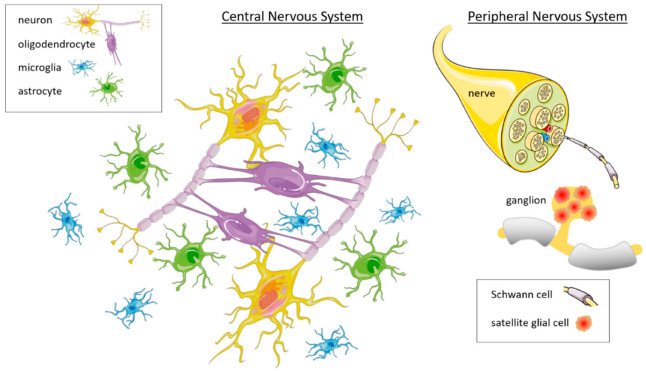
In recent years, numerous studies have highlighted the significant use of botulinum neurotoxins (BoNTs) in the human therapy of various motor and autonomic disorders. The therapeutic action is exerted with the selective cleavage of specific sites of the SNARE's protein complex, which plays a key role in the vesicular neuroexocytosis which is responsible for neural transmission. The primary target of the BoNTs' action is the peripheral neuromuscular junction (NMJ), where, by blocking cholinergic neurons releasing acetylcholine (ACh), they interfere with neural transmission. A great deal of experimental evidence has demonstrated that BoNTs are also effective in blocking the release of other neurotransmitters or neuromodulators, such as glutamate, substance-P, and CGRP, and they can interfere with the function of glial cells, both at the peripheral and central level. The purpose of this review is to provide an update on the available experimental data from animal models that suggest or confirm the direct interactions between BoNTs and glial cells. From the data collected, it appears evident that, through mechanisms that are not yet fully understood, BoNTs can block the activation of spinal glial cells and their subsequent release of pro-inflammatory factors. BoNTs are also able to promote peripheral regeneration processes after nerve injury by stimulating the proliferation of Schwann cells. The data will be discussed in consideration of the possible therapeutic implications of the use of BoNTs on those pathological conditions where the contribution of glial cell activation is fundamental, such as in peripheral and central neuropathies.
近年来,大量研究强调了肉毒杆菌神经毒素(BoNTs)在治疗各种运动和自主神经紊乱中的重要作用。治疗作用是通过选择性切割 SNARE 蛋白复合物的特定位点来发挥的,该复合物在负责神经传递的囊泡神经递质释放中起着关键作用。BoNTs 作用的主要靶点是周围神经肌肉接头(NMJ),通过阻断胆碱能神经元释放乙酰胆碱(ACh),它们干扰神经传递。大量实验证据表明,BoNTs 还能有效阻断其他神经递质或神经调质如谷氨酸、P 物质和 CGRP 的释放,并能干扰胶质细胞的功能,无论是在周围还是中枢水平。本综述的目的是提供动物模型中现有实验数据的最新进展,这些数据表明或证实了 BoNTs 与神经胶质细胞之间的直接相互作用。从收集的数据来看,很明显,BoNTs 通过尚未完全理解的机制,能够阻断脊髓胶质细胞的激活及其随后释放的促炎因子。BoNTs 还能够通过刺激雪旺细胞的增殖来促进神经损伤后的周围再生过程。将根据 BoNTs 在那些胶质细胞激活起重要作用的病理状况(如周围和中枢神经病变)中的可能治疗意义来讨论这些数据。