Innate Immunity, Deutsches Rheuma-Forschungszentrum Berlin (DRFZ), ein Leibniz Institut, Berlin, Germany.
Department of Pathology, Stanford University, Stanford, CA, USA.
Nat Immunol. 2022 Nov;23(11):1551-1563. doi: 10.1038/s41590-022-01327-7. Epub 2022 Oct 26.
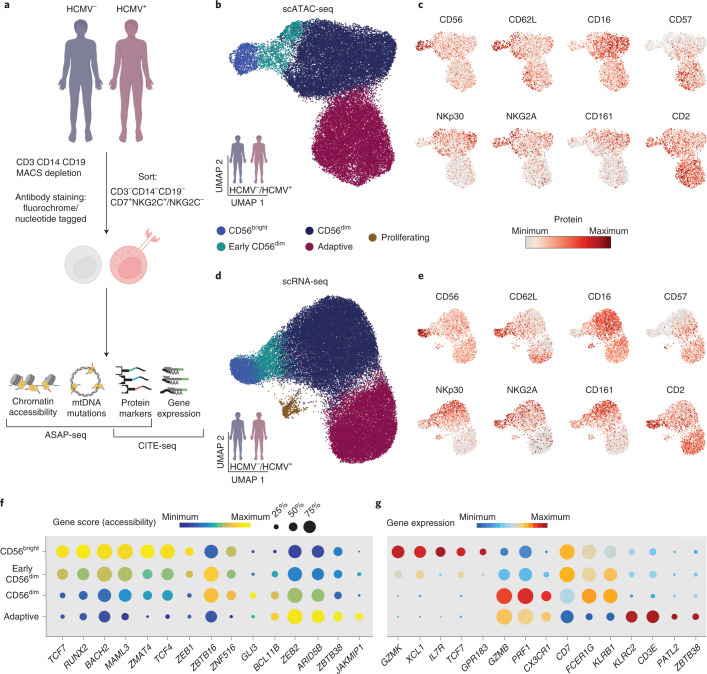
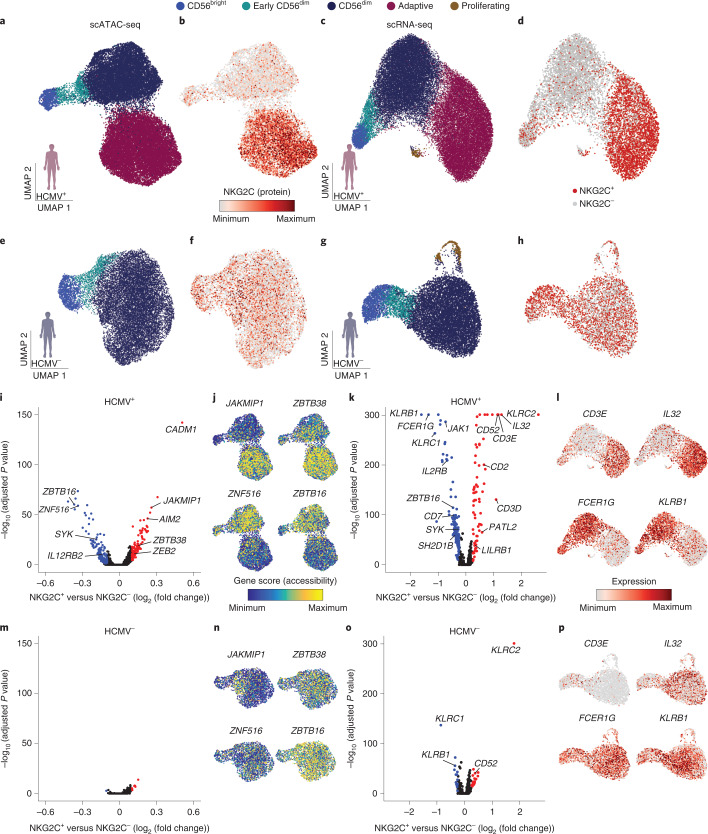
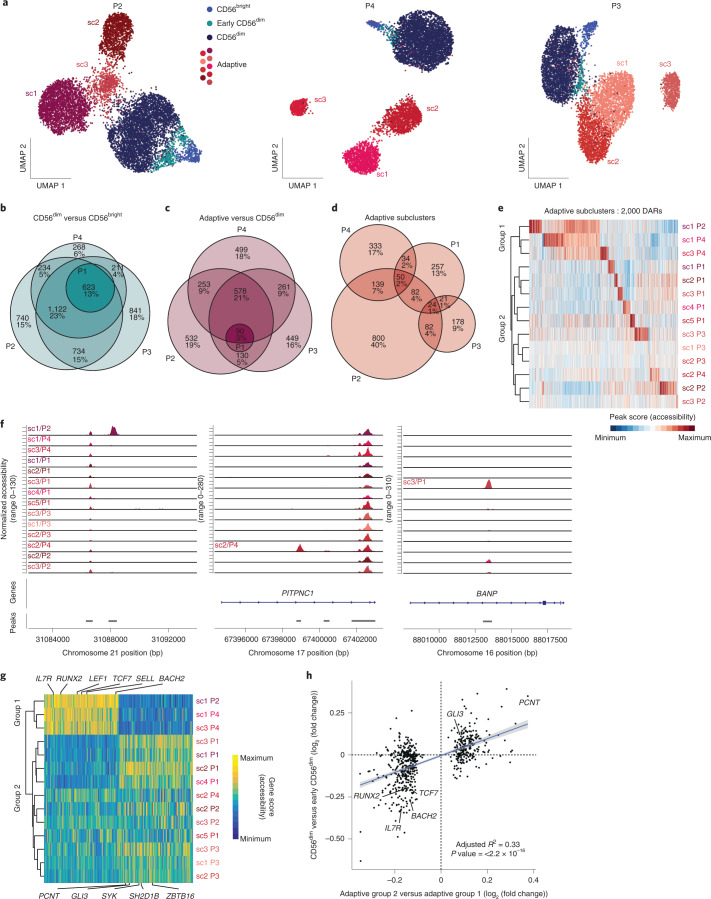
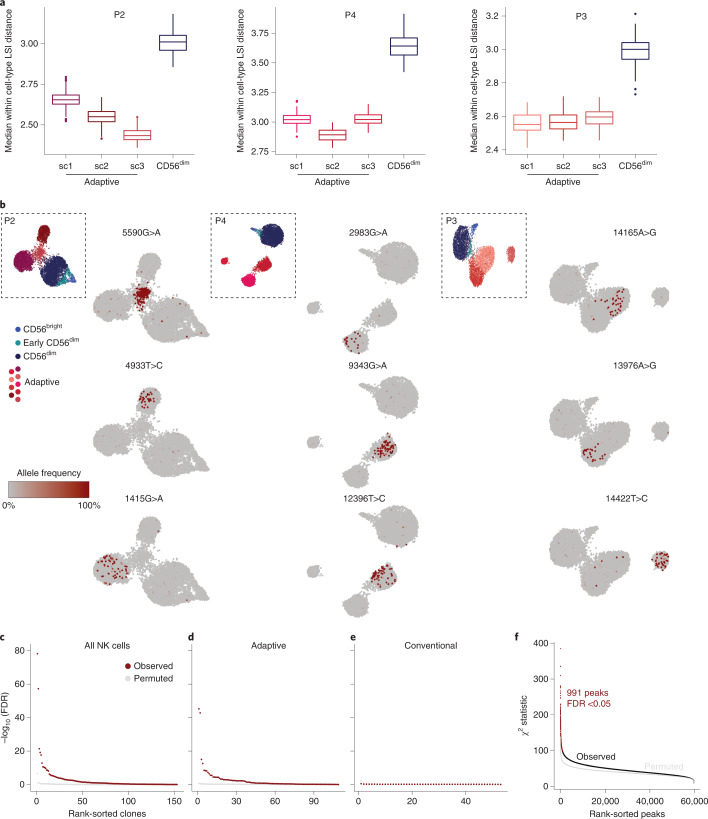
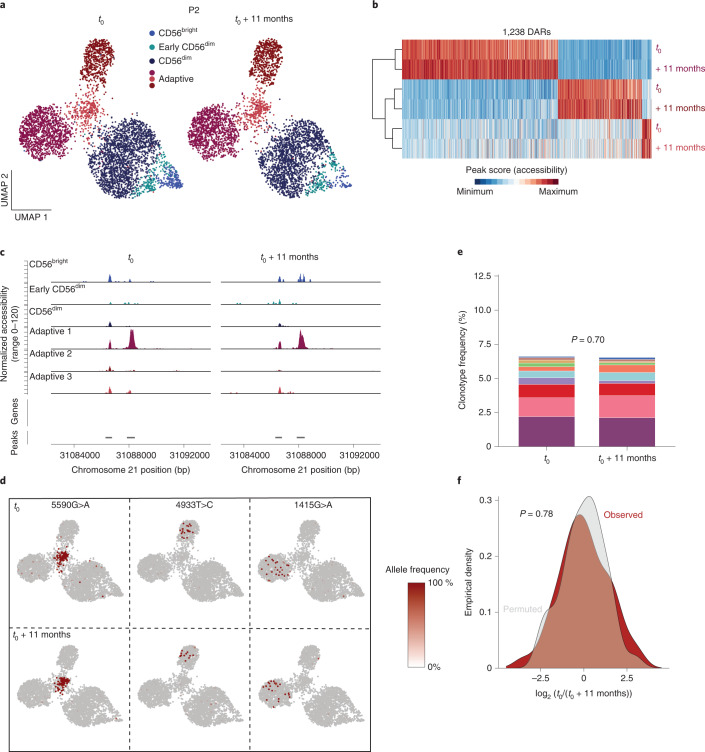
Clonal expansion of cells with somatically diversified receptors and their long-term maintenance as memory cells is a hallmark of adaptive immunity. Here, we studied pathogen-specific adaptation within the innate immune system, tracking natural killer (NK) cell memory to human cytomegalovirus (HCMV) infection. Leveraging single-cell multiomic maps of ex vivo NK cells and somatic mitochondrial DNA mutations as endogenous barcodes, we reveal substantial clonal expansion of adaptive NK cells in HCMV individuals. NK cell clonotypes were characterized by a convergent inflammatory memory signature enriched for AP1 motifs superimposed on a private set of clone-specific accessible chromatin regions. NK cell clones were stably maintained in specific epigenetic states over time, revealing that clonal inheritance of chromatin accessibility shapes the epigenetic memory repertoire. Together, we identify clonal expansion and persistence within the human innate immune system, suggesting that these mechanisms have evolved independent of antigen-receptor diversification.
细胞受体体细胞多样化的克隆扩增及其作为记忆细胞的长期维持是适应性免疫的标志。在这里,我们研究了先天免疫系统中的病原体特异性适应,追踪自然杀伤 (NK) 细胞对人巨细胞病毒 (HCMV) 感染的记忆。利用 NK 细胞的体外单细胞多组学图谱和作为内源性条形码的体细胞线粒体 DNA 突变,我们揭示了 HCMV 个体中适应性 NK 细胞的大量克隆扩增。NK 细胞克隆型的特征是炎症记忆特征的趋同,富集了 AP1 基序,叠加在一组私人的克隆特异性可及染色质区域上。NK 细胞克隆随着时间的推移在特定的表观遗传状态下稳定维持,表明染色质可及性的克隆遗传决定了表观遗传记忆库。总之,我们确定了人类先天免疫系统中的克隆扩增和持久性,这表明这些机制的进化独立于抗原受体多样化。