Institute of Genetics and Biophysics "A. Buzzati-Traverso", National Research Council (CNR-IGB), 80131, Naples, Italy.
Department of Cancer Biology, Instituto de Investigaciones Biomedicas "Alberto Sols" (IIBM), CSIC-UAM, 28029, Madrid, Spain.
J Exp Clin Cancer Res. 2022 Oct 26;41(1):315. doi: 10.1186/s13046-022-02516-w.
Tumor-initiating cells (TIC), also known as cancer stem cells, are considered a specific subpopulation of cells necessary for cancer initiation and metastasis; however, the mechanisms by which they acquire metastatic traits are not well understood.
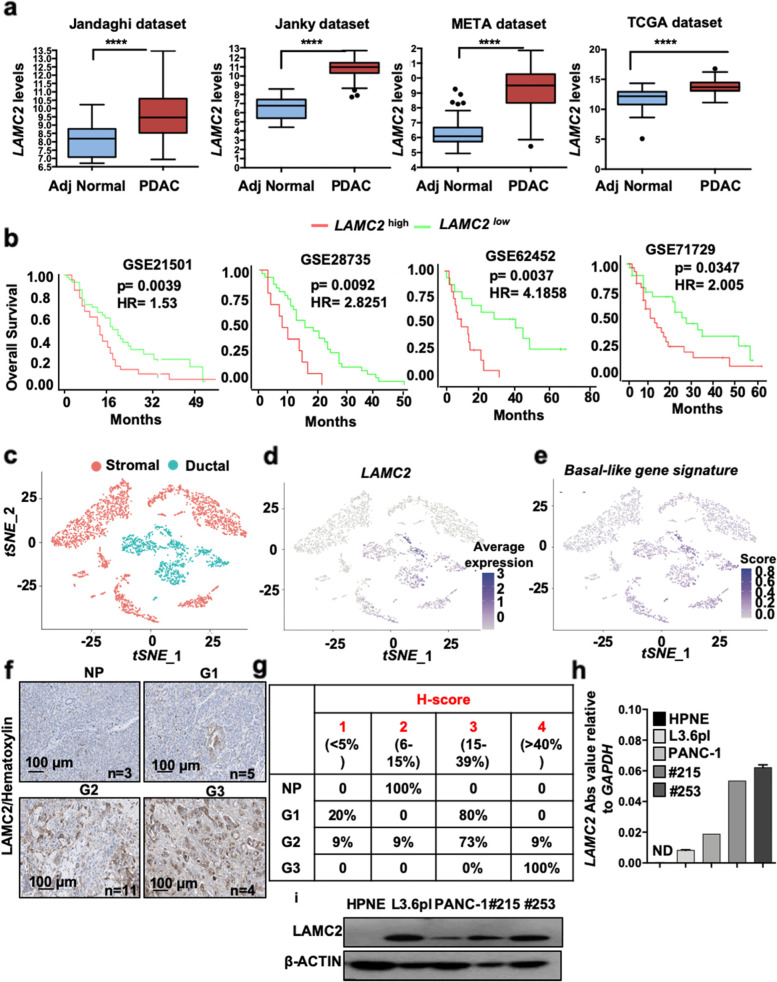
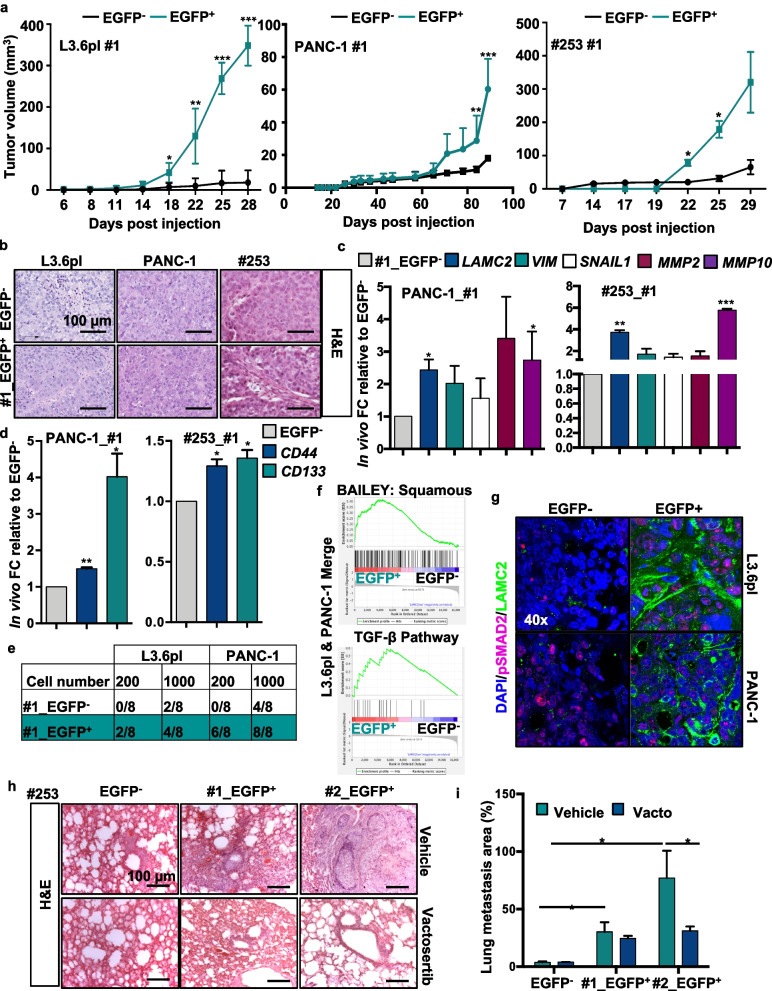
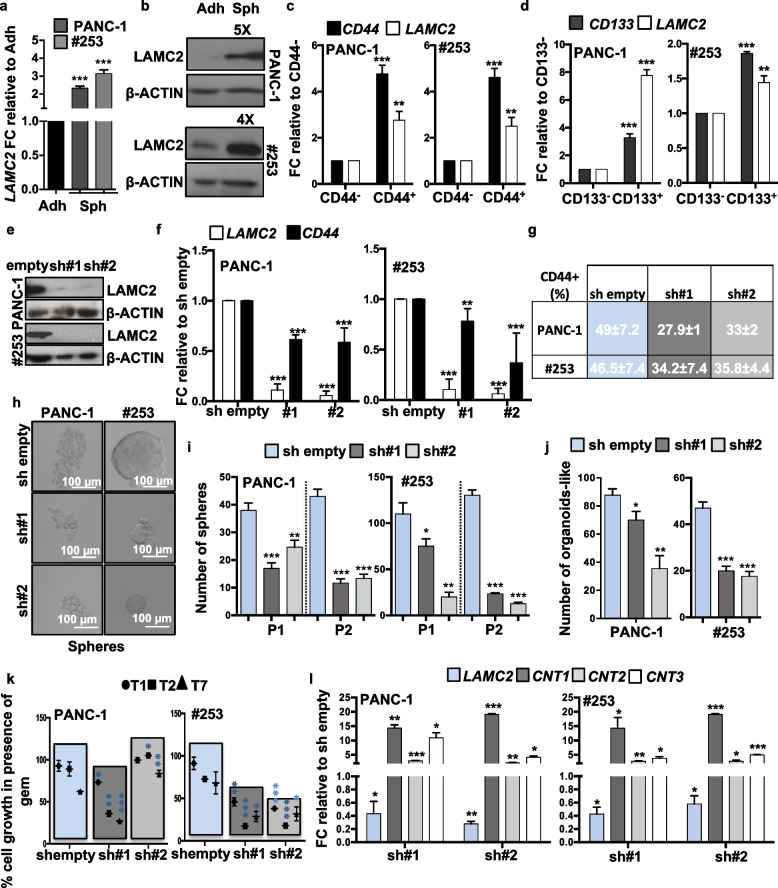
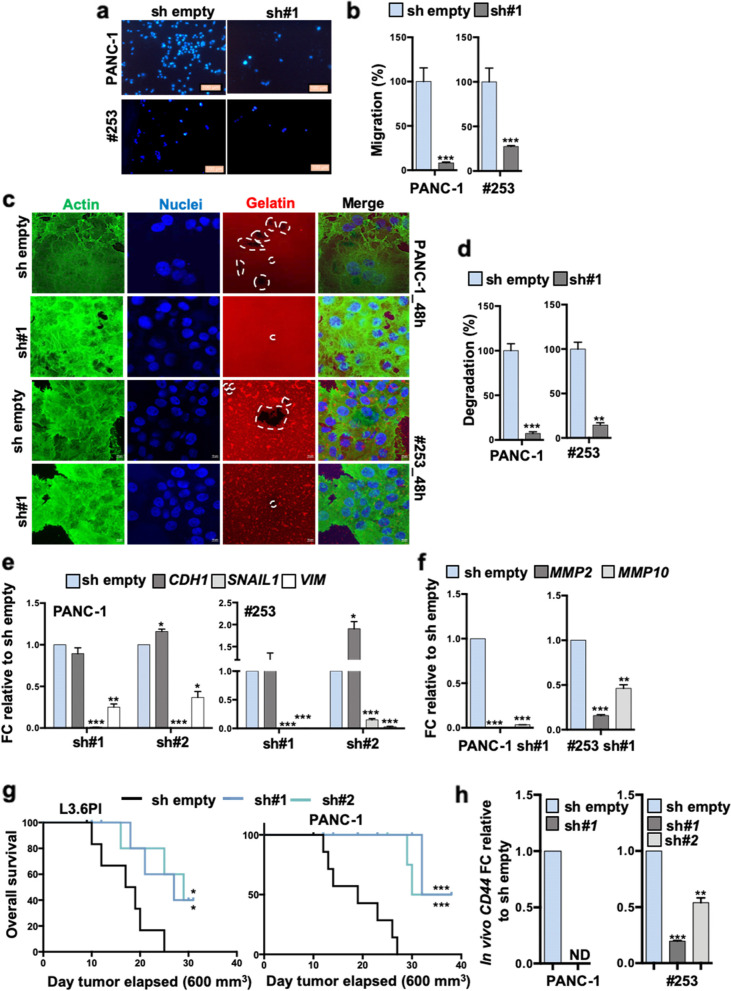
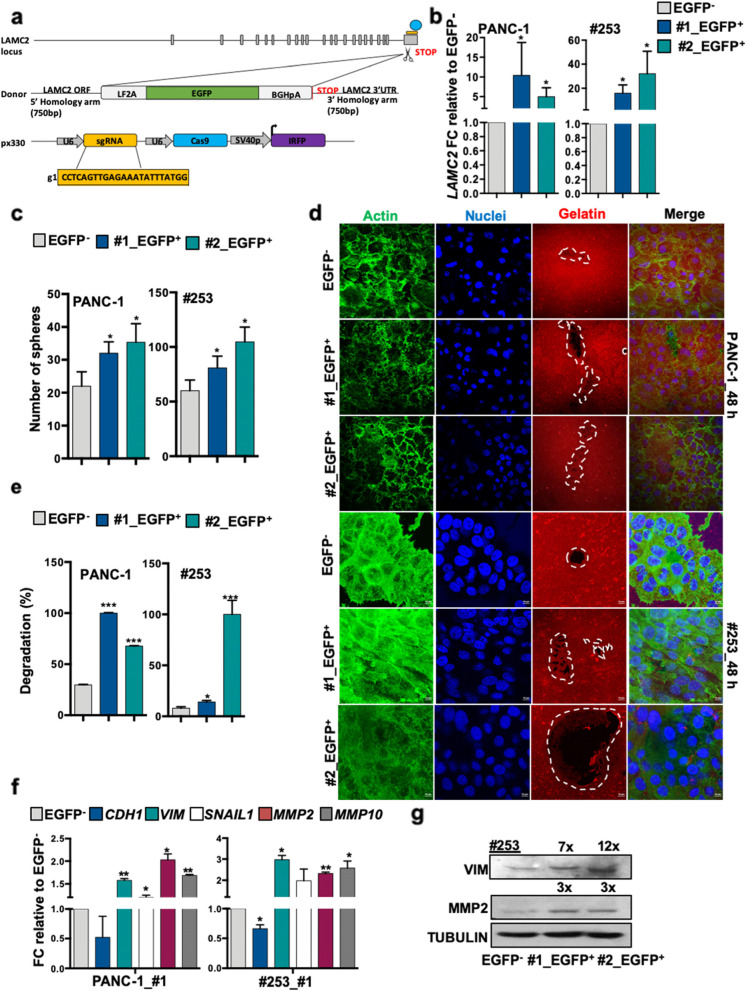
LAMC2 transcriptional levels were evaluated using publicly available transcriptome data sets, and LAMC2 immunohistochemistry was performed using a tissue microarray composed of PDAC and normal pancreas tissues. Silencing and tracing of LAMC2 was performed using lentiviral shRNA constructs and CRISPR/Cas9-mediated homologous recombination, respectively. The contribution of LAMC2 to PDAC tumorigenicity was explored in vitro by tumor cell invasion, migration, sphere-forming and organoids assays, and in vivo by tumor growth and metastatic assays. mRNA sequencing was performed to identify key cellular pathways upregulated in LAMC2 expressing cells. Metastatic spreading induced by LAMC2- expressing cells was blocked by pharmacological inhibition of transforming growth factor beta (TGF-β) signaling.
We report a LAMC2-expressing cell population, which is endowed with enhanced self-renewal capacity, and is sufficient for tumor initiation and differentiation, and drives metastasis. mRNA profiling of these cells indicates a prominent squamous signature, and differentially activated pathways critical for tumor growth and metastasis, including deregulation of the TGF-β signaling pathway. Treatment with Vactosertib, a new small molecule inhibitor of the TGF-β type I receptor (activin receptor-like kinase-5, ALK5), completely abrogated lung metastasis, primarily originating from LAMC2-expressing cells.
We have identified a highly metastatic subpopulation of TICs marked by LAMC2. Strategies aimed at targeting the LAMC2 population may be effective in reducing tumor aggressiveness in PDAC patients. Our results prompt further study of this TIC population in pancreatic cancer and exploration as a potential therapeutic target and/or biomarker.
肿瘤起始细胞(TIC),也称为癌症干细胞,被认为是癌症起始和转移所必需的特定细胞亚群;然而,它们获得转移特性的机制尚不清楚。
使用公开的转录组数据集评估 LAMC2 的转录水平,并使用包含 PDAC 和正常胰腺组织的组织微阵列进行 LAMC2 免疫组织化学检测。使用慢病毒 shRNA 构建体和 CRISPR/Cas9 介导的同源重组分别进行 LAMC2 的沉默和追踪。通过肿瘤细胞侵袭、迁移、球体形成和类器官测定在体外探索 LAMC2 对 PDAC 致瘤性的贡献,通过肿瘤生长和转移测定在体内探索。进行 mRNA 测序以鉴定在表达 LAMC2 的细胞中上调的关键细胞途径。通过抑制转化生长因子-β(TGF-β)信号转导来阻断表达 LAMC2 的细胞诱导的转移扩散。
我们报告了一个表达 LAMC2 的细胞群体,该群体具有增强的自我更新能力,足以进行肿瘤起始和分化,并驱动转移。这些细胞的 mRNA 谱分析表明存在显著的鳞状特征,以及差异激活的关键肿瘤生长和转移途径,包括 TGF-β 信号通路的失调。用 Vactosertib(一种新型 TGF-β Ⅰ型受体(激活素受体样激酶 5,ALK5)的小分子抑制剂)治疗完全阻断了肺转移,主要来源于表达 LAMC2 的细胞。
我们已经鉴定出一种具有高转移性的 TIC 亚群,其特征是表达 LAMC2。针对 LAMC2 群体的策略可能有效降低 PDAC 患者的肿瘤侵袭性。我们的结果促使进一步研究胰腺癌细胞中的这种 TIC 群体,并探索其作为潜在的治疗靶点和/或生物标志物。