Kosushkin Sergei A, Ustyantsev Ilia G, Borodulina Olga R, Vassetzky Nikita S, Kramerov Dmitri A
Laboratory of Eukaryotic Genome Evolution, Engelhardt Institute of Molecular Biology, Russian Academy of Sciences, 119991 Moscow, Russia.
Biology (Basel). 2022 Sep 26;11(10):1403. doi: 10.3390/biology11101403.
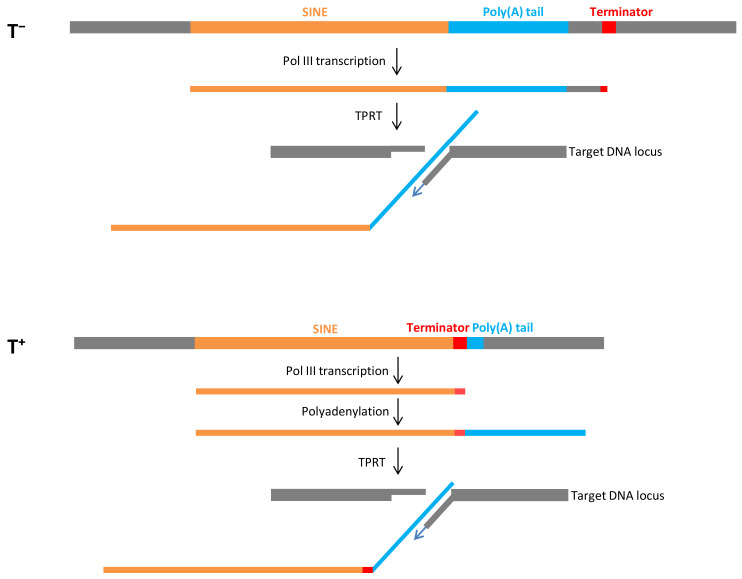
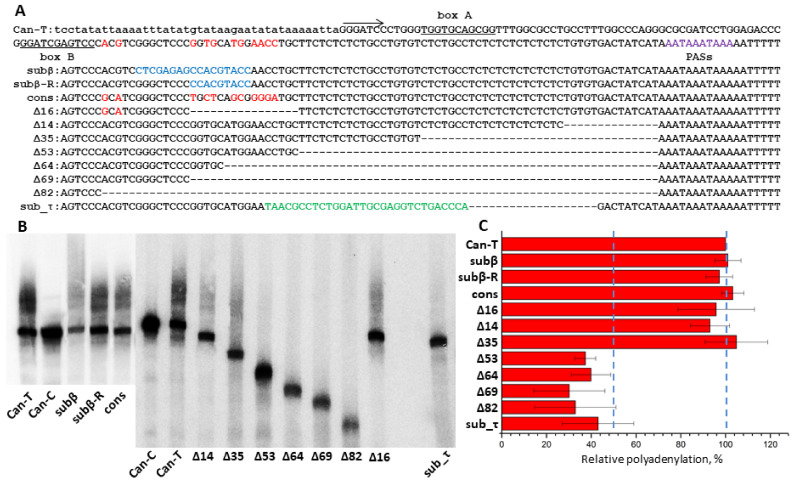
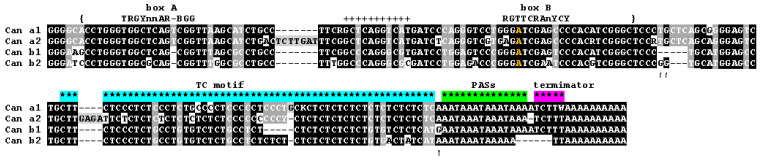
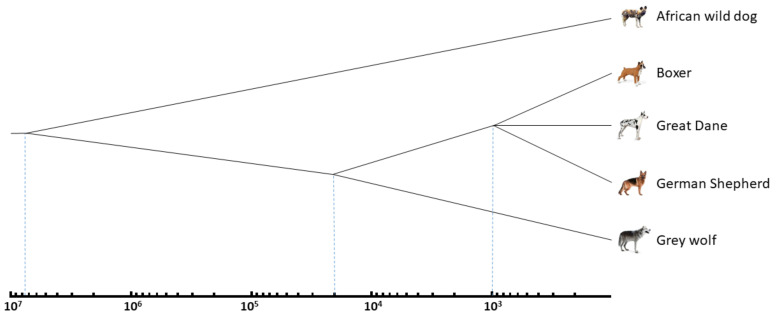
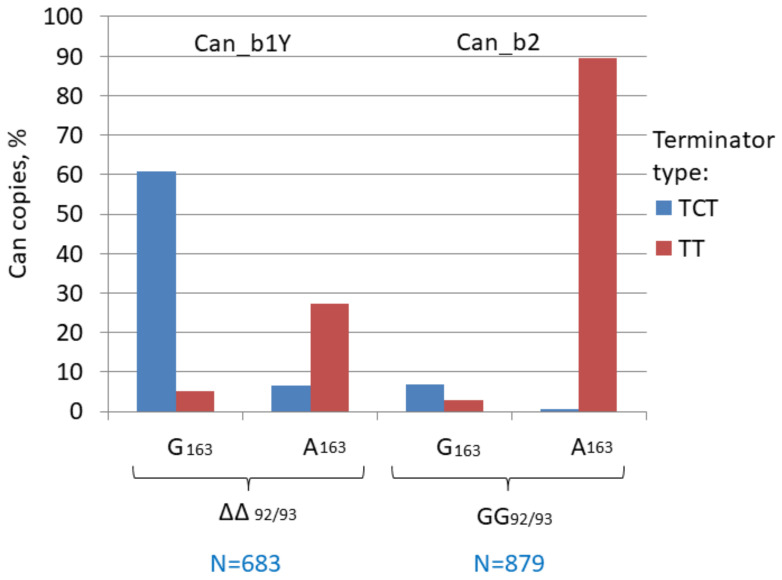
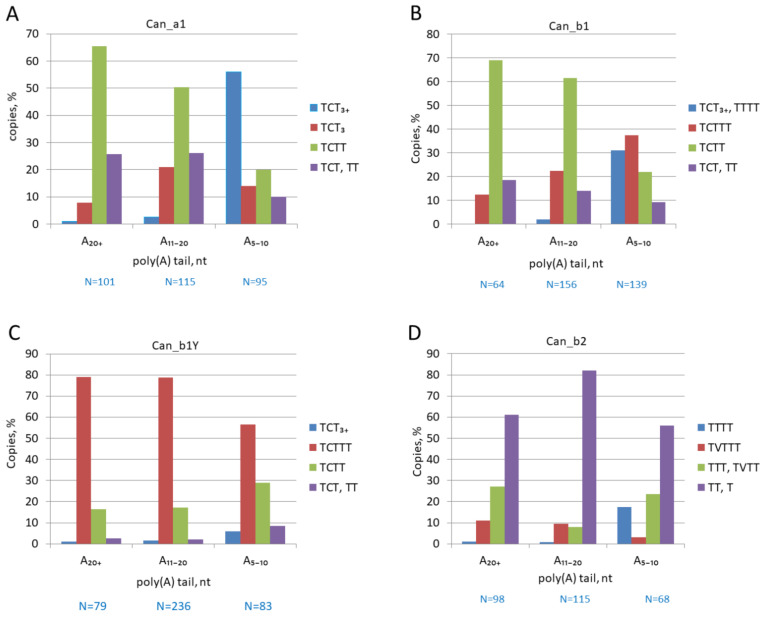
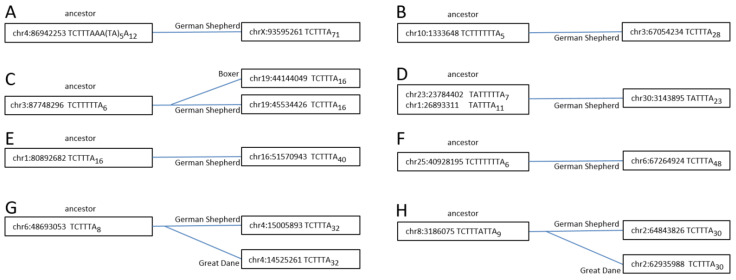
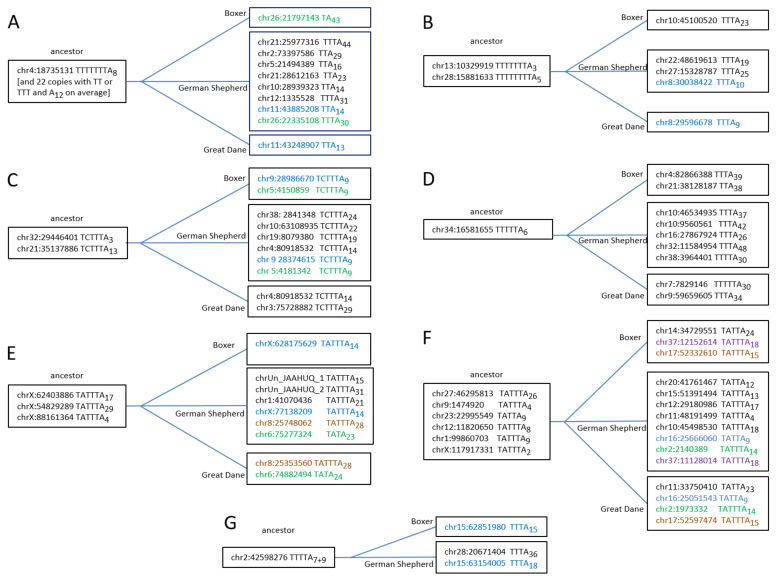
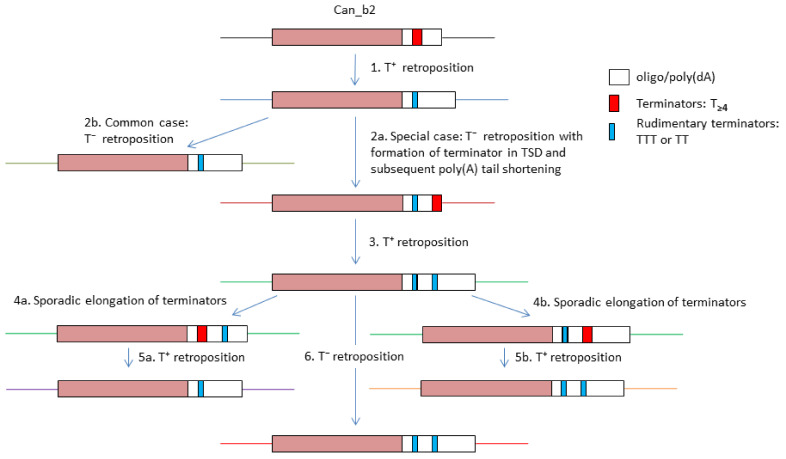
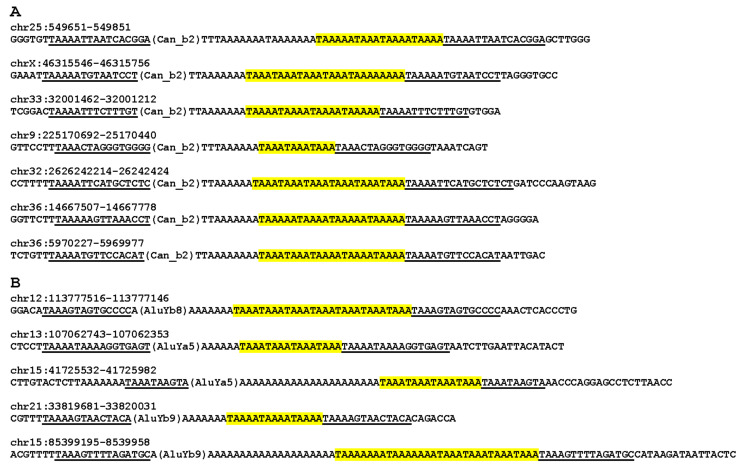
SINEs, non-autonomous short retrotransposons, are widespread in mammalian genomes. Their transcripts are generated by RNA polymerase III (pol III). Transcripts of certain SINEs can be polyadenylated, which requires polyadenylation and pol III termination signals in their sequences. Our sequence analysis divided Can SINEs in canids into four subfamilies, older a1 and a2 and younger b1 and b2. Can_b2 and to a lesser extent Can_b1 remained retrotranspositionally active, while the amplification of Can_a1 and Can_a2 ceased long ago. An extraordinarily high Can amplification was revealed in different dog breeds. Functional polyadenylation signals were analyzed in Can subfamilies, particularly in fractions of recently amplified, i.e., active copies. The transcription of various Can constructs transfected into HeLa cells proposed AATAAA and (TC) as functional polyadenylation signals. Our analysis indicates that older Can subfamilies (a1, a2, and b1) with an active transcription terminator were amplified by the T mechanism (with polyadenylation of pol III transcripts). In the currently active Can_b2 subfamily, the amplification mechanisms with (T) and without the polyadenylation of pol III transcripts (T) irregularly alternate. The active transcription terminator tends to shorten, which renders it nonfunctional and favors a switch to the T retrotransposition. The activity of a truncated terminator is occasionally restored by its elongation, which rehabilitates the T retrotransposition for a particular SINE copy.
短散在核元件(SINEs)是一类非自主的短逆转录转座子,广泛存在于哺乳动物基因组中。它们的转录本由RNA聚合酶III(pol III)产生。某些SINEs的转录本可以进行多聚腺苷酸化,这要求其序列中具有多聚腺苷酸化和pol III终止信号。我们的序列分析将犬科动物中的犬SINEs分为四个亚家族,较古老的a1和a2以及较年轻的b1和b2。Can_b2以及在较小程度上Can_b1仍然具有逆转录转座活性,而Can_a1和Can_a2的扩增在很久以前就停止了。在不同犬种中发现了异常高的Can扩增。我们分析了Can亚家族中的功能性多聚腺苷酸化信号,特别是在最近扩增的、即活跃拷贝的部分中。转染到HeLa细胞中的各种Can构建体的转录表明AATAAA和(TC)是功能性多聚腺苷酸化信号。我们的分析表明,具有活跃转录终止子的较古老Can亚家族(a1、a2和b1)通过T机制(pol III转录本的多聚腺苷酸化)进行扩增。在当前活跃的Can_b2亚家族中,具有(T)和不具有pol III转录本多聚腺苷酸化(T)的扩增机制不规则地交替出现。活跃的转录终止子倾向于缩短,这使其失去功能并有利于向T逆转录转座的转变。截短的终止子的活性偶尔会通过其延长而恢复,这使得特定SINE拷贝的T逆转录转座得以恢复。