Tang Jiahui, Liu Zhe, Han Jiaxu, Xue Jingfei, Liu Liyan, Lin Jicheng, Wu Caiqing, Zhang Qi, Wu Siting, Liu Canying, Huang Haishun, Fu Yuanyuan, Li Min, Zhuo Yehong, Li Yiqing
State Key Laboratory of Ophthalmology, Zhongshan Ophthalmic Center, Sun Yat-sen University, Guangdong Provincial Key Laboratory of Ophthalmology and Visual Science, Guangzhou 510060, China.
Guangdong Provincial Key Laboratory of Chiral Molecule and Drug Discovery, School of Pharmaceutical Sciences, Sun Yat-Sen University, Guangzhou 510006, China.
Antioxidants (Basel). 2022 Oct 10;11(10):2001. doi: 10.3390/antiox11102001.
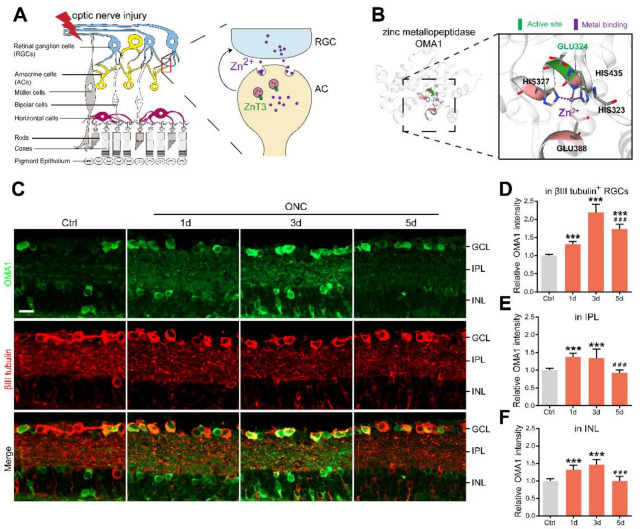
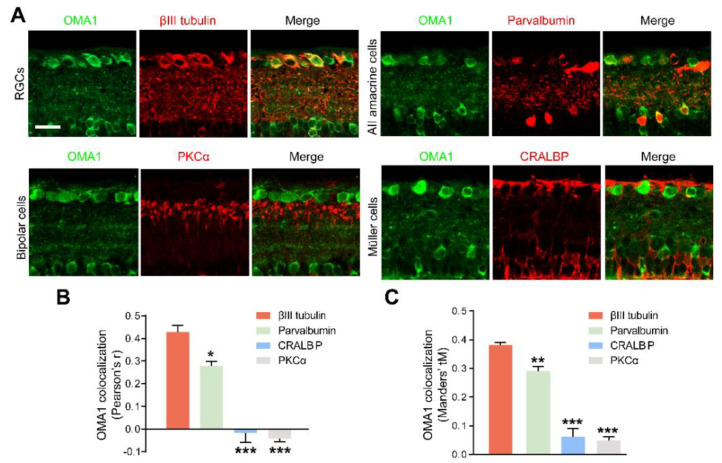
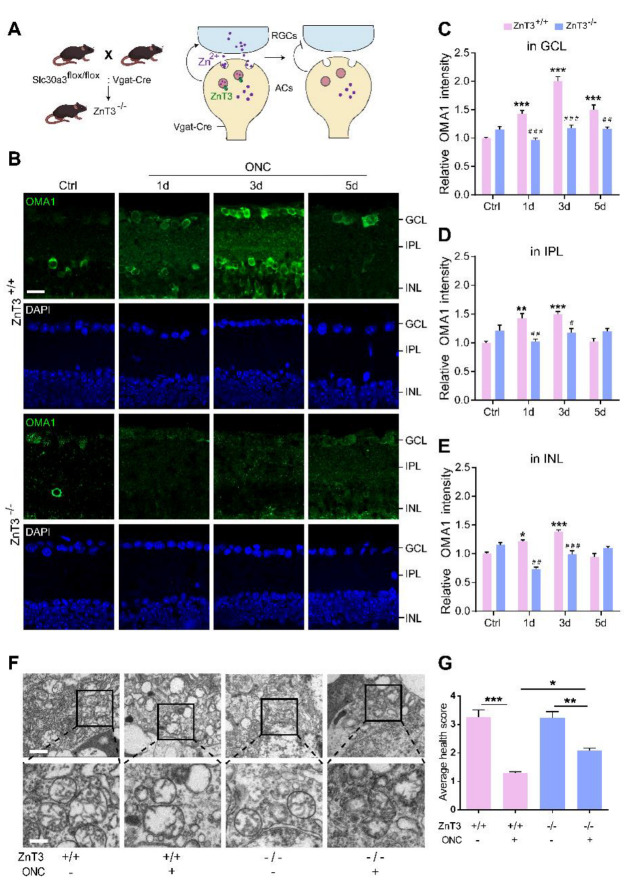
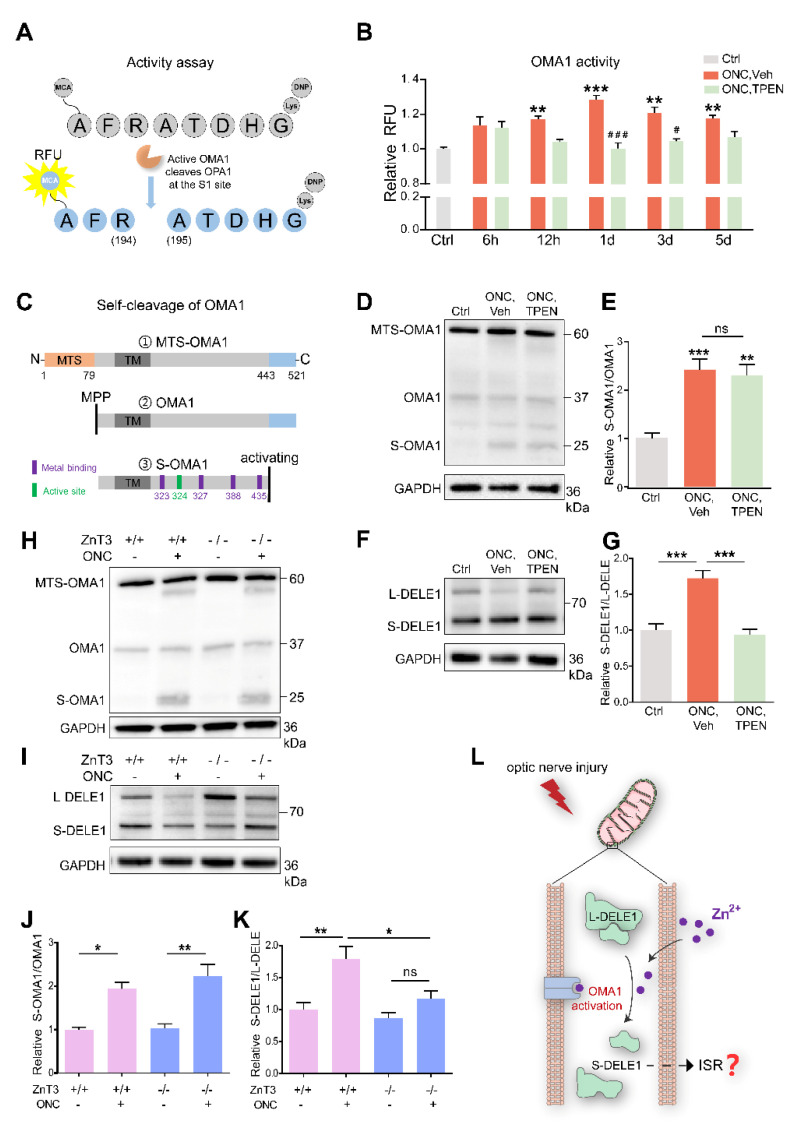
Retinal ganglion cells (RGCs), the projection neurons of the eye, are irreversibly lost once the optic nerve is injured, which is a critical mechanism of glaucoma. Mobile zinc (Zn) levels rapidly increase in retinal interneuron amacrine cells and Zn is then transferred to RGCs via the Zn transporter protein ZnT-3, triggering RGC loss in optic nerve injury. Zn chelation and ZnT-3 deletion promote long-term RGC survival. However, the downstream signaling pathways of Zn in RGCs remains unknown. Here, we show that increased levels of Zn upregulate the expression and activity of mitochondrial zinc metallopeptidase OMA1 in the retina, leading to the cleavage of DELE1 and activation of cytosolic eIF2α kinase PKR, triggering the integrated stress response (ISR) in RGCs. Our study identified OMA1 and ISR as the downstream molecular mechanisms of retinal Zn and potential targets for preventing the progression of Zn-associated neuronal damage.
视网膜神经节细胞(RGCs)是眼睛的投射神经元,一旦视神经受损,它们就会不可逆转地丧失,这是青光眼的一个关键机制。视网膜中间神经元无长突细胞中的可移动锌(Zn)水平迅速升高,然后锌通过锌转运蛋白ZnT-3转移到RGCs,引发视神经损伤中的RGCs丧失。锌螯合和ZnT-3缺失可促进RGCs的长期存活。然而,RGCs中锌的下游信号通路仍然未知。在这里,我们表明,锌水平的升高会上调视网膜中线粒体锌金属肽酶OMA1的表达和活性,导致DELE1的裂解和细胞质eIF2α激酶PKR的激活,从而触发RGCs中的综合应激反应(ISR)。我们的研究确定OMA1和ISR是视网膜锌的下游分子机制,也是预防锌相关神经元损伤进展的潜在靶点。