Liu Zhe, Xue Jingfei, Liu Canying, Tang Jiahui, Wu Siting, Lin Jicheng, Han Jiaxu, Zhang Qi, Wu Caiqing, Huang Haishun, Zhao Ling, Zhuo Yehong, Li Yiqing
State Key Laboratory of Ophthalmology, Zhongshan Ophthalmic Center, Sun Yat-sen University, Guangdong Provincial Key Laboratory of Ophthalmology and Visual Science, Guangzhou, Guangdong Province, China, Guangzhou.
Neural Regen Res. 2023 Dec;18(12):2773-2780. doi: 10.4103/1673-5374.373660.
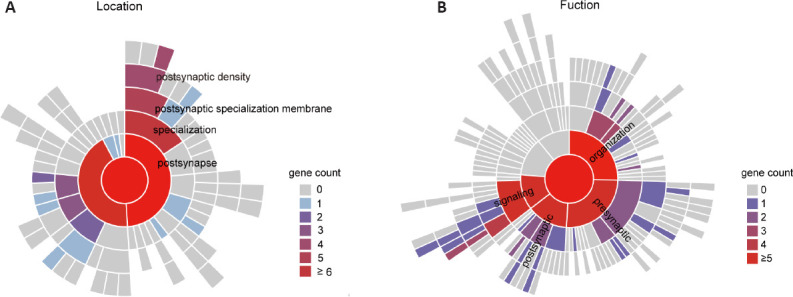
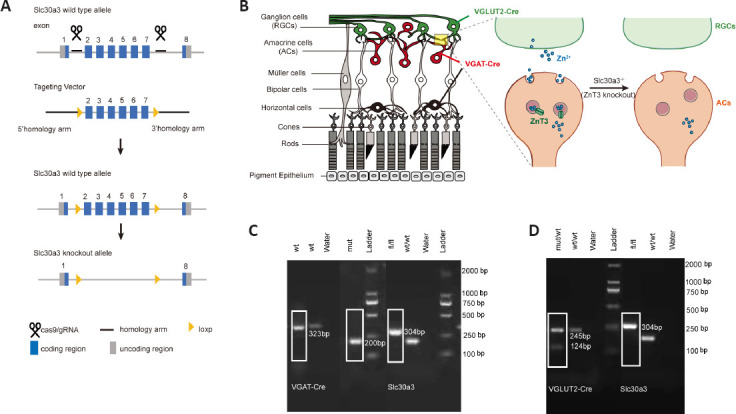
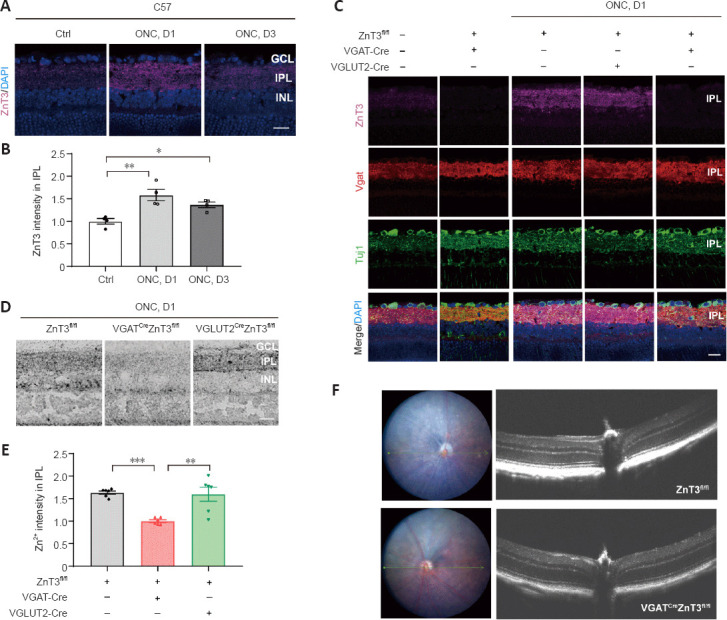
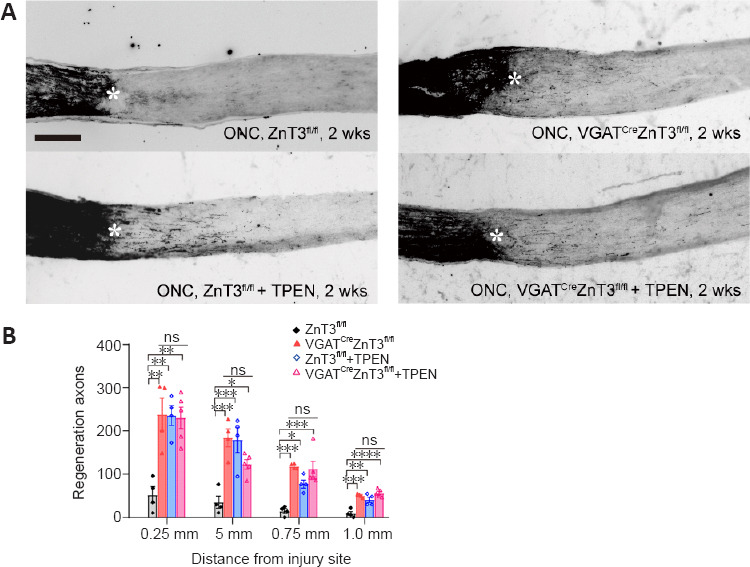
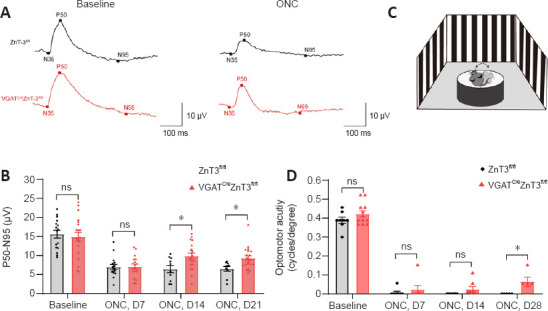
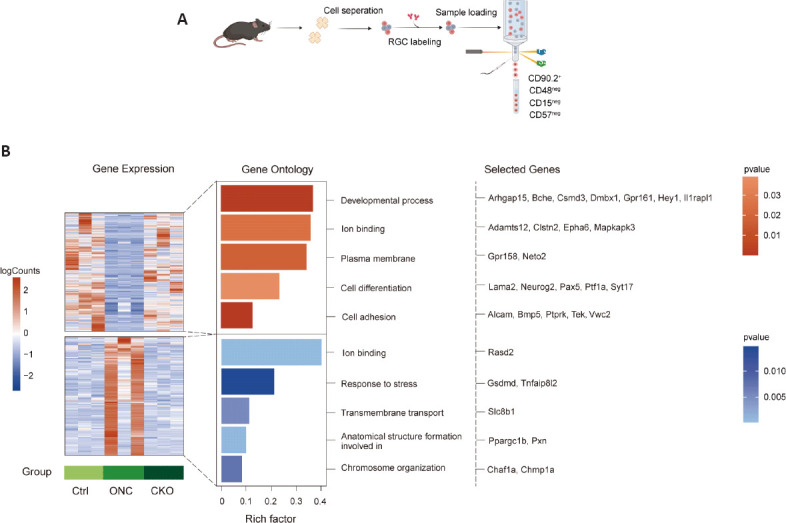
Vision depends on accurate signal conduction from the retina to the brain through the optic nerve, an important part of the central nervous system that consists of bundles of axons originating from retinal ganglion cells. The mammalian optic nerve, an important part of the central nervous system, cannot regenerate once it is injured, leading to permanent vision loss. To date, there is no clinical treatment that can regenerate the optic nerve and restore vision. Our previous study found that the mobile zinc (Zn) level increased rapidly after optic nerve injury in the retina, specifically in the vesicles of the inner plexiform layer. Furthermore, chelating Zn significantly promoted axonal regeneration with a long-term effect. In this study, we conditionally knocked out zinc transporter 3 (ZnT3) in amacrine cells or retinal ganglion cells to construct two transgenic mouse lines (VGATZnT3 and VGLUT2ZnT3, respectively). We obtained direct evidence that the rapidly increased mobile Zn in response to injury was from amacrine cells. We also found that selective deletion of ZnT3 in amacrine cells promoted retinal ganglion cell survival and axonal regeneration after optic nerve crush injury, improved retinal ganglion cell function, and promoted vision recovery. Sequencing analysis of reginal ganglion cells revealed that inhibiting the release of presynaptic Zn affected the transcription of key genes related to the survival of retinal ganglion cells in postsynaptic neurons, regulated the synaptic connection between amacrine cells and retinal ganglion cells, and affected the fate of retinal ganglion cells. These results suggest that amacrine cells release Zn to trigger transcriptomic changes related to neuronal growth and survival in reginal ganglion cells, thereby influencing the synaptic plasticity of retinal networks. These results make the theory of zinc-dependent retinal ganglion cell death more accurate and complete and provide new insights into the complex interactions between retinal cell networks.
视觉依赖于从视网膜通过视神经向大脑的准确信号传导,视神经是中枢神经系统的重要组成部分,由源自视网膜神经节细胞的轴突束组成。哺乳动物的视神经作为中枢神经系统的重要部分,一旦受损就无法再生,会导致永久性视力丧失。迄今为止,尚无能够使视神经再生并恢复视力的临床治疗方法。我们之前的研究发现,视网膜中视神经损伤后可移动锌(Zn)水平迅速升高,特别是在内网状层的囊泡中。此外,螯合锌可显著促进轴突再生且具有长期效果。在本研究中,我们有条件地敲除无长突细胞或视网膜神经节细胞中的锌转运体3(ZnT3),构建了两种转基因小鼠品系(分别为VGATZnT3和VGLUT2ZnT3)。我们获得了直接证据,表明损伤后迅速增加的可移动锌来自无长突细胞。我们还发现,选择性敲除无长突细胞中的ZnT3可促进视神经挤压伤后视网膜神经节细胞的存活和轴突再生,改善视网膜神经节细胞功能,并促进视力恢复。对视网膜神经节细胞的测序分析表明,抑制突触前锌的释放会影响突触后神经元中与视网膜神经节细胞存活相关的关键基因的转录,调节无长突细胞与视网膜神经节细胞之间的突触连接,并影响视网膜神经节细胞的命运。这些结果表明,无长突细胞释放锌以触发与视网膜神经节细胞中神经元生长和存活相关的转录组变化,从而影响视网膜网络的突触可塑性。这些结果使锌依赖性视网膜神经节细胞死亡理论更加准确和完整,并为视网膜细胞网络之间的复杂相互作用提供了新的见解。