Ilie Ovidiu-Dumitru, Duta Raluca, Balmus Ioana-Miruna, Savuca Alexandra, Petrovici Adriana, Nita Ilinca-Bianca, Antoci Lucian-Mihai, Jijie Roxana, Mihai Cosmin-Teodor, Ciobica Alin, Nicoara Mircea, Popescu Roxana, Dobrin Romeo, Solcan Carmen, Trifan Anca, Stanciu Carol, Doroftei Bogdan
Department of Biology, Faculty of Biology, "Alexandru Ioan Cuza" University, Carol I Avenue, no 20A, 700505 Iasi, Romania.
Department of Exact and Natural Sciences, Institute of Interdisciplinary Research, "Alexandru Ioan Cuza" University, Carol I Avenue, no 11, 700506 Iasi, Romania.
Antioxidants (Basel). 2022 Oct 17;11(10):2040. doi: 10.3390/antiox11102040.
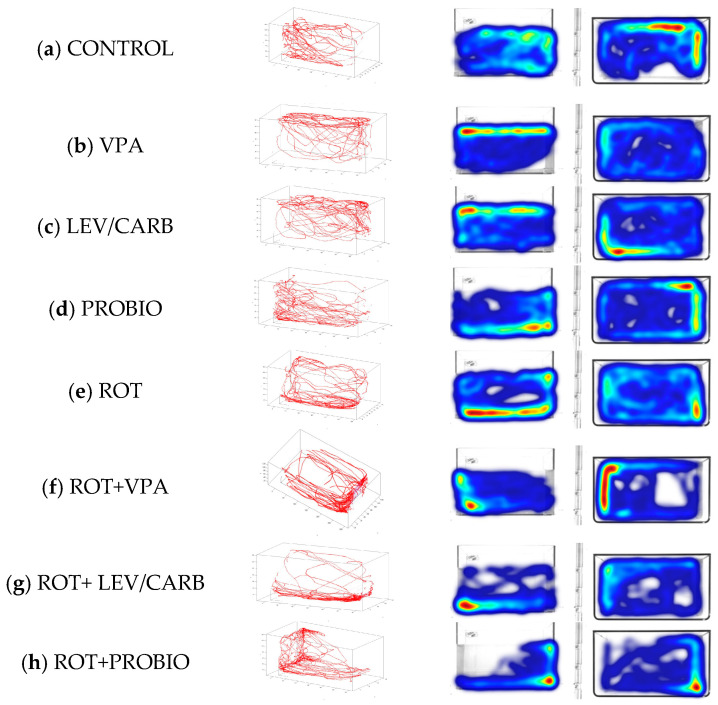
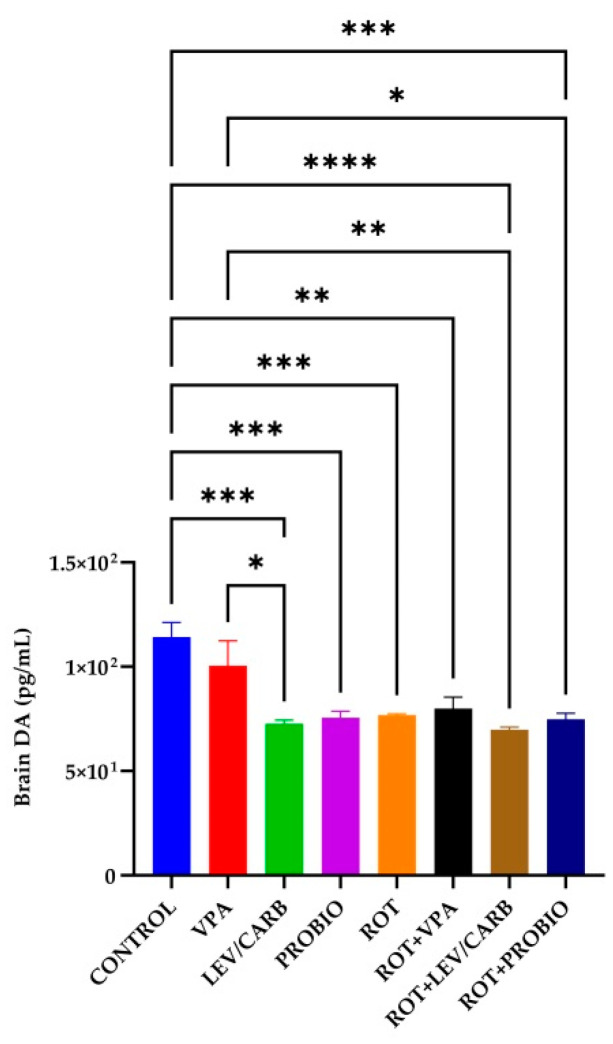
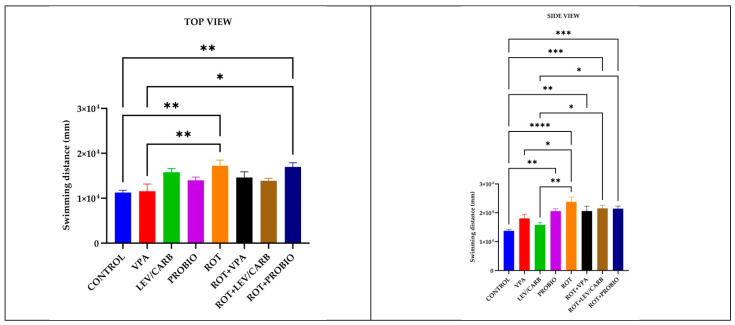
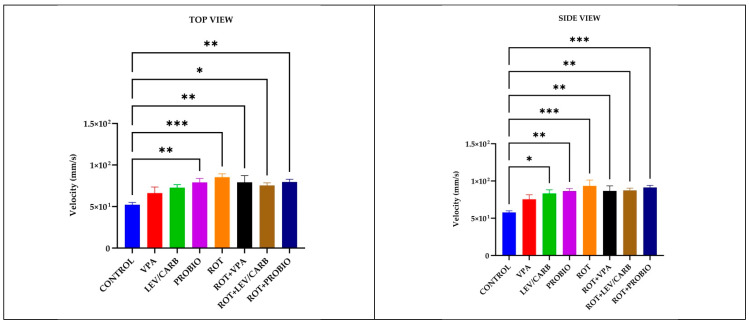
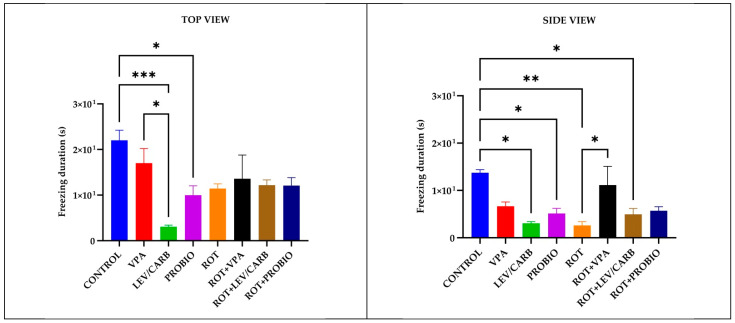
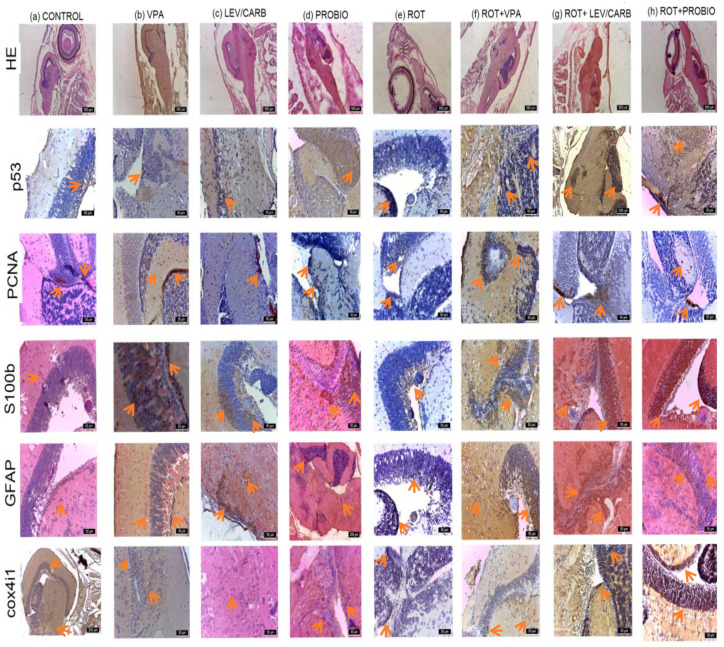
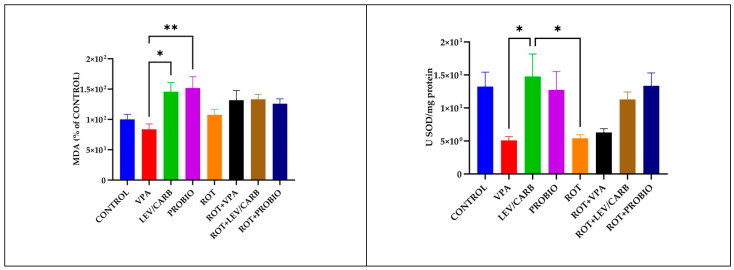
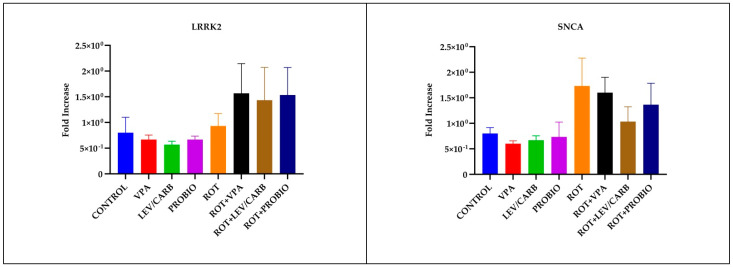
Parkinson's disease (PD) is an enigmatic neurodegenerative disorder that is currently the subject of extensive research approaches aiming at deepening the understanding of its etiopathophysiology. Recent data suggest that distinct compounds used either as anticonvulsants or agents usually used as dopaminergic agonists or supplements consisting of live active lactic acid bacteria strains might alleviate and improve PD-related phenotypes. This is why we aimed to elucidate how the administration of rotenone (ROT) disrupts homeostasis and the possible neuroactive potential of valproic acid (VPA), antiparkinsonian agents (levodopa and carbidopa - LEV+CARB), and a mixture of six and three species (PROBIO) might re-establish the optimal internal parameters. ROT causes significant changes in the central nervous system (CNS), notably reduced neurogenesis and angiogenesis, by triggering apoptosis, reflected by the increased expression of and gene(s), low brain dopamine (DA) levels, and as opposed to and compared with healthy zebrafish. VPA, LEV/CARB, and PROBIO sustain neurogenesis and angiogenesis, manifesting a neuroprotective role in diminishing the effect of ROT in zebrafish. Interestingly, none of the tested compounds influenced oxidative stress (OS), as reflected by the level of malondialdehyde (MDA) level and superoxide dismutase (SOD) enzymatic activity revealed in non-ROT-exposed zebrafish. Overall, the selected concentrations were enough to trigger particular behavioral patterns as reflected by our parameters of interest (swimming distance (mm), velocity (mm/s), and freezing episodes (s)), but sequential testing is mandatory to decipher whether they exert an inhibitory role following ROT exposure. In this way, we further offer data into how ROT may trigger a PD-related phenotype and the possible beneficial role of VPA, LEV+CARB, and PROBIO in re-establishing homeostasis in .
帕金森病(PD)是一种神秘的神经退行性疾病,目前是广泛研究的对象,旨在加深对其病因病理生理学的理解。最近的数据表明,用作抗惊厥药或通常用作多巴胺能激动剂的药物,或由活性乳酸菌菌株组成的补充剂,可能会减轻和改善与PD相关的表型。这就是为什么我们旨在阐明鱼藤酮(ROT)的给药如何破坏体内平衡,以及丙戊酸(VPA)、抗帕金森病药物(左旋多巴和卡比多巴 - LEV+CARB)和六种及三种物种的混合物(PROBIO)可能具有的神经活性潜力如何重新建立最佳内部参数。ROT通过触发细胞凋亡,导致中枢神经系统(CNS)发生显著变化,特别是神经发生和血管生成减少,这表现为 和 基因表达增加、脑多巴胺(DA)水平降低,并且与健康斑马鱼相比, 和 也有所不同。VPA、LEV/CARB和PROBIO维持神经发生和血管生成,在减轻ROT对斑马鱼的影响方面发挥神经保护作用。有趣的是,如未暴露于ROT的斑马鱼中丙二醛(MDA)水平和超氧化物歧化酶(SOD)酶活性所反映的那样,所测试的化合物均未影响氧化应激(OS)。总体而言,所选浓度足以触发我们感兴趣的参数(游泳距离(mm)、速度(mm/s)和冻结时间(s))所反映的特定行为模式,但必须进行连续测试以解读它们在ROT暴露后是否发挥抑制作用。通过这种方式,我们进一步提供了关于ROT如何触发与PD相关的表型以及VPA、LEV+CARB和PROBIO在重新建立 体内平衡方面可能的有益作用的数据。