Doerr Vivian, Montalvo Ryan N, Nguyen Branden L, Boeno Franccesco P, Sunshine Michael D, Bindi Victoria E, Fuller David D, Smuder Ashley J
Department of Applied Physiology and Kinesiology, University of Florida, Gainesville, FL 32611, USA.
Breathing Research and Therapeutics Center, University of Florida, Gainesville, FL 32610, USA.
Antioxidants (Basel). 2022 Oct 20;11(10):2073. doi: 10.3390/antiox11102073.
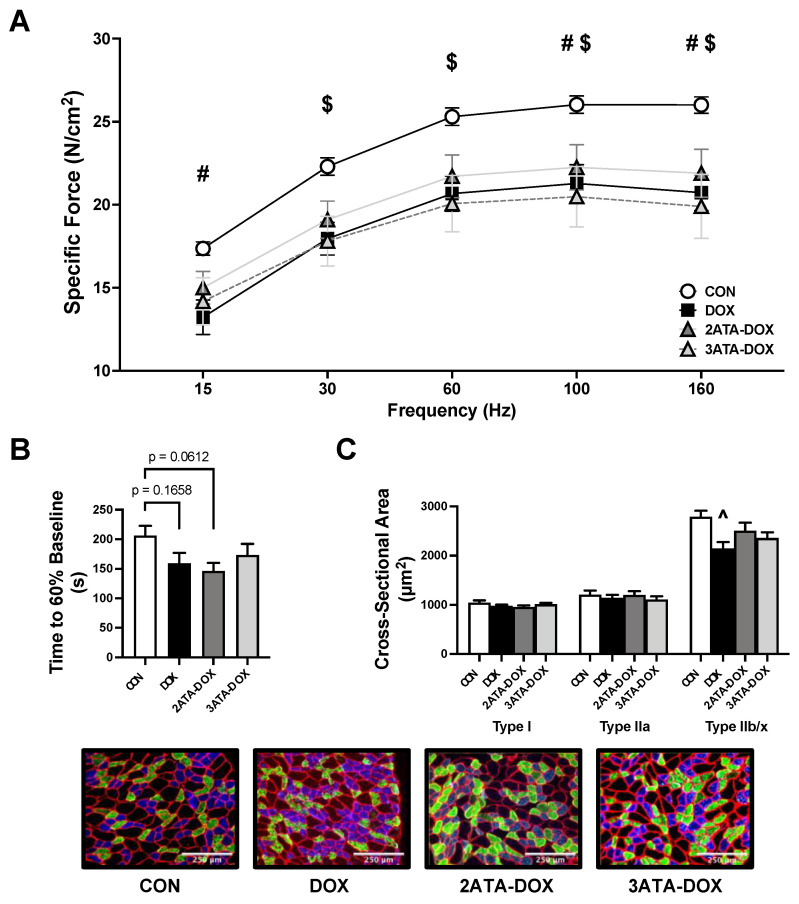
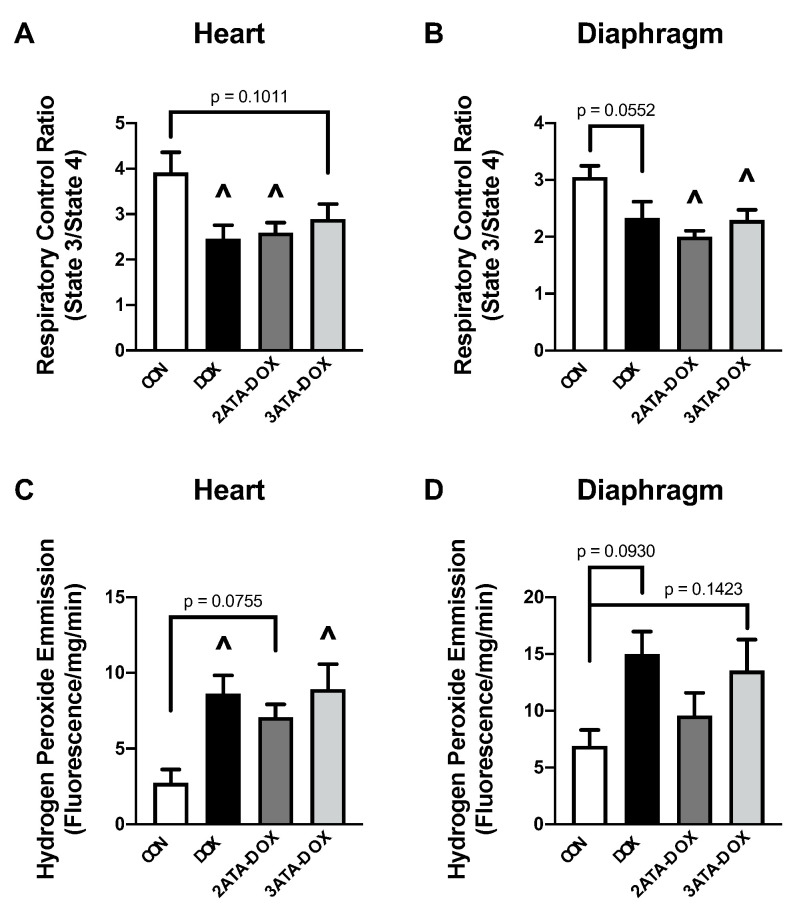
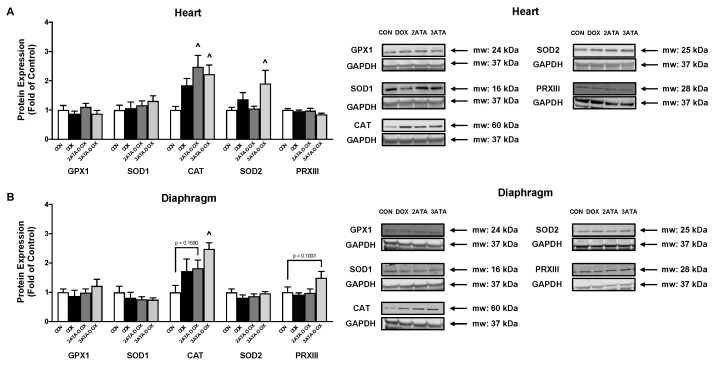
Cardiorespiratory dysfunction resulting from doxorubicin (DOX) chemotherapy treatment is a debilitating condition affecting cancer patient outcomes and quality of life. DOX treatment promotes cardiac and respiratory muscle pathology due to enhanced reactive oxygen species (ROS) production, mitochondrial dysfunction and impaired muscle contractility. In contrast, hyperbaric oxygen (HBO) therapy is considered a controlled oxidative stress that can evoke a substantial and sustained increase in muscle antioxidant expression. This HBO-induced increase in antioxidant capacity has the potential to improve cardiac and respiratory (i.e., diaphragm) muscle redox balance, preserving mitochondrial function and preventing muscle dysfunction. Therefore, we determined whether HBO therapy prior to DOX treatment is sufficient to enhance muscle antioxidant expression and preserve muscle redox balance and cardiorespiratory muscle function. To test this, adult female Sprague Dawley rats received HBO therapy (2 or 3 atmospheres absolute (ATA), 100% O, 1 h/day) for 5 consecutive days prior to acute DOX treatment (20 mg/kg i.p.). Our data demonstrate that 3 ATA HBO elicits a greater antioxidant response compared to 2 ATA HBO. However, these effects did not correspond with beneficial adaptations to cardiac systolic and diastolic function or diaphragm muscle force production in DOX treated rats. These findings suggest that modulating muscle antioxidant expression with HBO therapy is not sufficient to prevent DOX-induced cardiorespiratory dysfunction.
阿霉素(DOX)化疗导致的心肺功能障碍是一种使人衰弱的病症,会影响癌症患者的治疗效果和生活质量。DOX治疗会促进心脏和呼吸肌病变,原因是活性氧(ROS)生成增加、线粒体功能障碍以及肌肉收缩力受损。相比之下,高压氧(HBO)疗法被认为是一种可控的氧化应激,可引起肌肉抗氧化剂表达显著且持续的增加。这种由HBO诱导的抗氧化能力增加有可能改善心脏和呼吸(即膈肌)肌的氧化还原平衡,维持线粒体功能并预防肌肉功能障碍。因此,我们确定在DOX治疗之前进行HBO疗法是否足以增强肌肉抗氧化剂表达并维持肌肉氧化还原平衡以及心肺肌功能。为了验证这一点,成年雌性Sprague Dawley大鼠在急性DOX治疗(20 mg/kg腹腔注射)之前连续5天接受HBO疗法(2或3个绝对大气压(ATA),100%氧气,每天1小时)。我们的数据表明,与2 ATA HBO相比,3 ATA HBO引发的抗氧化反应更强。然而,这些效应与DOX治疗的大鼠心脏收缩和舒张功能或膈肌力量产生的有益适应性变化并不对应。这些发现表明,用HBO疗法调节肌肉抗氧化剂表达不足以预防DOX诱导的心肺功能障碍。