Applied Organic Chemistry Department, Chemical Industries Research Institute, National Research Centre (NRC), Dokki, Giza 12622, Egypt.
Chemistry Department, Faculty of Science, Cairo University, Giza 12613, Egypt.
Biosensors (Basel). 2022 Sep 20;12(10):778. doi: 10.3390/bios12100778.
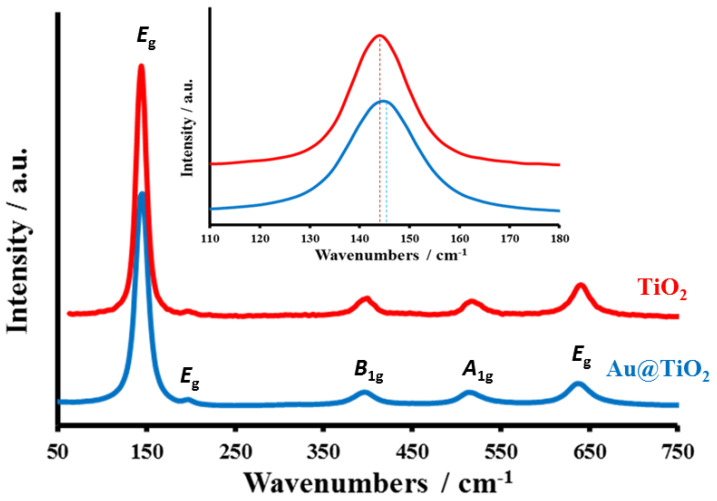
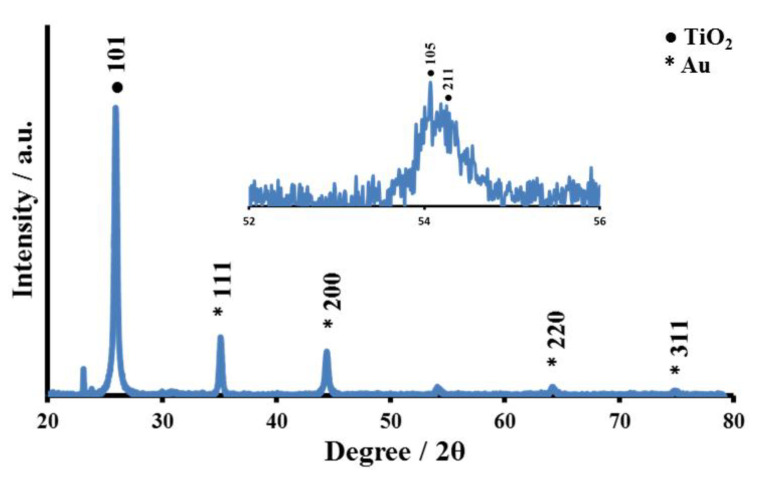
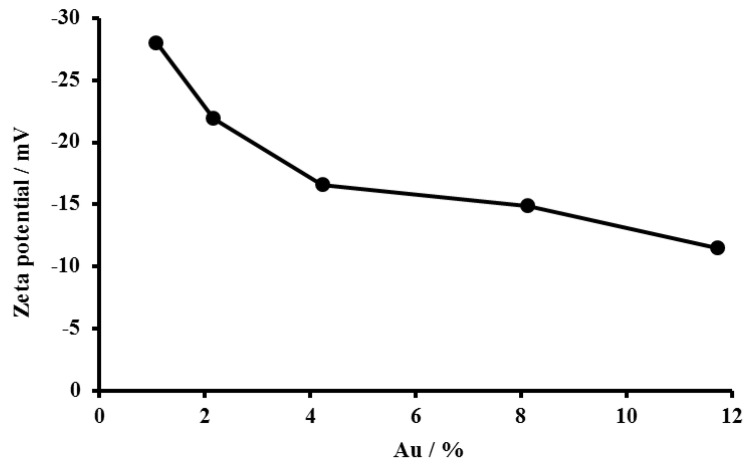
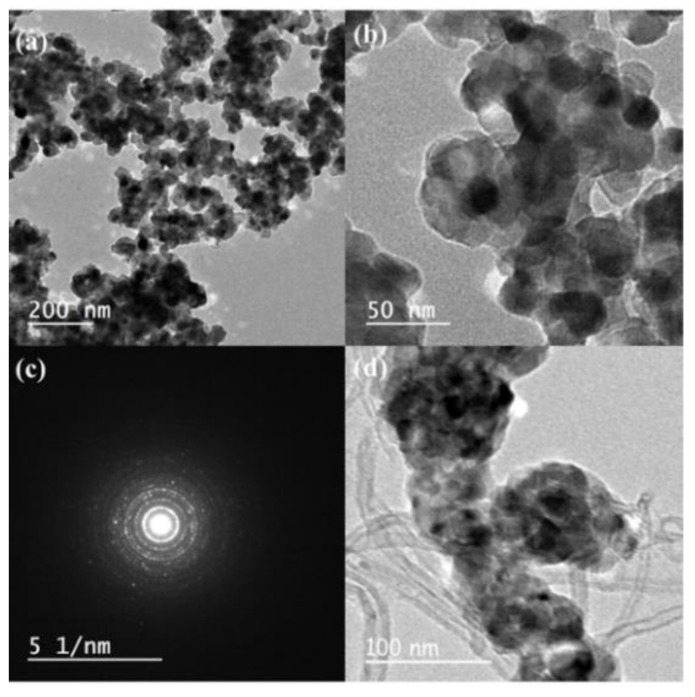
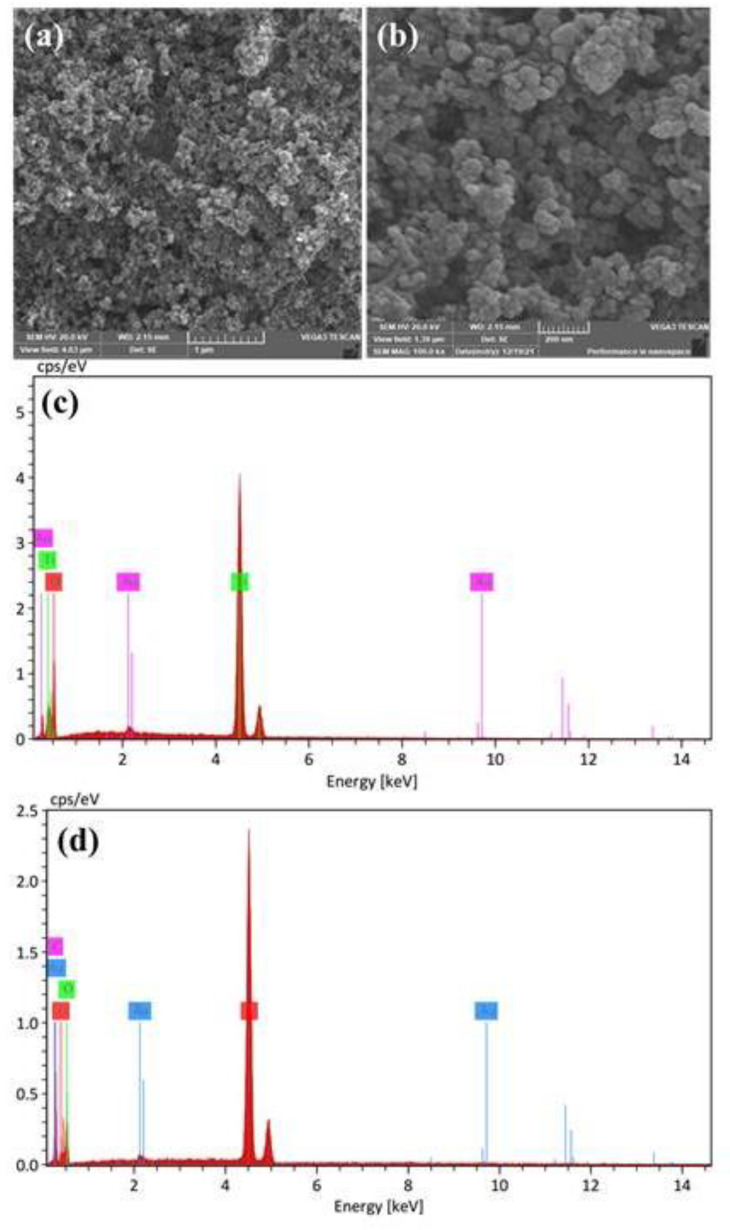
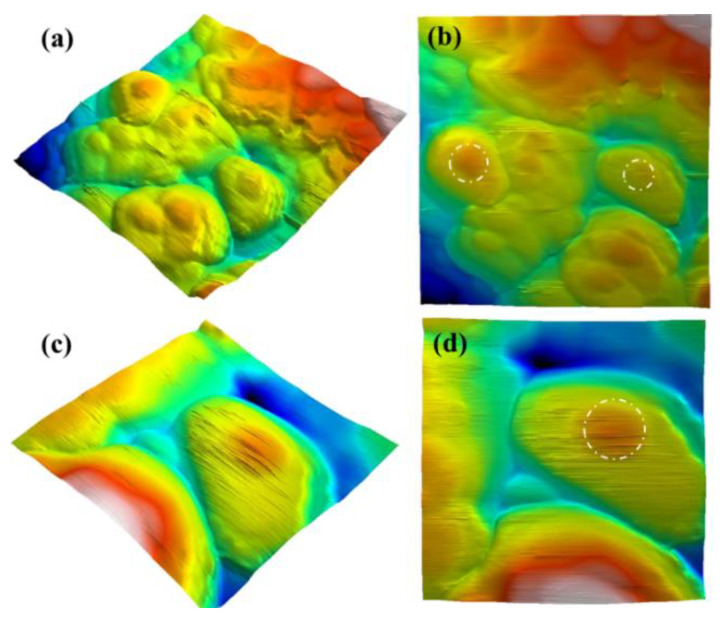
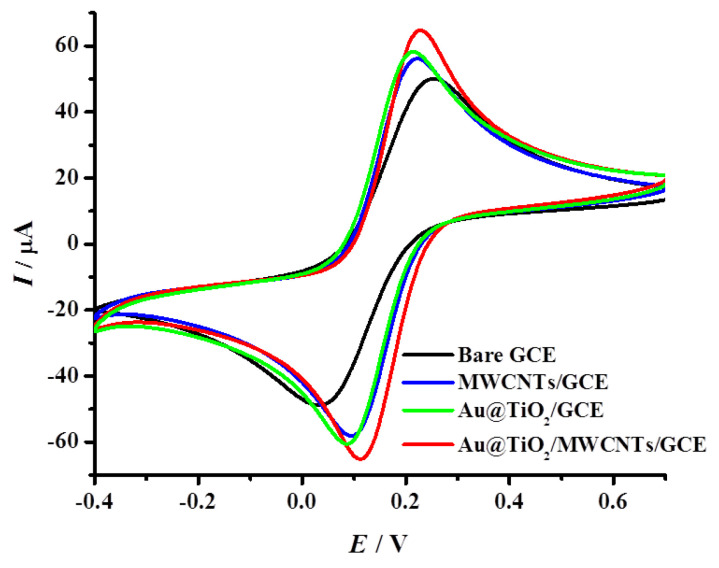
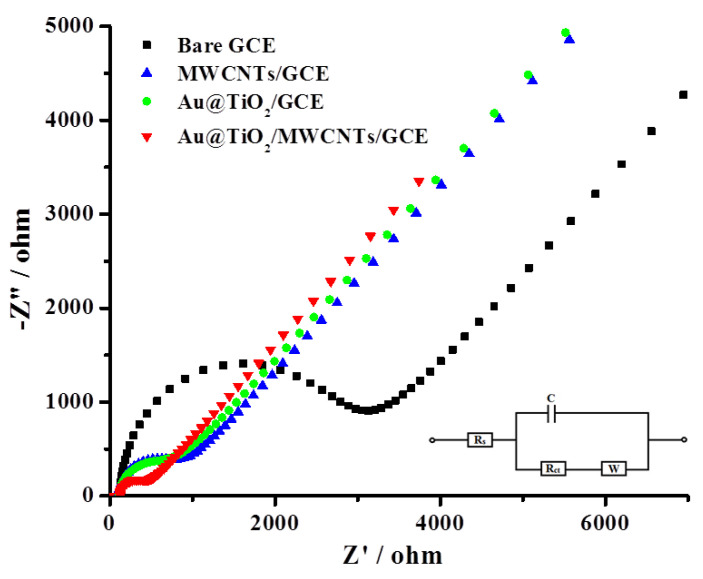
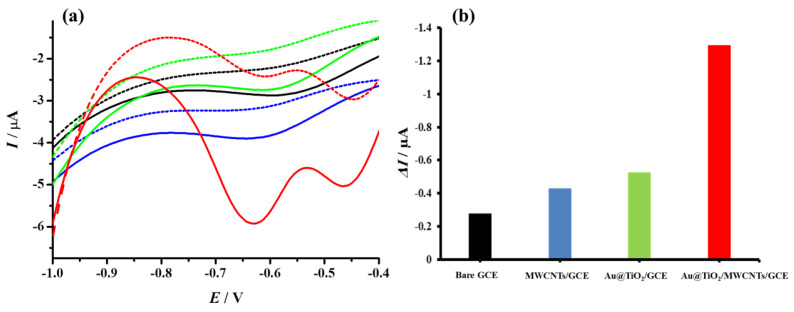
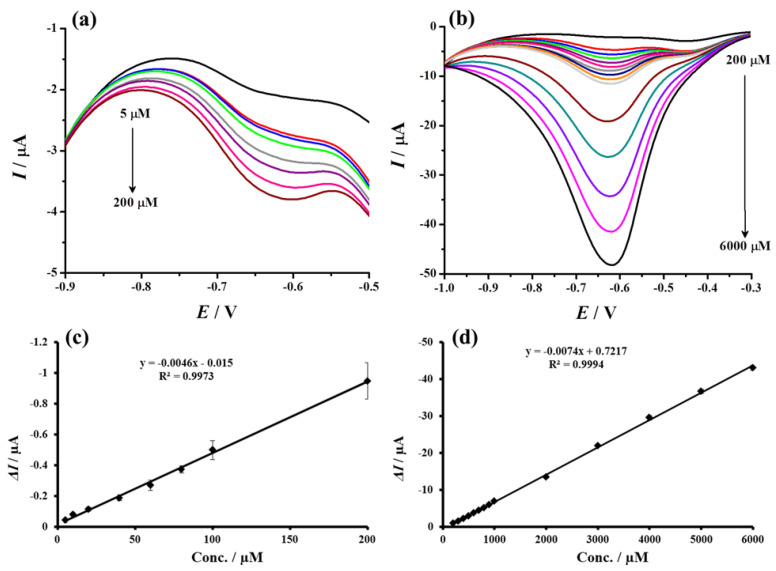
A hydrogen peroxide (HO) sensor was developed based on core-shell gold@titanium dioxide nanoparticles and multi-walled carbon nanotubes modified glassy carbon electrode (Au@TiO/MWCNTs/GCE). Core-shell Au@TiO material was prepared and characterized using a scanning electron microscopy and energy dispersive X-ray analysis (SEM/EDX), transmission electron microscopy (TEM), atomic force microscopy (AFM), Raman spectroscopy, X-ray diffraction (XRD) and Zeta-potential analyzer. The proposed sensor (Au@TiO/MWCNTs/GCE) was investigated electrochemically using cyclic voltammetry (CV) and electrochemical impedance spectroscopy (EIS). The analytical performance of the sensor was evaluated towards HO using differential pulse voltammetry (DPV). The proposed sensor exhibited excellent stability and sensitivity with a linear concentration range from 5 to 200 µM ( = 0.9973) and 200 to 6000 µM ( = 0.9994), and a limit of detection (LOD) of 1.4 µM achieved under physiological pH conditions. The practicality of the proposed sensor was further tested by measuring HO in human serum and saliva samples. The observed response and recovery results demonstrate its potential for real-world HO monitoring. Additionally, the proposed sensor and detection strategy can offer potential prospects in electrochemical sensors development, indicative oxidative stress monitoring, clinical diagnostics, general cancer biomarker measurements, paper bleaching, etc.
基于核壳金@二氧化钛纳米粒子和多壁碳纳米管修饰玻碳电极(Au@TiO/MWCNTs/GCE),开发了一种过氧化氢(HO)传感器。使用扫描电子显微镜和能量色散 X 射线分析(SEM/EDX)、透射电子显微镜(TEM)、原子力显微镜(AFM)、拉曼光谱、X 射线衍射(XRD)和 Zeta 电位分析仪对核壳 Au@TiO 材料进行了制备和表征。采用循环伏安法(CV)和电化学阻抗谱(EIS)对传感器(Au@TiO/MWCNTs/GCE)进行了电化学研究。使用差分脉冲伏安法(DPV)对传感器对 HO 的分析性能进行了评估。该传感器表现出优异的稳定性和灵敏度,线性浓度范围为 5 至 200 μM(=0.9973)和 200 至 6000 μM(=0.9994),在生理 pH 条件下检测限(LOD)为 1.4 μM。通过测量人血清和唾液样本中的 HO,进一步测试了所提出传感器的实用性。观察到的响应和恢复结果表明其在实际 HO 监测中的潜力。此外,所提出的传感器和检测策略在电化学传感器开发、指示氧化应激监测、临床诊断、一般癌症生物标志物测量、纸张漂白等方面具有潜在的前景。