Wahyuni Wulan Tri, Putra Budi Riza, Rahman Hemas Arif, Anindya Weni, Hardi Jaya, Rustami Erus, Ahmad Shahrul Nizam
Department of Chemistry, Faculty of Mathematics and Natural Sciences, IPB University, 16680Bogor,Indonesia.
Tropical Biopharma Research Center, Institute of Research and Community Empowerment, IPB University, 16680 Bogor,Indonesia.
ACS Omega. 2024 Jan 2;9(2):2896-2910. doi: 10.1021/acsomega.3c08349. eCollection 2024 Jan 16.
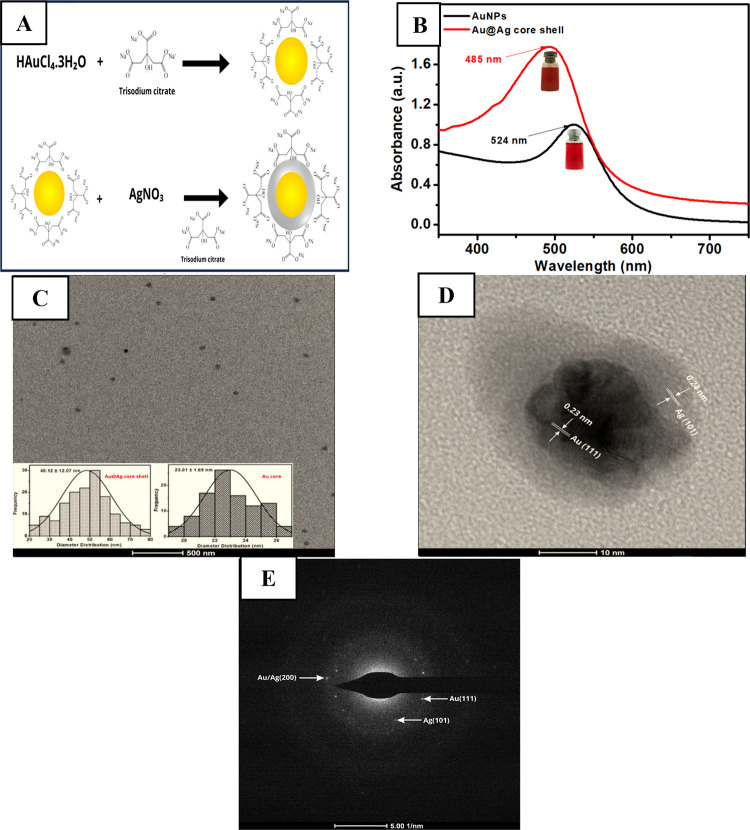
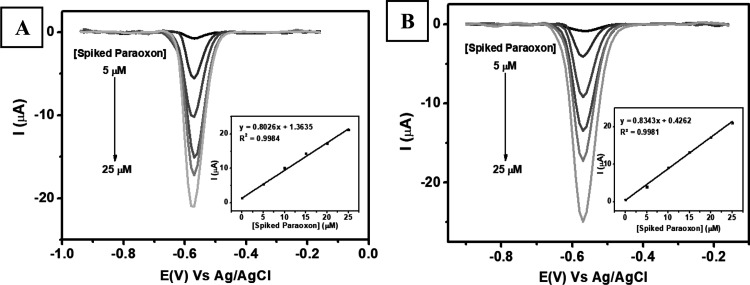
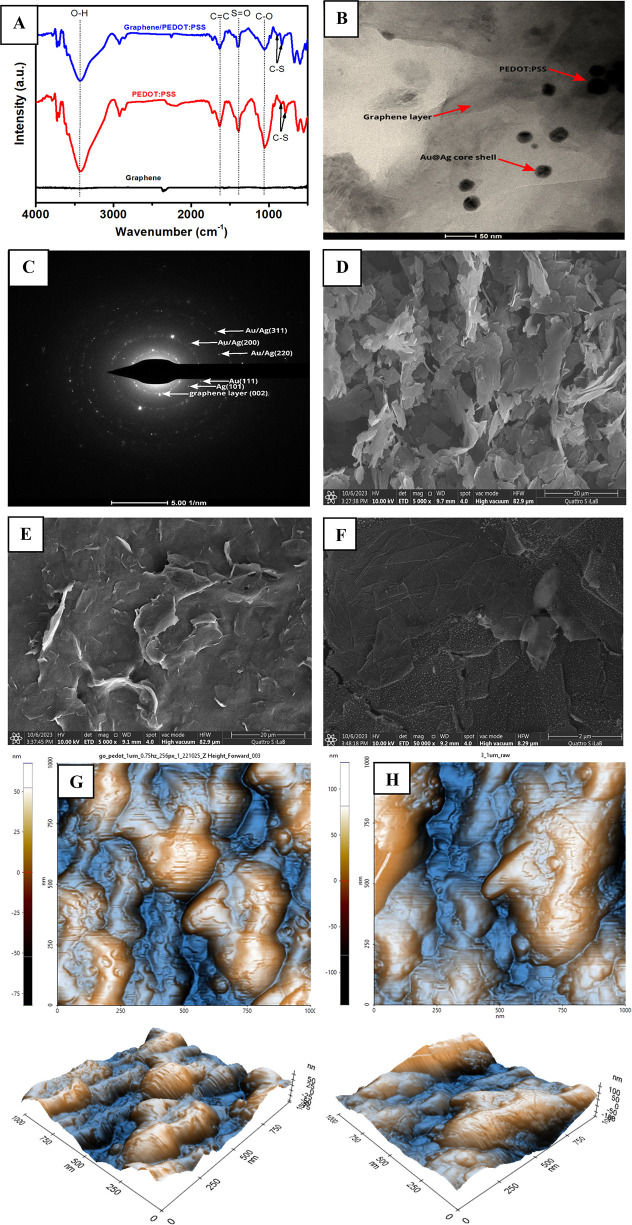
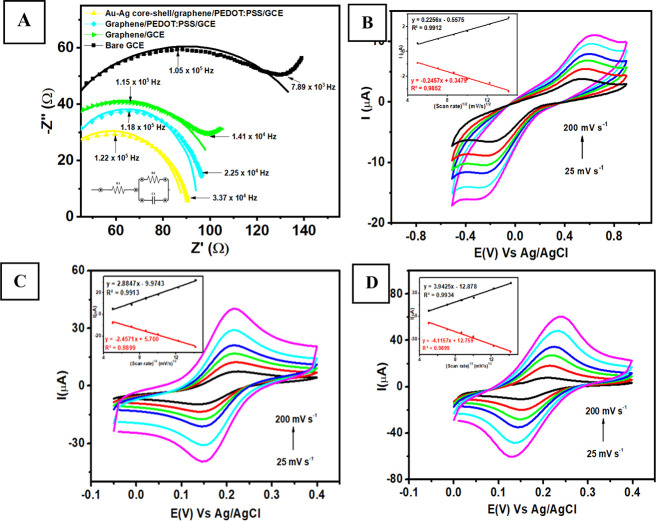
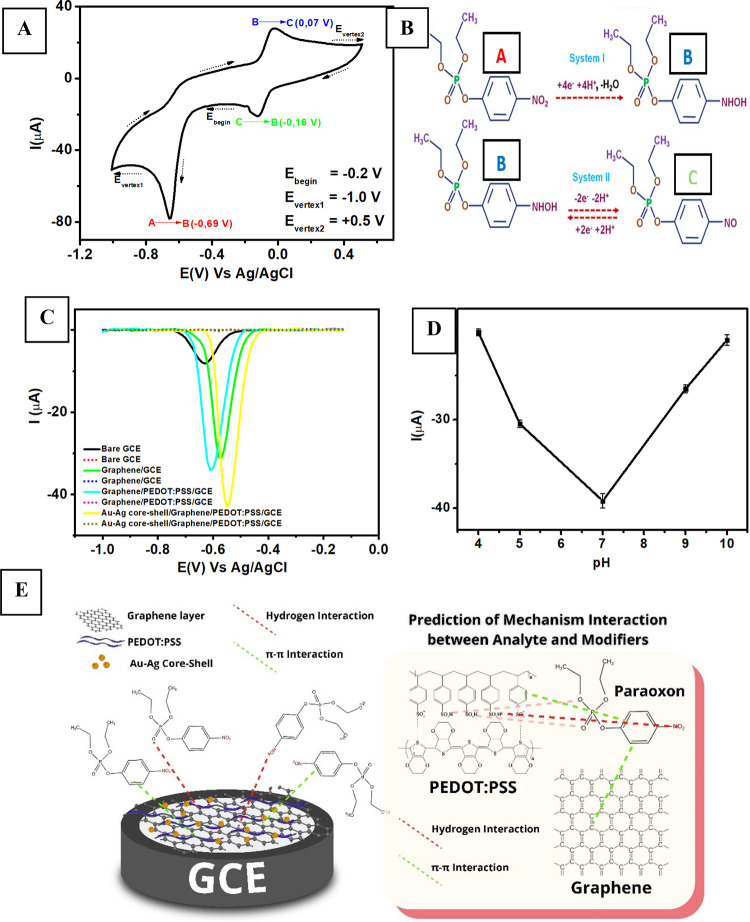
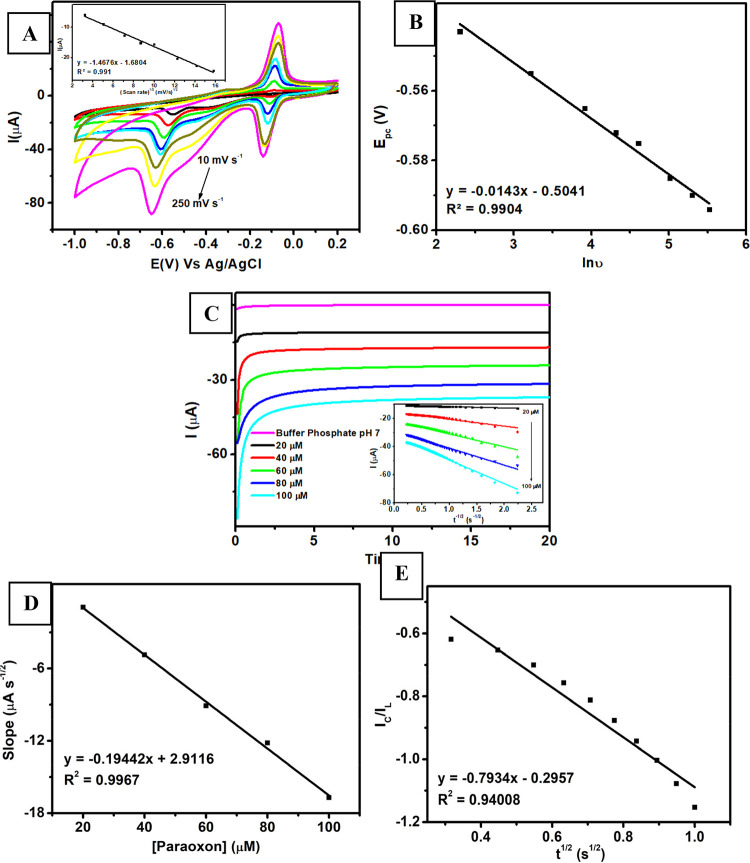
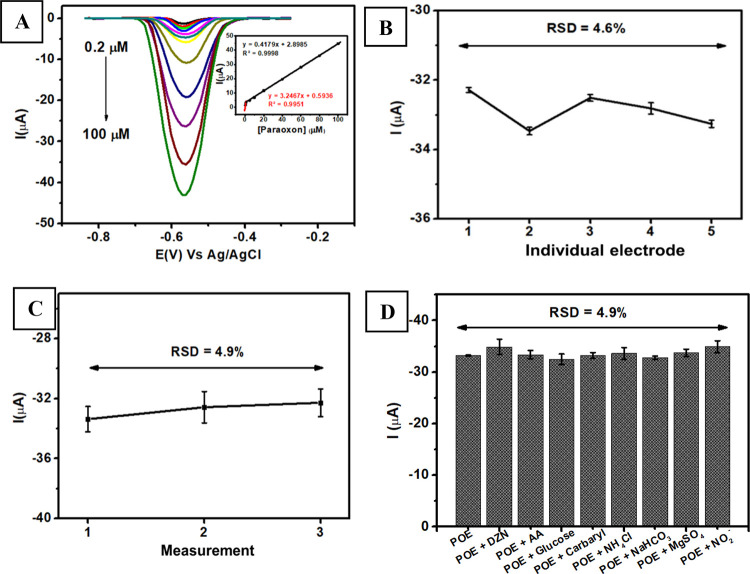
Herein, a nonenzymatic detection of paraoxon-ethyl was developed by modifying a glassy carbon electrode (GCE) with gold-silver core-shell (Au-Ag) nanoparticles combined with the composite of graphene with poly(3,4-ethylenedioxythiophene)/poly(styrenesulfonate) (PEDOT:PSS). These core-shell nanoparticles (Au-Ag) were synthesized using a seed-growth method and characterized using UV-vis spectroscopy and high-resolution transmission electron microscopy (HR-TEM) techniques. Meanwhile, the structural properties, surface morphology and topography, and electrochemical characterization of the composite of Au-Ag core-shell/graphene/PEDOT:PSS were analyzed using infrared spectroscopy, field emission scanning electron microscopy (FE-SEM), atomic force microscopy (AFM), and electrochemical impedance spectroscopy (EIS) techniques. Moreover, the proposed sensor for paraoxon-ethyl detection based on Au-Ag core-shell/graphene/PEDOT:PSS modified GCE demonstrates good electrochemical and electroanalytical performance when investigated with cyclic voltammetry (CV), differential pulse voltammetry (DPV), and chronoamperometry techniques. It was found that the synergistic effect between Au-Ag core-shell nanoparticles and the composite of graphene/PEDOT:PSS provides a higher conductivity and enhanced electrocatalytic activity for paraoxon-ethyl detection at an optimum pH of 7. At pH 7, the proposed sensor for paraoxon-ethyl detection shows a linear range of concentrations from 0.2 to 100 μM with a limit of detection of 10 nM and high sensitivity of 3.24 μA μM cm. In addition, the proposed sensor for paraoxon-ethyl confirmed good reproducibility, with the possibility of being further developed as a disposable electrode. This sensor also displayed good selectivity in the presence of several interfering species such as diazinon, carbaryl, ascorbic acid, glucose, nitrite, sodium bicarbonate, and magnesium sulfate. For practical applications, this proposed sensor was employed for the determination of paraoxon-ethyl in real samples (fruits and vegetables) and showed no significant difference from the standard spectrophotometric technique. In conclusion, this proposed sensor might have a potential to be developed as a platform of electrochemical sensors for pesticide detection.
在此,通过用金-银核壳(Au-Ag)纳米颗粒与石墨烯与聚(3,4-乙撑二氧噻吩)/聚(苯乙烯磺酸盐)(PEDOT:PSS)的复合材料修饰玻碳电极(GCE),开发了一种对乙基对氧磷的非酶检测方法。这些核壳纳米颗粒(Au-Ag)采用种子生长法合成,并使用紫外-可见光谱和高分辨率透射电子显微镜(HR-TEM)技术进行表征。同时,利用红外光谱、场发射扫描电子显微镜(FE-SEM)、原子力显微镜(AFM)和电化学阻抗谱(EIS)技术分析了Au-Ag核壳/石墨烯/PEDOT:PSS复合材料的结构性质、表面形态和形貌以及电化学特性。此外,基于Au-Ag核壳/石墨烯/PEDOT:PSS修饰GCE的用于检测乙基对氧磷的传感器在采用循环伏安法(CV)、差分脉冲伏安法(DPV)和计时电流法技术进行研究时,表现出良好的电化学和电分析性能。研究发现,Au-Ag核壳纳米颗粒与石墨烯/PEDOT:PSS复合材料之间的协同效应在最佳pH值为7时为乙基对氧磷检测提供了更高的电导率和增强的电催化活性。在pH值为7时,所提出的用于检测乙基对氧磷的传感器显示出浓度范围为0.2至100μM的线性范围,检测限为10 nM,灵敏度高达3.24μA μM cm。此外,所提出的用于检测乙基对氧磷的传感器具有良好的重现性,有可能进一步开发为一次性电极。该传感器在存在几种干扰物质(如二嗪农、西维因、抗坏血酸、葡萄糖、亚硝酸盐、碳酸氢钠和硫酸镁)的情况下也表现出良好的选择性。对于实际应用,该所提出的传感器用于测定实际样品(水果和蔬菜)中的乙基对氧磷,与标准分光光度法相比无显著差异。总之,该所提出的传感器可能有潜力开发成为用于农药检测的电化学传感器平台。