Experimental Neurology Unit and Milan Center for Neuroscience, School of Medicine and Surgery, University of Milano-Bicocca, 20900 Monza, Italy.
Int J Mol Sci. 2022 Oct 19;23(20):12545. doi: 10.3390/ijms232012545.
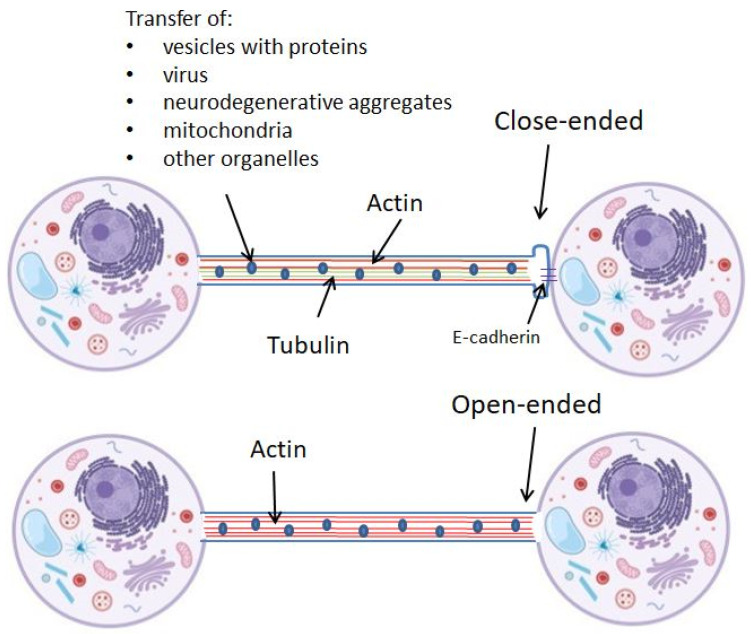
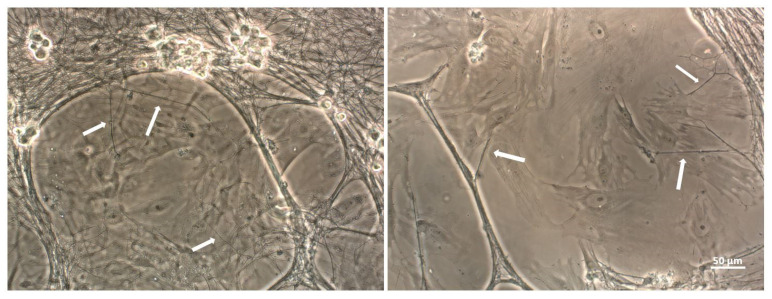
Cellular communication and the transfer of information from one cell to another is crucial for cell viability and homeostasis. During the last decade, tunneling nanotubes (TNTs) have attracted scientific attention, not only as a means of direct intercellular communication, but also as a possible system to transport biological cargo between distant cells. Peculiar TNT characteristics make them both able to increase cellular survival capacities, as well as a potential target of neurodegenerative disease progression. Despite TNT formation having been documented in a number of cell types, the exact mechanisms triggering their formation are still not completely known. In this review, we will summarize and highlight those studies focusing on TNT formation in the nervous system, as well as their role in neurodegenerative diseases. Moreover, we aim to stress some possible mechanisms and important proteins probably involved in TNT formation in the nervous system.
细胞间通讯以及信息从一个细胞传递到另一个细胞对于细胞的存活和内稳态至关重要。在过去的十年中,隧道纳米管(TNTs)引起了科学界的关注,不仅作为直接细胞间通讯的一种方式,而且还可能作为在远距离细胞之间运输生物有效载荷的系统。TNTs 的特殊特征使它们既能提高细胞的生存能力,又能成为神经退行性疾病进展的潜在靶点。尽管已经在许多细胞类型中记录了 TNT 的形成,但触发它们形成的确切机制仍不完全清楚。在这篇综述中,我们将总结和强调那些专注于神经系统中 TNT 形成的研究,以及它们在神经退行性疾病中的作用。此外,我们旨在强调一些可能涉及神经系统中 TNT 形成的机制和重要蛋白质。