School of Resources and Geosciences, China University of Mining and Technology, Xuzhou 221116, China.
Fundamental Research Laboratory for Mine Water Hazards Prevention and Controlling Technology, Xuzhou 221006, China.
Int J Environ Res Public Health. 2022 Oct 16;19(20):13359. doi: 10.3390/ijerph192013359.
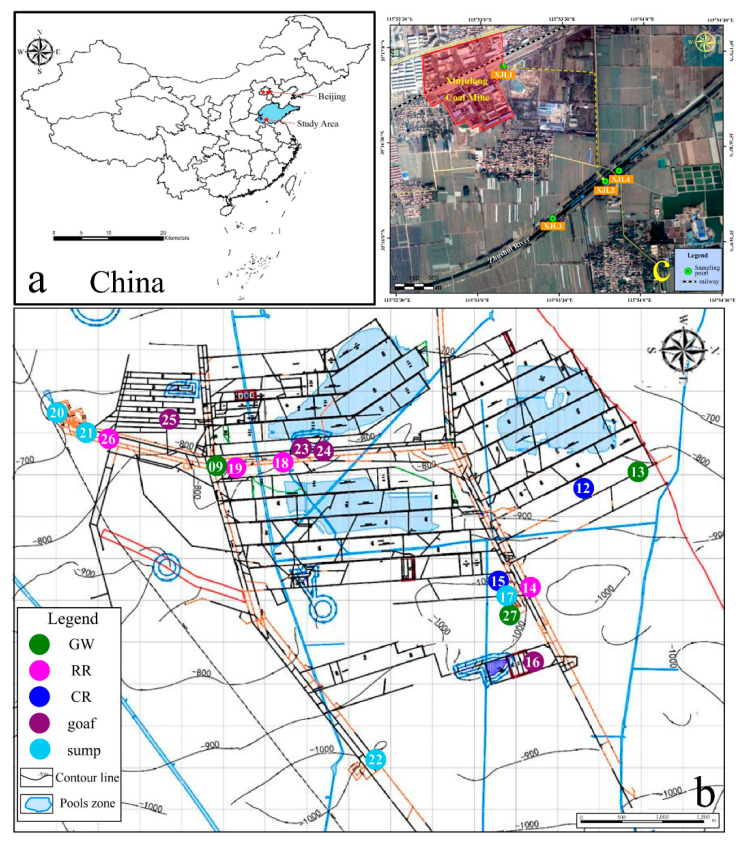
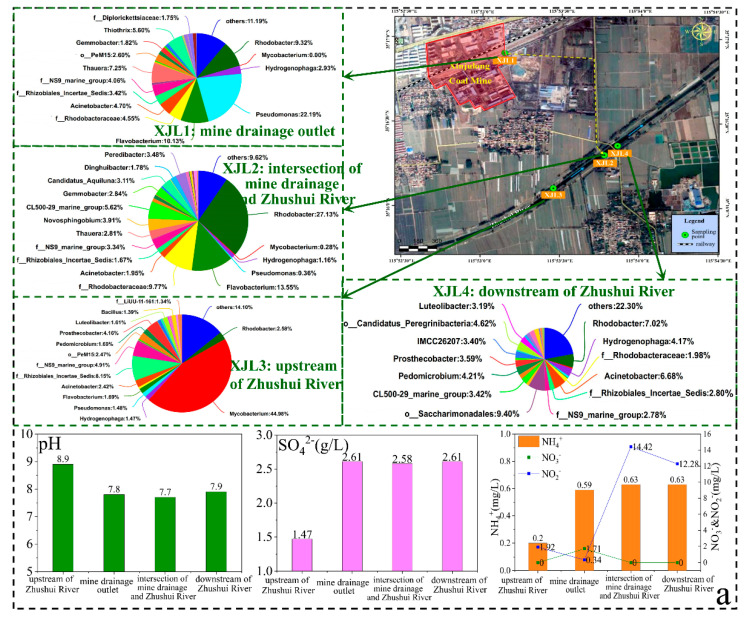
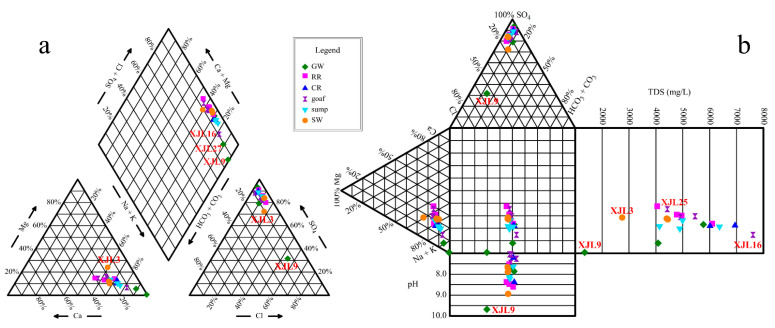
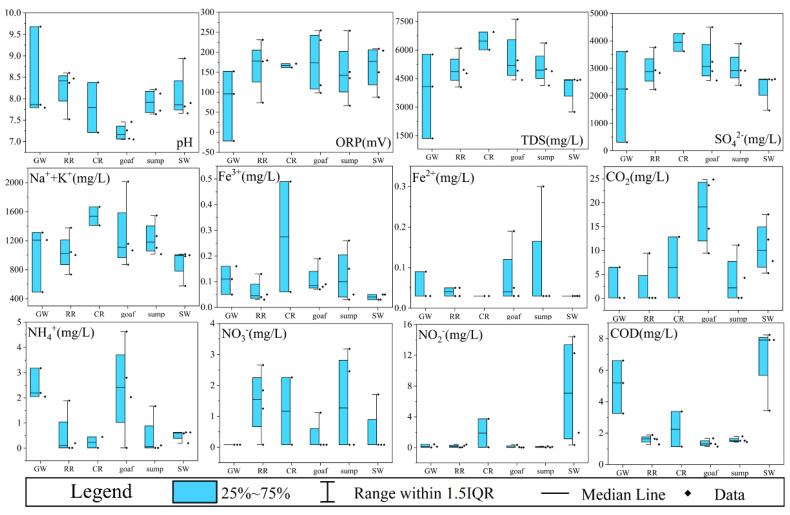
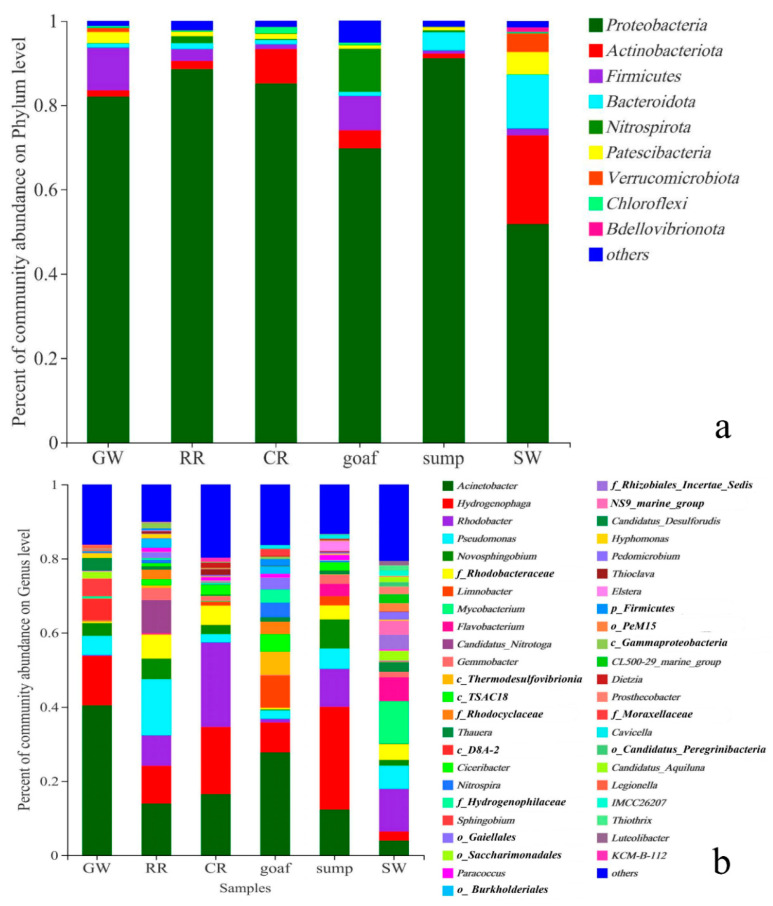
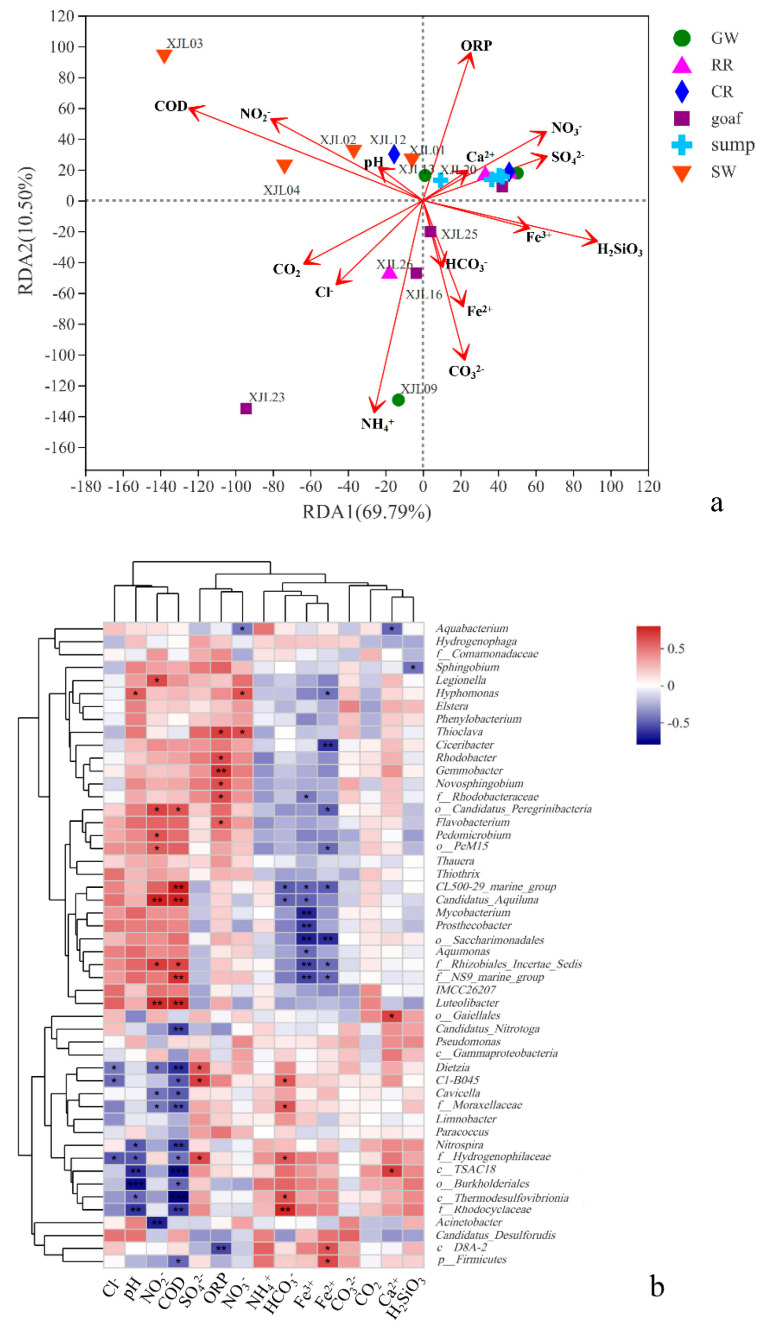
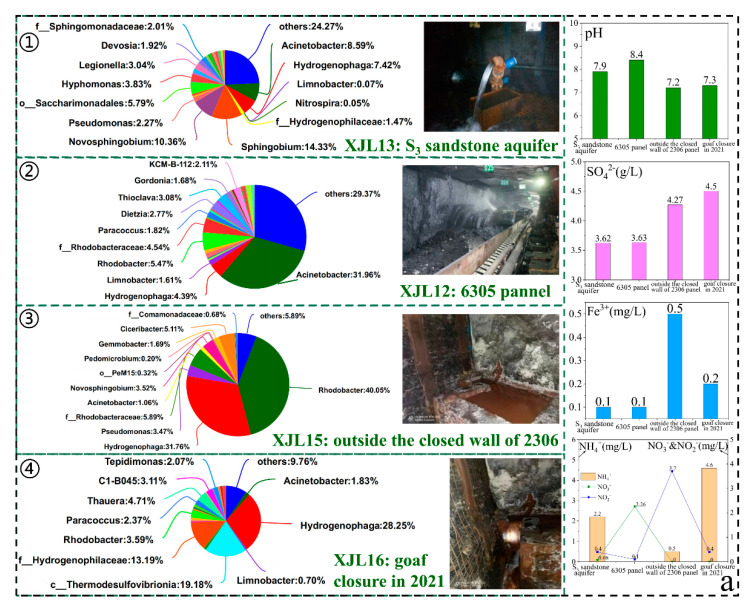
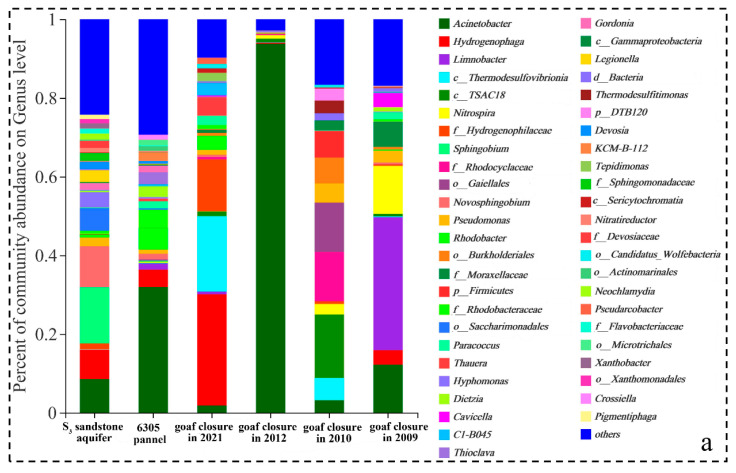
Coal mining can cause groundwater pollution, and microorganism may reflect/affect its hydrochemical characteristics, yet little is known about the microorganism's distribution characteristics and its influence on the formation and evolution of mine water quality in underground coal mines. Here, we investigated the hydrochemical characteristics and microbial communities of six typical zones in a typical North China coalfield. The results showed that hydrochemical compositions and microbial communities of the water samples displayed apparent zone-specific patterns. The microbial community diversity of the six zones followed the order of surface waters > coal roadways > water sumps ≈ rock roadways ≈ goafs > groundwater aquifers. The microbial communities corresponded to the redox sensitive indices' levels. Coal roadways and goafs were the critical zones of groundwater pollution prevention and control. During tunneling in the panel, pyrite was oxidized by sulfur-oxidizing bacteria leading to SO increase. With the closure of the panel and formation of the goaf, SO increased rapidly for a short period. However, with the time since goaf closure, sulfate-reducing bacteria (e.g., , , etc.) proportion increased significantly, leading to SO concentration's decrease by 42% over 12 years, indicating the long-term closed goafs had a certain self-purification ability. These findings would benefit mine water pollution prevention and control by district.
煤炭开采会导致地下水污染,微生物可能会反映/影响其水化学特征,但对于地下煤矿中微生物的分布特征及其对矿井水质形成和演化的影响知之甚少。在这里,我们调查了华北典型煤田 6 个典型区域的水化学特征和微生物群落。结果表明,水样的水化学组成和微生物群落表现出明显的区域特异性模式。六个区域的微生物群落多样性顺序为地表水>煤巷>水仓≈岩巷>采空区>地下水含水层。微生物群落与氧化还原敏感指标的水平相对应。煤巷和采空区是地下水污染防治的关键区域。在工作面掘进过程中,黄铁矿被硫氧化菌氧化,导致 SO 增加。随着工作面的封闭和采空区的形成,SO 在短时间内迅速增加。然而,随着采空区封闭时间的延长,硫酸盐还原菌(如 、 等)的比例显著增加,导致 SO 浓度在 12 年内下降了 42%,表明长期封闭的采空区具有一定的自净能力。这些发现将有助于分区进行矿井水污染防治。