Guan Xiaoling, Song Miao, Lu Jingwen, Yang Hong, Li Xiao, Liu Wenbo, Zhang Yu, Miao Weiguo, Li Zhigang, Lin Chunhua
Key Laboratory of Green Prevention and Control of Tropical Plant Diseases and Pests, Ministry of Education, College of Plant Protection, Hainan University, Haikou 570228, China.
Rubber Research Institute, Chinese Academy of Tropical Agricultural Science, Haikou 571101, China.
J Fungi (Basel). 2022 Sep 29;8(10):1032. doi: 10.3390/jof8101032.
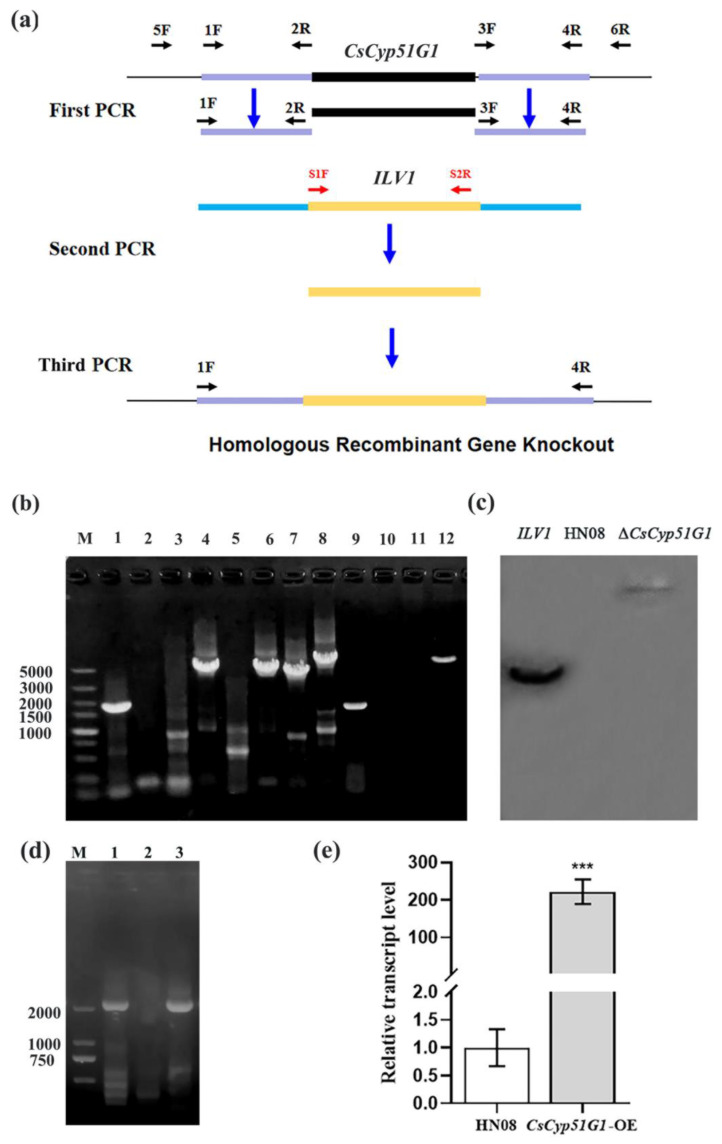
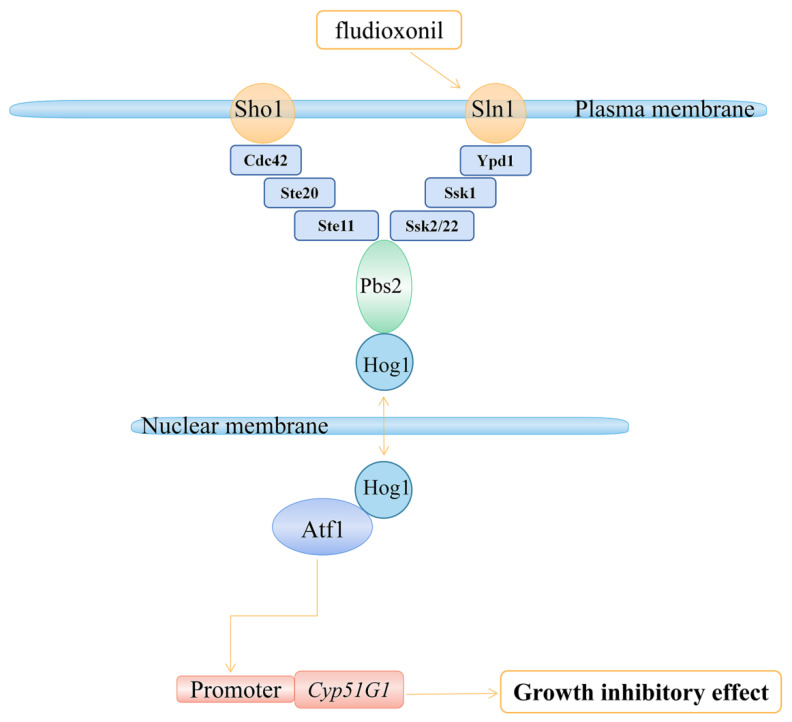
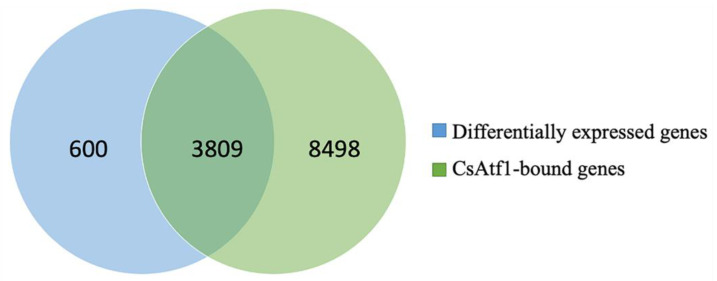
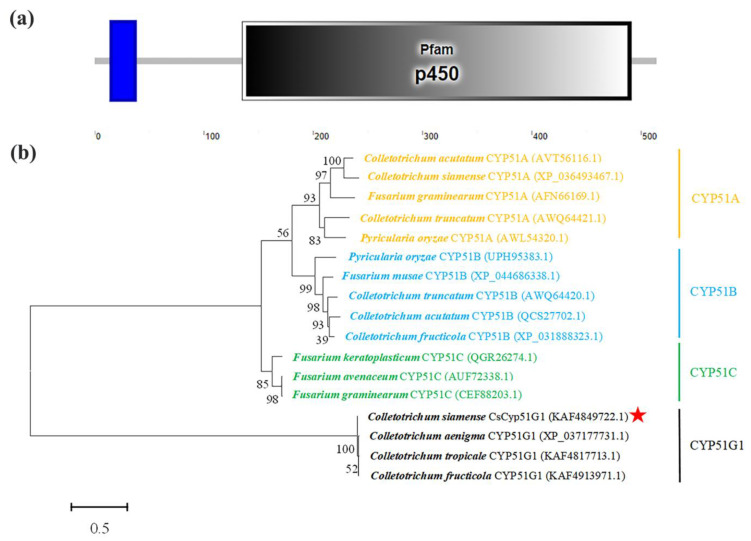
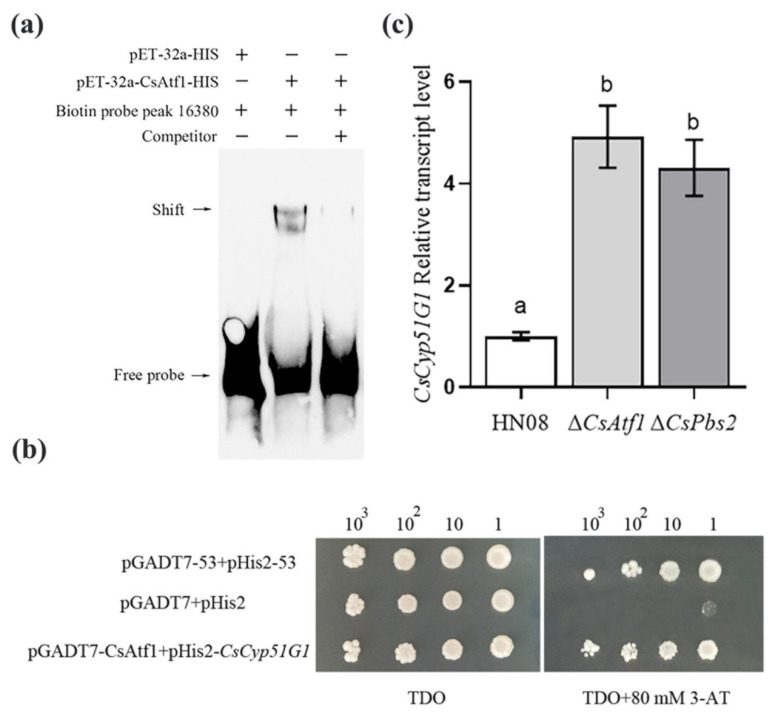
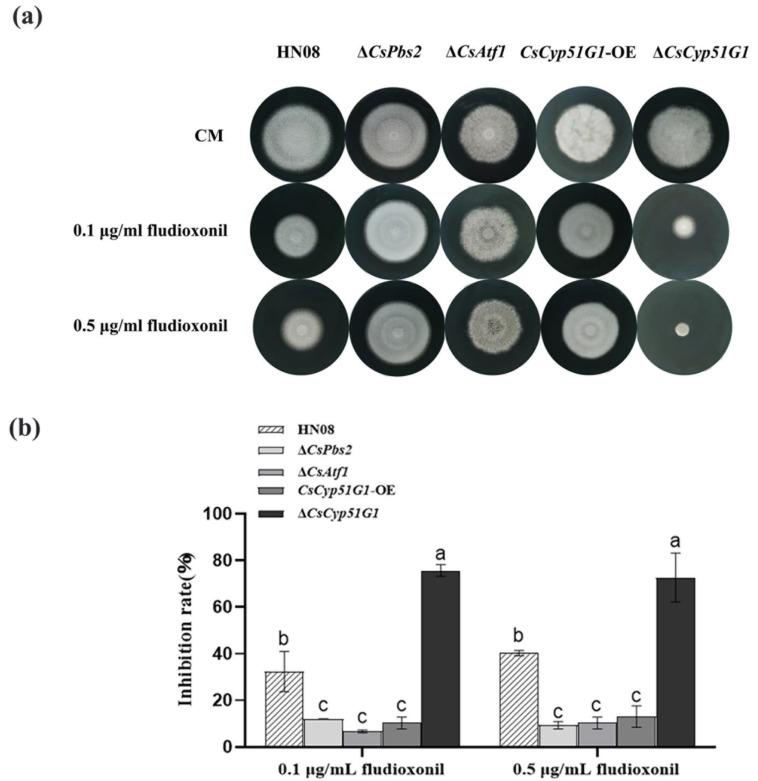
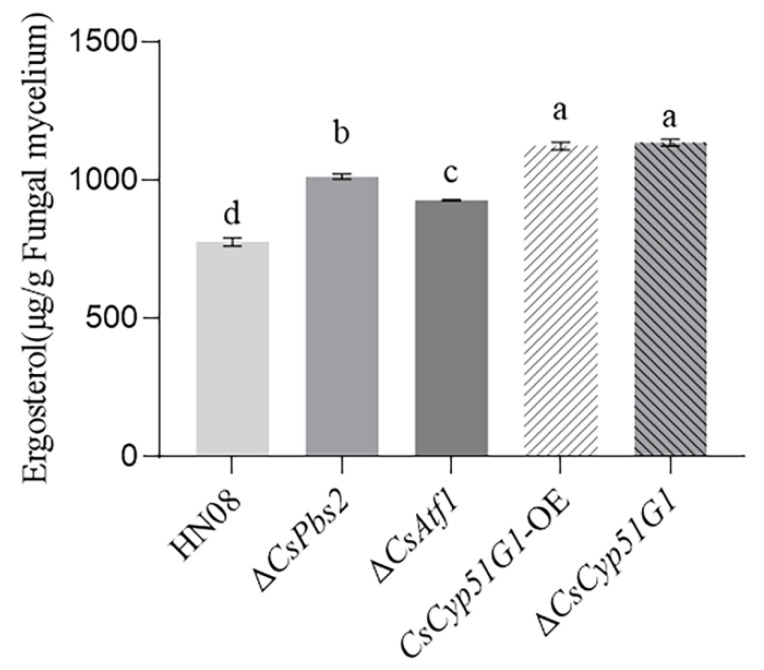
Previous studies have shown that the high-osmolarity glycerol mitogen-activated protein kinase (HOG MAPK) signaling pathway and its downstream transcription factor CsAtf1 are involved in the regulation of fludioxonil sensitivity in . However, the downstream target genes of CsAtf1 related to the fludioxonil stress response remain unclear. Here, we performed chromatin immunoprecipitation sequencing (ChIP-Seq) and high-throughput RNA-sequencing (RNA-Seq) to identify genome-wide potential CsAtf1 target genes. A total of 3809 significantly differentially expressed genes were predicted to be directly regulated by CsAtf1, including 24 cytochrome oxidase-related genes. Among them, a cytochrome P450-encoding gene, designated , was confirmed to be a target gene, and its transcriptional expression was negatively regulated by CsAtf1, as determined using an electrophoretic mobility shift assay (EMSA), a yeast one-hybrid (Y1H) assay, and quantitative real-time PCR (qRT-PCR). Moreover, the overexpression mutant of exhibited increased fludioxonil tolerance, and the deletion mutant exhibited decreased fludioxonil resistance, which revealed that is involved in fludioxonil sensitivity regulation in . However, the cellular ergosterol content of the mutants was not consistent with the phenotype of fludioxonil sensitivity, which indicated that regulates fludioxonil sensitivity by affecting factors other than the ergosterol level in . In conclusion, our data indicate that the transcription factor CsAtf1 negatively regulates the cytochrome P450 gene to increase fludioxonil sensitivity in .
先前的研究表明,高渗甘油促分裂原活化蛋白激酶(HOG MAPK)信号通路及其下游转录因子CsAtf1参与了[具体对象]中咯菌腈敏感性的调控。然而,与咯菌腈应激反应相关的CsAtf1的下游靶基因仍不清楚。在此,我们进行了染色质免疫沉淀测序(ChIP-Seq)和高通量RNA测序(RNA-Seq),以鉴定全基因组范围内潜在的CsAtf1靶基因。共有3809个显著差异表达基因被预测受CsAtf1直接调控,其中包括24个细胞色素氧化酶相关基因。其中,一个编码细胞色素P450的基因,命名为[具体名称],经电泳迁移率变动分析(EMSA)、酵母单杂交(Y1H)分析和定量实时PCR(qRT-PCR)确定,被证实为靶基因,其转录表达受CsAtf1负调控。此外,[具体基因]的过表达突变体表现出对咯菌腈的耐受性增加,而[具体基因]的缺失突变体表现出对咯菌腈的抗性降低,这表明[具体基因]参与了[具体对象]中咯菌腈敏感性的调控。然而,突变体的细胞麦角固醇含量与咯菌腈敏感性表型不一致,这表明[具体基因]通过影响[具体对象]中麦角固醇水平以外的因素来调节咯菌腈敏感性。总之,我们的数据表明转录因子CsAtf1负调控细胞色素P450基因[具体基因],以增加[具体对象]中咯菌腈的敏感性。