Mendes Michele P R, Paiva Maria José N, Costa-Amaral Isabele C, Carvalho Leandro V B, Figueiredo Victor O, Gonçalves Eline S, Larentis Ariane L, André Leiliane C
Department of Clinical and Toxicological Analysis, Faculty of Pharmacy, Federal University of Minas Gerais (UFMG), Belo Horizonte 31270-901, MG, Brazil.
Center for the Study of Occupational Health and Human Ecology (CESTEH), Sergio Arouca National School of Public Health (ENSP), Oswaldo Cruz Foundation (Fiocruz), Rua Leopoldo Bulhões 1480, Manguinhos, Rio de Janeiro 21041-210, RJ, Brazil.
Metabolites. 2022 Oct 16;12(10):978. doi: 10.3390/metabo12100978.
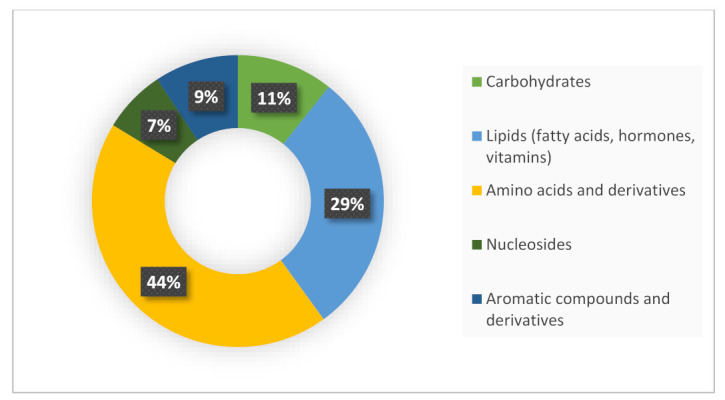
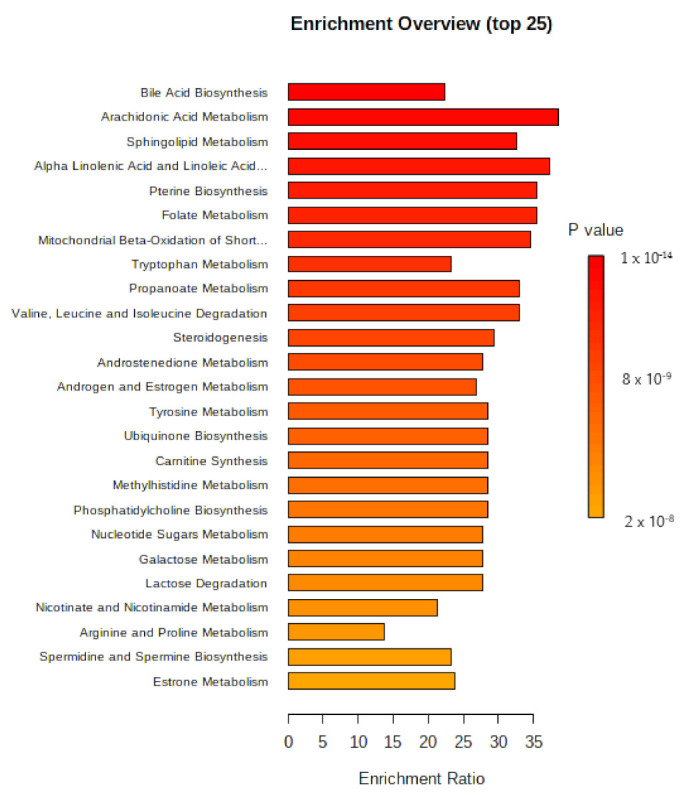
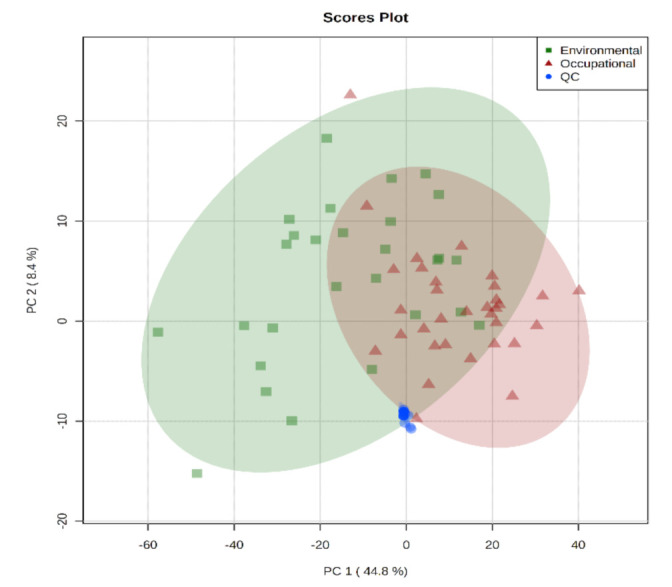
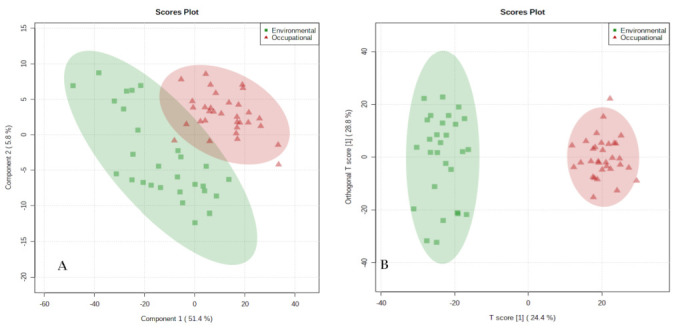
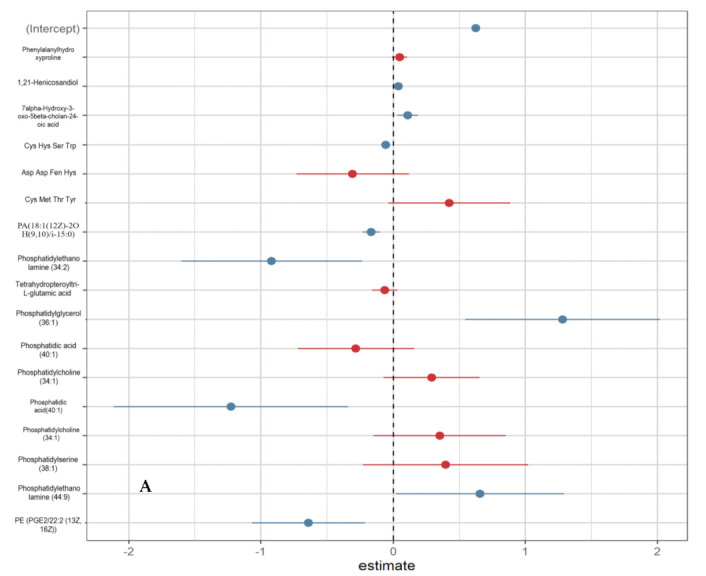
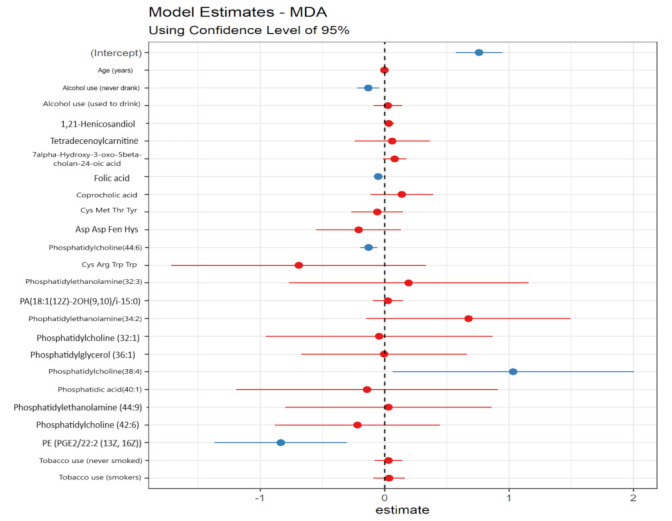
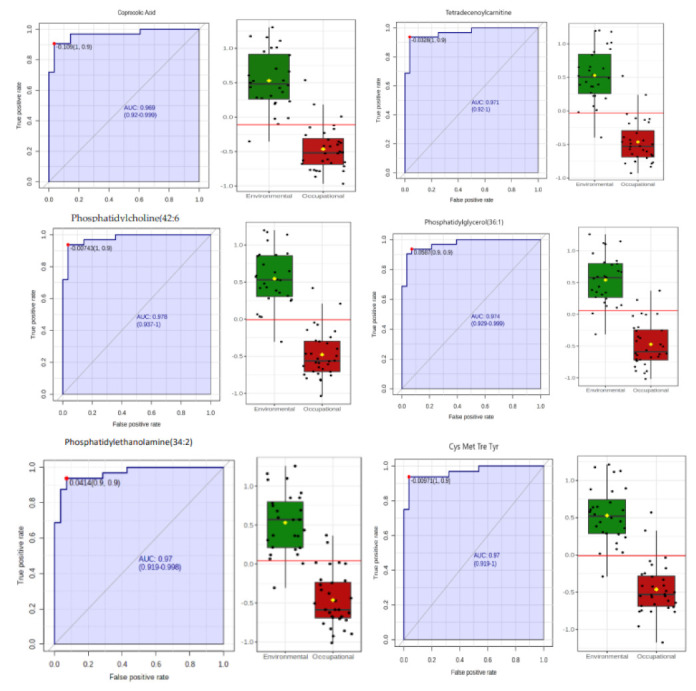
Benzene is a human carcinogen whose exposure to concentrations below 1 ppm (3.19 mg·m) is associated with myelotoxic effects. The determination of biomarkers such as muconic acid (AttM) and -phenylmercapturic acid (SPMA) show exposure without reflecting the toxic effects of benzene. For this reason, in this study, the urinary metabolome of individuals exposed to low concentrations of benzene was investigated, with the aim of understanding the biological response to exposure to this xenobiotic and identifying metabolites correlated with the toxic effects induced by it. Ultra-efficient liquid chromatography coupled to a quadrupole-time-of-flight mass spectrometer (UHPLC-ESI-Q-ToF-MS) was used to identify metabolites in the urine of environmentally ( = 28) and occupationally exposed ( = 32) to benzene (mean of 22.1 μg·m and 31.8 μg·m, respectively). Non-targeted metabolomics analysis by PLS-DA revealed nine urinary metabolites discriminating between groups and statistically correlated with oxidative damage (MDA, thiol) and genetic material (chromosomal aberrations) induced by the hydrocarbon. The analysis of metabolic pathways revealed important alterations in lipid metabolism. These results point to the involvement of alterations in lipid metabolism in the mechanisms of cytotoxic and genotoxic action of benzene. Furthermore, this study proves the potential of metabolomics to provide relevant information to understand the biological response to exposure to xenobiotics and identify early effect biomarkers.
苯是一种人类致癌物,接触浓度低于1 ppm(3.19毫克·立方米)会产生骨髓毒性作用。对诸如粘康酸(AttM)和苯巯基尿酸(SPMA)等生物标志物的测定显示有接触情况,但未反映出苯的毒性作用。因此,在本研究中,对接触低浓度苯的个体的尿液代谢组进行了调查,目的是了解对这种外源性物质接触的生物学反应,并确定与它所诱导的毒性作用相关的代谢物。使用超高效液相色谱与四极杆飞行时间质谱仪联用(UHPLC-ESI-Q-ToF-MS)来鉴定环境接触苯(n = 28)和职业接触苯(n = 32)个体尿液中的代谢物(平均浓度分别为22.1微克·立方米和31.8微克·立方米)。通过PLS-DA进行的非靶向代谢组学分析揭示了九种尿液代谢物可区分不同组,并且与该碳氢化合物诱导的氧化损伤(丙二醛、硫醇)和遗传物质(染色体畸变)具有统计学相关性。代谢途径分析揭示了脂质代谢的重要改变。这些结果表明脂质代谢改变参与了苯的细胞毒性和遗传毒性作用机制。此外,本研究证明了代谢组学在提供相关信息以了解对外源性物质接触的生物学反应以及鉴定早期效应生物标志物方面的潜力。