Eich Charlotte, Biggs Tristan E G, van de Poll Willem H, van Manen Mathijs, Tian Hung-An, Jung Jinyoung, Lee Youngju, Middag Rob, Brussaard Corina P D
Department of Marine Microbiology and Biogeochemistry, NIOZ Royal Netherlands Institute for Sea Research, 1797 SZ 't Horntje, The Netherlands.
Institute for Biodiversity and Ecosystem Dynamics (IBED), University of Amsterdam, 1098 XH Amsterdam, The Netherlands.
Microorganisms. 2022 Oct 5;10(10):1967. doi: 10.3390/microorganisms10101967.
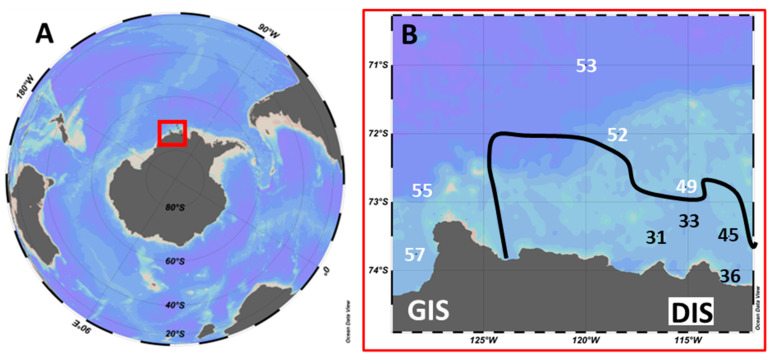
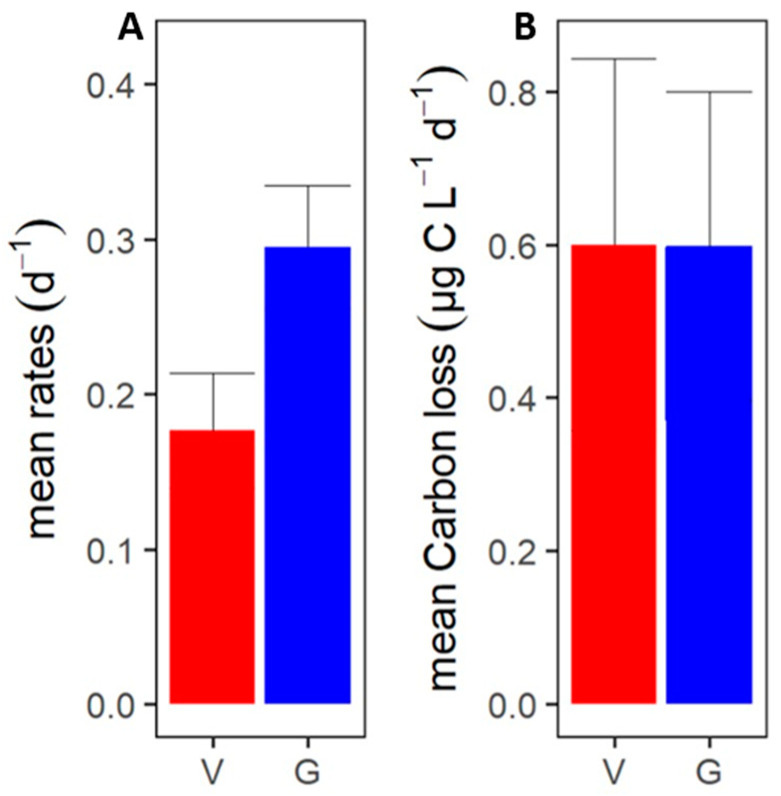
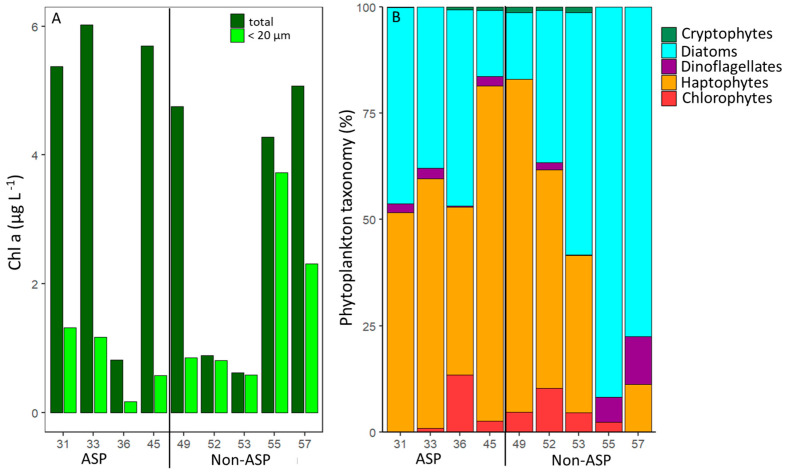
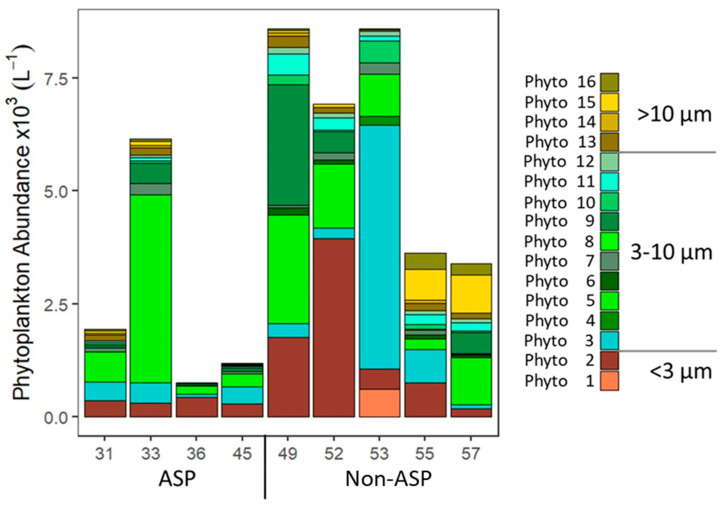
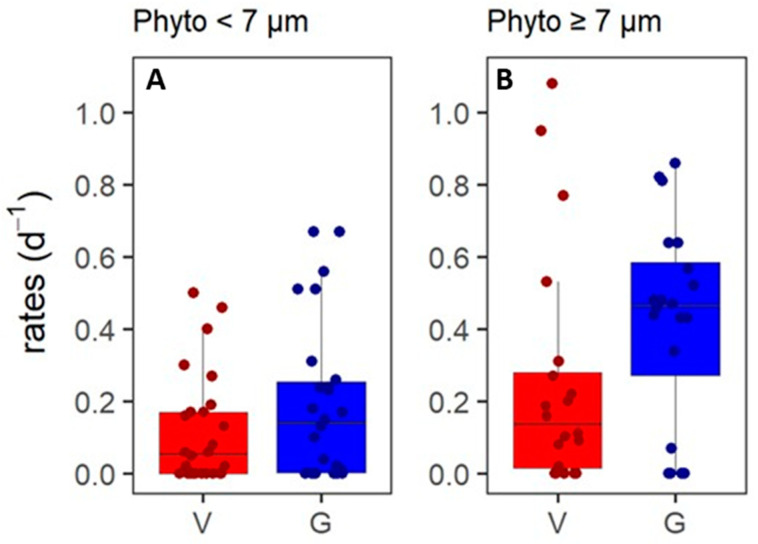
Whether phytoplankton mortality is caused by grazing or viral lysis has important implications for phytoplankton dynamics and biogeochemical cycling. The ecological relevance of viral lysis for Antarctic phytoplankton is still under-studied. The Amundsen Sea is highly productive in spring and summer, especially in the Amundsen Sea Polynya (ASP), and very sensitive to global warming-induced ice-melt. This study reports on the importance of the viral lysis, compared to grazing, of pico- and nanophytoplankton, using the modified dilution method (based on apparent growth rates) in combination with flow cytometry and size fractionation. Considerable viral lysis was shown for all phytoplankton populations, independent of sampling location and cell size. In contrast, the average grazing rate was 116% higher for the larger nanophytoplankton, and grazing was also higher in the ASP (0.45 d vs. 0.30 d outside). Despite average specific viral lysis rates being lower than grazing rates (0.17 d vs. 0.29 d), the average amount of phytoplankton carbon lost was similar (0.6 µg C L d each). The viral lysis of the larger-sized phytoplankton populations (including diatoms) and the high lysis rates of the abundant contributed substantially to the carbon lost. Our results demonstrate that viral lysis is a principal loss factor to consider for Southern Ocean phytoplankton communities and ecosystem production.
浮游植物的死亡是由捕食还是病毒裂解引起的,这对浮游植物动态和生物地球化学循环具有重要影响。病毒裂解对南极浮游植物的生态相关性仍研究不足。阿蒙森海在春季和夏季生产力很高,特别是在阿蒙森海多边形区(ASP),并且对全球变暖引起的冰融化非常敏感。本研究报告了使用改良稀释法(基于表观生长率)结合流式细胞术和大小分级,与捕食相比,病毒裂解对微微型和微型浮游植物的重要性。所有浮游植物种群都显示出相当程度的病毒裂解,与采样位置和细胞大小无关。相比之下,较大的微型浮游植物的平均捕食率高116%,并且在ASP中的捕食率也更高(0.45 d对外部的0.30 d)。尽管平均比病毒裂解率低于捕食率(0.17 d对0.29 d),但浮游植物碳损失的平均量相似(各为0.6 µg C L d)。较大尺寸浮游植物种群(包括硅藻)的病毒裂解以及丰富种群的高裂解率对碳损失有很大贡献。我们的结果表明,病毒裂解是南大洋浮游植物群落和生态系统生产需要考虑的主要损失因素。