• 文献检索
  • 文档翻译
  • 深度研究
  • 学术资讯
  • Suppr Zotero 插件Zotero 插件
  • 邀请有礼
  • 套餐&价格
  • 历史记录
应用&插件
Suppr Zotero 插件Zotero 插件浏览器插件Mac 客户端Windows 客户端微信小程序
定价
高级版会员购买积分包购买API积分包
服务
文献检索文档翻译深度研究API 文档MCP 服务
关于我们
关于 Suppr公司介绍联系我们用户协议隐私条款
关注我们

Suppr 超能文献

核心技术专利:CN118964589B侵权必究
粤ICP备2023148730 号-1Suppr @ 2026

文献检索

告别复杂PubMed语法,用中文像聊天一样搜索,搜遍4000万医学文献。AI智能推荐,让科研检索更轻松。

立即免费搜索

文件翻译

保留排版,准确专业,支持PDF/Word/PPT等文件格式,支持 12+语言互译。

免费翻译文档

深度研究

AI帮你快速写综述,25分钟生成高质量综述,智能提取关键信息,辅助科研写作。

立即免费体验

面向使用Hadoop-Spark和数据增强技术为物联网网络开发一个强大的入侵检测模型。

Towards Developing a Robust Intrusion Detection Model Using Hadoop-Spark and Data Augmentation for IoT Networks.

作者信息

Manzano Sanchez Ricardo Alejandro, Zaman Marzia, Goel Nishith, Naik Kshirasagar, Joshi Rohit

机构信息

Cistech Limited, 201-203 Colonnade Rd, Nepean, ON K2E 7K3, Canada.

Cistel Technology Inc., 30 Concourse Gate, Nepean, ON K2E 7V7, Canada.

出版信息

Sensors (Basel). 2022 Oct 12;22(20):7726. doi: 10.3390/s22207726.

DOI:10.3390/s22207726
PMID:36298077
原文链接:https://pmc.ncbi.nlm.nih.gov/articles/PMC9608938/
Abstract

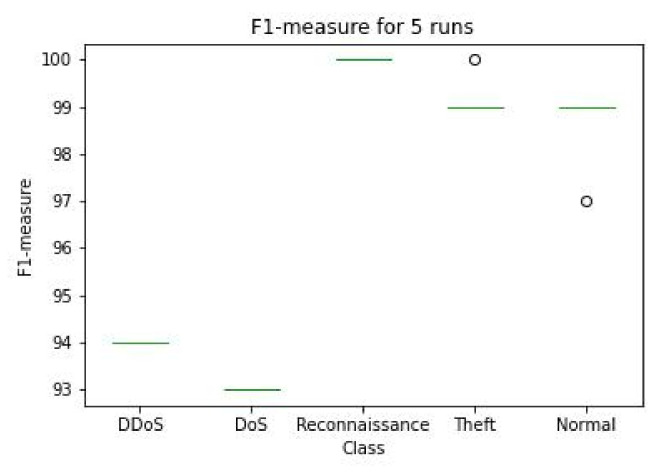
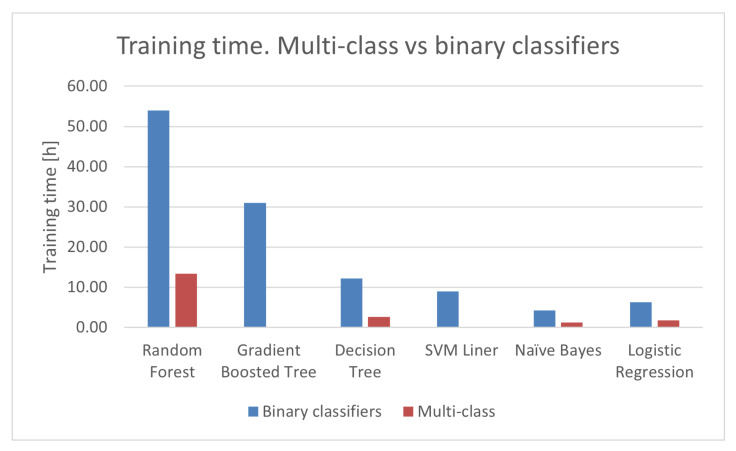
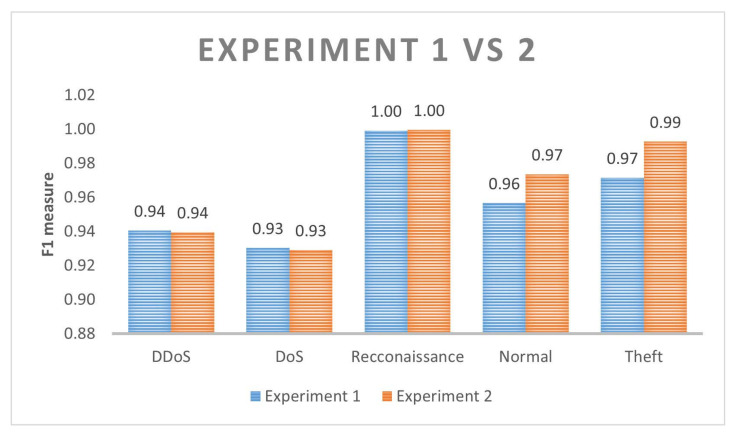
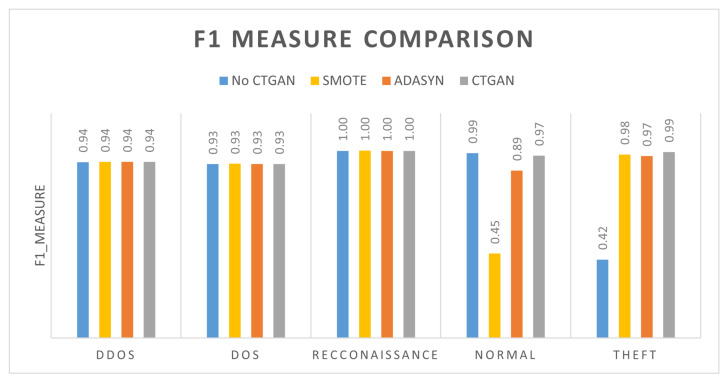
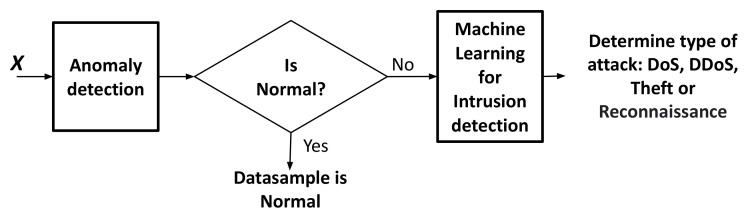
In recent years, anomaly detection and machine learning for intrusion detection systems have been used to detect anomalies on Internet of Things networks. These systems rely on machine and deep learning to improve the detection accuracy. However, the robustness of the model depends on the number of datasamples available, quality of the data, and the distribution of the data classes. In the present paper, we focused specifically on the amount of data and class imbalanced since both parameters are key in IoT due to the fact that network traffic is increasing exponentially. For this reason, we propose a framework that uses a big data methodology with Hadoop-Spark to train and test multi-class and binary classification with one-vs-rest strategy for intrusion detection using the entire BoT IoT dataset. Thus, we evaluate all the algorithms available in Hadoop-Spark in terms of accuracy and processing time. In addition, since the BoT IoT dataset used is highly imbalanced, we also improve the accuracy for detecting minority classes by generating more datasamples using a Conditional Tabular Generative Adversarial Network (CTGAN). In general, our proposed model outperforms other published models including our previous model. Using our proposed methodology, the F1-score of one of the minority class, i.e., Theft attack was improved from 42% to 99%.

摘要

近年来,入侵检测系统中的异常检测和机器学习已被用于检测物联网网络上的异常情况。这些系统依靠机器学习和深度学习来提高检测精度。然而,模型的稳健性取决于可用数据样本的数量、数据质量以及数据类别的分布。在本文中,我们特别关注数据量和类不平衡问题,因为由于网络流量呈指数级增长,这两个参数在物联网中至关重要。因此,我们提出了一个框架,该框架使用Hadoop-Spark的大数据方法,采用一对多策略对整个物联网僵尸网络数据集进行多类和二分类的训练和测试,以用于入侵检测。因此,我们从准确性和处理时间方面评估了Hadoop-Spark中所有可用的算法。此外,由于所使用的物联网僵尸网络数据集高度不平衡,我们还通过使用条件表格生成对抗网络(CTGAN)生成更多数据样本,提高了检测少数类别的准确性。总体而言,我们提出的模型优于其他已发表的模型,包括我们之前的模型。使用我们提出的方法,少数类之一即盗窃攻击的F1分数从42%提高到了99%。
https://cdn.ncbi.nlm.nih.gov/pmc/blobs/f3d0/9608938/f05567682294/sensors-22-07726-g008.jpg
https://cdn.ncbi.nlm.nih.gov/pmc/blobs/f3d0/9608938/188a572302d2/sensors-22-07726-g001.jpg
https://cdn.ncbi.nlm.nih.gov/pmc/blobs/f3d0/9608938/f2021de1e13d/sensors-22-07726-g002.jpg
https://cdn.ncbi.nlm.nih.gov/pmc/blobs/f3d0/9608938/cf61ec4e0a2a/sensors-22-07726-g003.jpg
https://cdn.ncbi.nlm.nih.gov/pmc/blobs/f3d0/9608938/525e1dc7fec8/sensors-22-07726-g004.jpg
https://cdn.ncbi.nlm.nih.gov/pmc/blobs/f3d0/9608938/758a4947580c/sensors-22-07726-g005.jpg
https://cdn.ncbi.nlm.nih.gov/pmc/blobs/f3d0/9608938/f7ba694a171f/sensors-22-07726-g006.jpg
https://cdn.ncbi.nlm.nih.gov/pmc/blobs/f3d0/9608938/432b82df0b81/sensors-22-07726-g007.jpg
https://cdn.ncbi.nlm.nih.gov/pmc/blobs/f3d0/9608938/f05567682294/sensors-22-07726-g008.jpg
https://cdn.ncbi.nlm.nih.gov/pmc/blobs/f3d0/9608938/188a572302d2/sensors-22-07726-g001.jpg
https://cdn.ncbi.nlm.nih.gov/pmc/blobs/f3d0/9608938/f2021de1e13d/sensors-22-07726-g002.jpg
https://cdn.ncbi.nlm.nih.gov/pmc/blobs/f3d0/9608938/cf61ec4e0a2a/sensors-22-07726-g003.jpg
https://cdn.ncbi.nlm.nih.gov/pmc/blobs/f3d0/9608938/525e1dc7fec8/sensors-22-07726-g004.jpg
https://cdn.ncbi.nlm.nih.gov/pmc/blobs/f3d0/9608938/758a4947580c/sensors-22-07726-g005.jpg
https://cdn.ncbi.nlm.nih.gov/pmc/blobs/f3d0/9608938/f7ba694a171f/sensors-22-07726-g006.jpg
https://cdn.ncbi.nlm.nih.gov/pmc/blobs/f3d0/9608938/432b82df0b81/sensors-22-07726-g007.jpg
https://cdn.ncbi.nlm.nih.gov/pmc/blobs/f3d0/9608938/f05567682294/sensors-22-07726-g008.jpg

相似文献

1
Towards Developing a Robust Intrusion Detection Model Using Hadoop-Spark and Data Augmentation for IoT Networks.面向使用Hadoop-Spark和数据增强技术为物联网网络开发一个强大的入侵检测模型。
Sensors (Basel). 2022 Oct 12;22(20):7726. doi: 10.3390/s22207726.
2
Conditional Tabular Generative Adversarial Based Intrusion Detection System for Detecting Ddos and Dos Attacks on the Internet of Things Networks.基于条件表格生成对抗的物联网网络 DDoS 和 DOS 攻击入侵检测系统。
Sensors (Basel). 2023 Jun 16;23(12):5644. doi: 10.3390/s23125644.
3
Towards an Effective Intrusion Detection Model Using Focal Loss Variational Autoencoder for Internet of Things (IoT).基于焦点损失变分自动编码器的物联网(IoT)有效入侵检测模型。
Sensors (Basel). 2022 Aug 4;22(15):5822. doi: 10.3390/s22155822.
4
An Experimental Analysis of Attack Classification Using Machine Learning in IoT Networks.基于机器学习的物联网网络攻击分类的实验分析。
Sensors (Basel). 2021 Jan 10;21(2):446. doi: 10.3390/s21020446.
5
An Aggregated Mutual Information Based Feature Selection with Machine Learning Methods for Enhancing IoT Botnet Attack Detection.基于聚合互信息的特征选择与机器学习方法在增强物联网僵尸网络攻击检测中的应用。
Sensors (Basel). 2021 Dec 28;22(1):185. doi: 10.3390/s22010185.
6
Towards Deep-Learning-Driven Intrusion Detection for the Internet of Things.迈向基于深度学习驱动的物联网入侵检测
Sensors (Basel). 2019 Apr 27;19(9):1977. doi: 10.3390/s19091977.
7
A Novel Deep Supervised Learning-Based Approach for Intrusion Detection in IoT Systems.一种基于深度监督学习的物联网系统入侵检测新方法。
Sensors (Basel). 2022 Jun 13;22(12):4459. doi: 10.3390/s22124459.
8
Attentive transformer deep learning algorithm for intrusion detection on IoT systems using automatic Xplainable feature selection.基于自动可解释特征选择的物联网系统入侵检测的注意 Transformer 深度学习算法。
PLoS One. 2023 Oct 16;18(10):e0286652. doi: 10.1371/journal.pone.0286652. eCollection 2023.
9
Customised Intrusion Detection for an Industrial IoT Heterogeneous Network Based on Machine Learning Algorithms Called FTL-CID.基于机器学习算法的工业物联网异构网络的定制入侵检测,称为 FTL-CID。
Sensors (Basel). 2022 Dec 28;23(1):321. doi: 10.3390/s23010321.
10
Anomaly Detection in Industrial IoT Using Distributional Reinforcement Learning and Generative Adversarial Networks.基于分布强化学习和生成对抗网络的工业物联网异常检测。
Sensors (Basel). 2022 Oct 22;22(21):8085. doi: 10.3390/s22218085.

引用本文的文献

1
Using Machine Learning Multiclass Classification Technique to Detect IoT Attacks in Real Time.使用机器学习多类分类技术实时检测物联网攻击。
Sensors (Basel). 2024 Jul 12;24(14):4516. doi: 10.3390/s24144516.

本文引用的文献

1
Advanced Feature Extraction and Selection Approach Using Deep Learning and Aquila Optimizer for IoT Intrusion Detection System.基于深度学习和雕鸮优化器的高级特征提取与选择方法在物联网入侵检测系统中的应用。
Sensors (Basel). 2021 Dec 26;22(1):140. doi: 10.3390/s22010140.