Xie Ting, Guo Dan, Guo Tao, Zhu Yapei, Li Fangyuan, Zhang Sumei, Lang Jinghe, Sun Zhijing
Department of Medical Research Center, Peking Union Medical College Hospital, Chinese Academy of Medical Sciences & Peking Union Medical College, Beijing, China.
Department of Obstetrics and Gynecology, Peking Union Medical College Hospital, Chinese Academy of Medical Sciences & Peking Union Medical College, National Clinical Research Center for Obstetric & Gynecologic Diseases, Beijing, China.
Front Physiol. 2022 Oct 10;13:980843. doi: 10.3389/fphys.2022.980843. eCollection 2022.
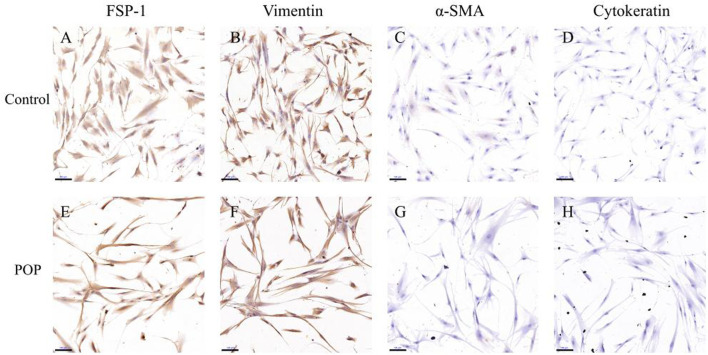
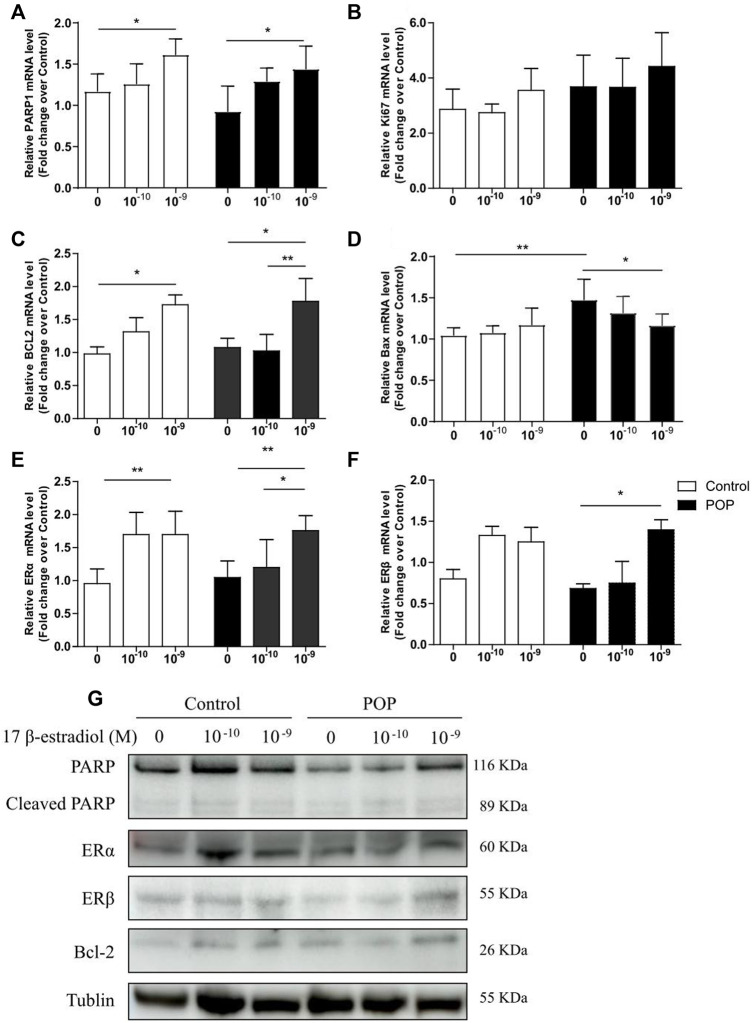
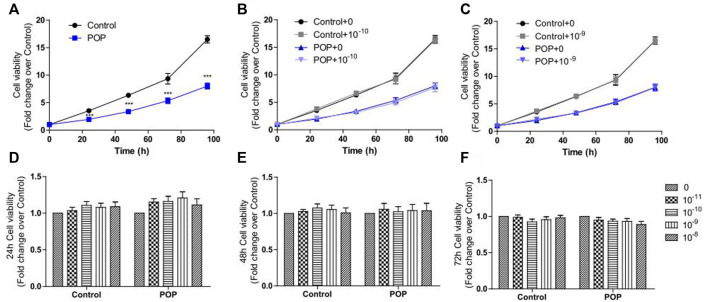
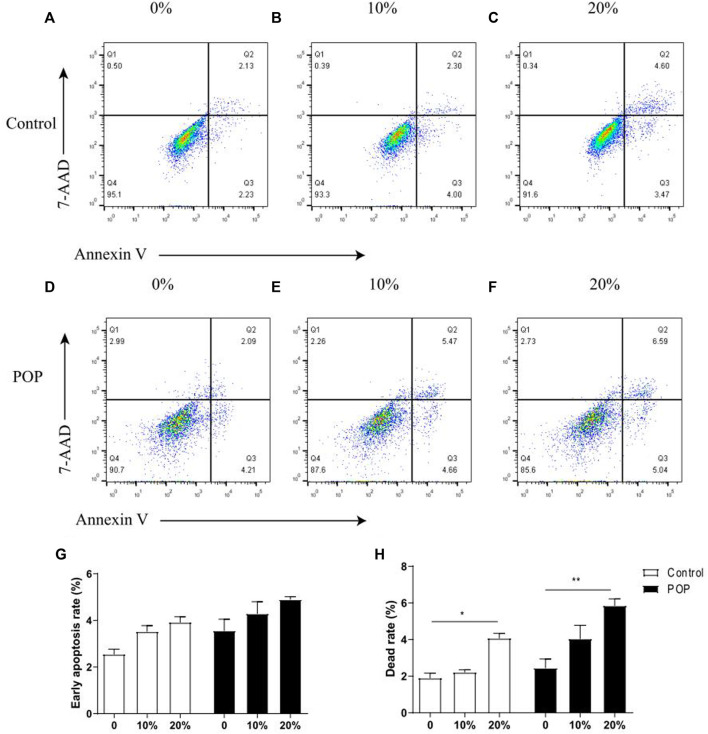
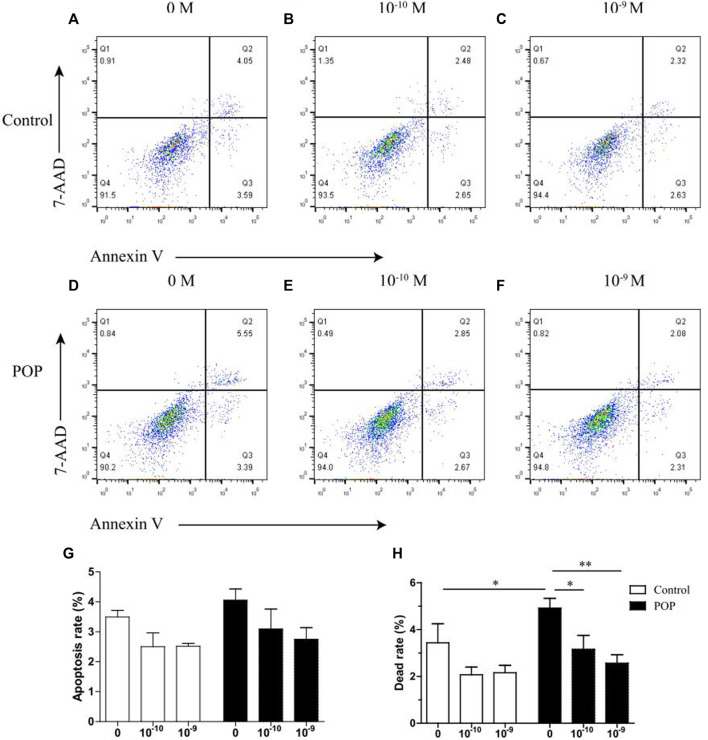
This study aims to explore the protective effects of 17 β-estradiol on the human uterosacral ligament fibroblasts (hUSLFs) under static or stretched conditions. The experiments were performed on hUSLFs derived from pelvic organ prolapse (POP) and non-POP patients. Fibroblasts were cultured after collagenase digestion and identified by morphological observation and immunocytochemical methods. 17 β-estradiol (10 M and 10 M) and mechanical stress induced by the FX-5000 T-cell stress loading system under a loading strain of 1/2 sin waveform uniaxial cyclic stress with a tensile strain of 20% and a frequency of 0.5 Hz were either or both applied on hUSLFs. Cell proliferation was measured by CCK8, and cell apoptosis and death were detected using Annexin V/7-AAD staining and flow cytometric analysis. We found that the fibroblasts growth rate of POP patients was significantly lower than controls. The cell apoptosis and death rate increased as the mechanical load intensifying. After 20% mechanical stretching for 24 h, the dead cell rate was higher in POP than control. Notably, 17 β-estradiol treatment reversed mechanical stress induced hUSLFs apoptosis and death in both POP and Control cells. The protein and mRNA levels of anti-apoptotic PARP1 (poly-ADP-ribose polymerase) and Bcl-2 were increased by estrogen treatment. Meanwhile, expression of estrogen receptor α, a target of Poly-ADP-Ribosylation of PARP1, was also enhanced by 17 β-estradiol under the mechanical load. In conclusion, estrogen application ameliorates the mechanical strain induced cell apoptosis and death in hUSLFs from POP patients. PARP1 might be involved in this protective process, providing novel insights into the mechanical biology of and possible therapies for POP.
本研究旨在探讨17β-雌二醇在静态或拉伸条件下对人子宫骶韧带成纤维细胞(hUSLFs)的保护作用。实验在源自盆腔器官脱垂(POP)患者和非POP患者的hUSLFs上进行。成纤维细胞经胶原酶消化后培养,并通过形态学观察和免疫细胞化学方法进行鉴定。将17β-雌二醇(10⁻⁶ M和10⁻⁸ M)以及由FX-5000 T细胞应力加载系统在加载应变1/2正弦波形单轴循环应力下诱导的机械应力(拉伸应变20%,频率0.5 Hz)单独或同时施加于hUSLFs。通过CCK8检测细胞增殖,使用Annexin V/7-AAD染色和流式细胞术分析检测细胞凋亡和死亡情况。我们发现POP患者的成纤维细胞生长速率显著低于对照组。细胞凋亡和死亡率随着机械负荷的增加而升高。在20%机械拉伸24小时后,POP组的死细胞率高于对照组。值得注意的是,17β-雌二醇处理可逆转机械应力诱导的POP和对照组细胞中hUSLFs的凋亡和死亡。雌激素处理可提高抗凋亡蛋白PARP1(聚ADP核糖聚合酶)和Bcl-2的蛋白质和mRNA水平。同时,在机械负荷下,17β-雌二醇还可增强PARP1的多聚ADP核糖基化靶点雌激素受体α的表达。总之,雌激素应用可改善机械应变诱导的POP患者hUSLFs细胞凋亡和死亡。PARP1可能参与了这一保护过程,为POP的机械生物学和可能的治疗方法提供了新的见解。