Zhou Pengxiang, Cheng Yinchu, Cao Guangna, Xing Yan, Zhai Suodi, Tong Xiaomei, Yang Kehu
Evidence Based Medicine Center, School of Basic Medical Sciences, Lanzhou University, Lanzhou, China.
Key Laboratory of Evidence Based Medicine and Knowledge Translation of Gansu Province, Lanzhou, China.
Front Pharmacol. 2022 Oct 10;13:1001924. doi: 10.3389/fphar.2022.1001924. eCollection 2022.
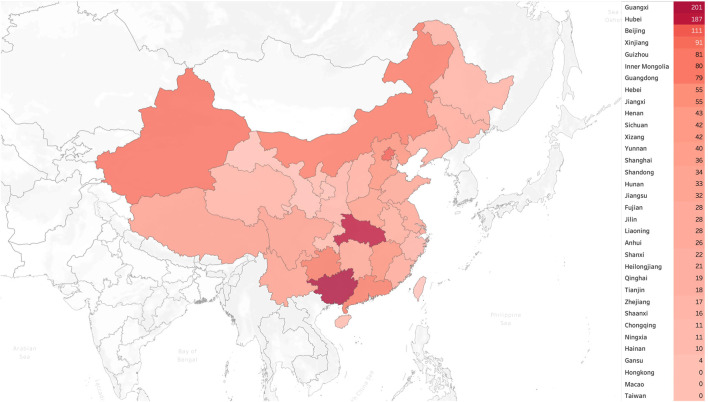
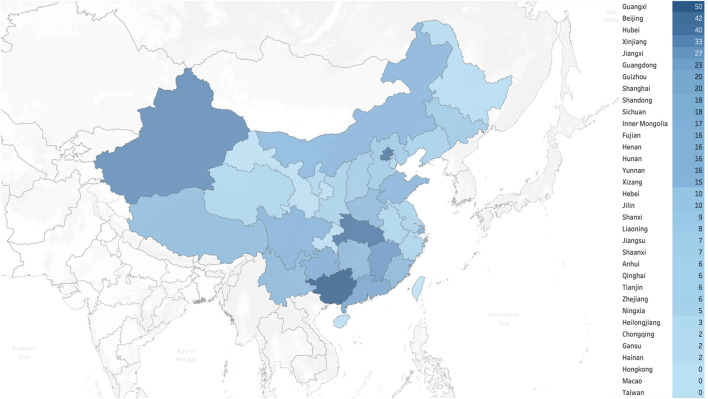
Dosing strategies of β-lactams and vancomycin should be optimized according to pharmacokinetic/pharmacodynamic principles. However, there is no available data indicating the implementation of extended infusion (EI) or continuous infusion (CI) administration in the management of neonatal sepsis. A nationwide cross-sectional survey was conducted and the pediatricians from 31 provinces in China were enrolled. A multidisciplinary team created the questionnaire, which had three sections and a total of 21 questions with open- and closed-ended responses. The survey was then conducted using an internet platform in an anonymous way. The data was eventually gathered, compiled, and examined. To identify the risk factors associated with the implementation of EI/CI, logistic regression was carried out. A total of 1501 respondents answered the questionnaires. The implementation of EI/CI of β-lactams and vancomycin were only available to one-third of the respondents, and the prolonged strategy was primarily supported by guidelines (71.25%) and advice from medical specialists (55.18%). A significant fraction (72.94%-94.71%) lacked a strong understanding of the infusions' stability. Additionally, it was discovered that more frequent MDT discussions about antibiotic use and the appropriate time pediatricians worked in the neonatal ward were associated with an increase in the use of the EI/CI strategy. The EI/CI strategy in neonatal sepsis was not well recognized in China, and it is necessary to establish a solid MDT team with regularly collaborates. In the near future, guidelines regarding prolonged infusion management in neonatal sepsis should be developed.
β-内酰胺类药物和万古霉素的给药策略应根据药代动力学/药效学原理进行优化。然而,目前尚无数据表明在新生儿败血症的管理中实施延长输注(EI)或持续输注(CI)给药。我们进行了一项全国性横断面调查,纳入了中国31个省份的儿科医生。一个多学科团队设计了问卷,问卷分为三个部分,共有21个问题,包括开放式和封闭式回答。然后通过互联网平台以匿名方式进行调查。最终收集、整理并审查了数据。为了确定与实施EI/CI相关的风险因素,进行了逻辑回归分析。共有1501名受访者回答了问卷。只有三分之一的受访者采用了β-内酰胺类药物和万古霉素的EI/CI给药方式,延长给药策略主要得到指南(71.25%)和医学专家建议(55.18%)的支持。很大一部分人(72.94%-94.71%)对输注稳定性缺乏深入了解。此外,还发现更频繁地进行关于抗生素使用的多学科团队讨论以及儿科医生在新生儿病房工作的适当时间与EI/CI策略使用的增加有关。在中国,新生儿败血症的EI/CI策略尚未得到充分认可,有必要建立一个定期协作的坚实多学科团队。在不久的将来,应制定关于新生儿败血症延长输注管理的指南。