Al Juffali Lobna, Almalag Haya M, Alswyan Najd, Almutairi Jawaher, Alsanea Dalal, Alarfaj Hussain F, Alarfaj Abdurhman S, Abouzaid Hanan H, Omair Mohammed A
Department of Clinical Pharmacy, College of Pharmacy, King Saud University, Riyadh, Saudi Arabia.
Rheumatology Unit, Department of Medicine, King Saud University, Riyadh, Saudi Arabia.
Patient Prefer Adherence. 2022 Oct 19;16:2845-2865. doi: 10.2147/PPA.S379197. eCollection 2022.
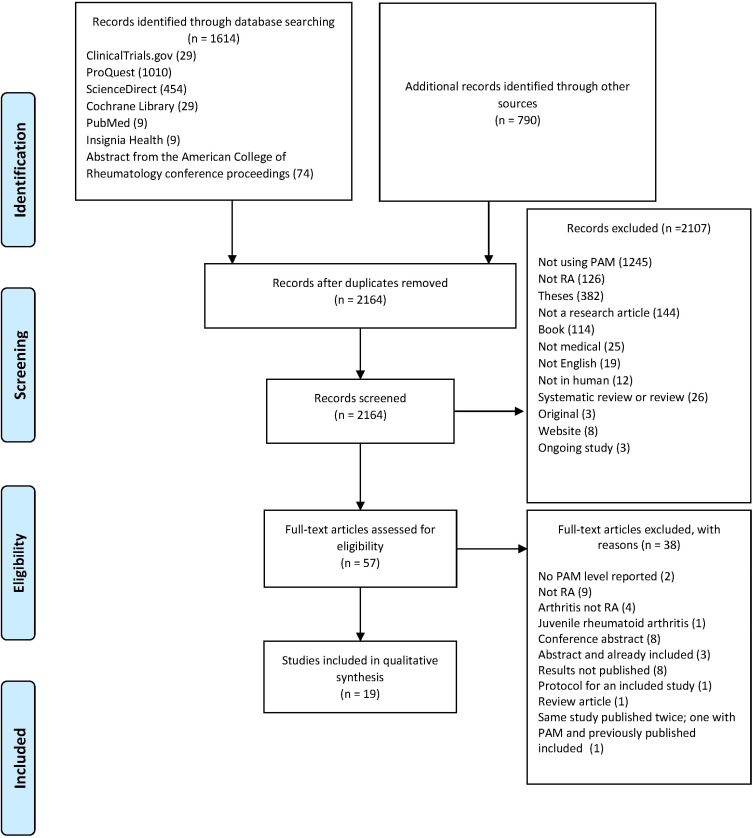
INTRODUCTION/OBJECTIVE: The patient activation measure (PAM) is considered a reliable tool for measuring patient activation. This study aimed to systematically review the scientific literature regarding the use of PAM -13 in rheumatology patients and to compare PAM scores in patients with rheumatoid arthritis (RA) following two different practices at a single institution with previously published studies.
The study consisted of a systematic review of articles reporting the PAM-13 in patients with RA, followed by a cross-sectional study evaluating PAM scores between standard rheumatology clinics and specialized rheumatology clinics (SRCs). The correlation between PAM levels and other variables, such as demographics, disease characteristics, and treatment, was assessed.
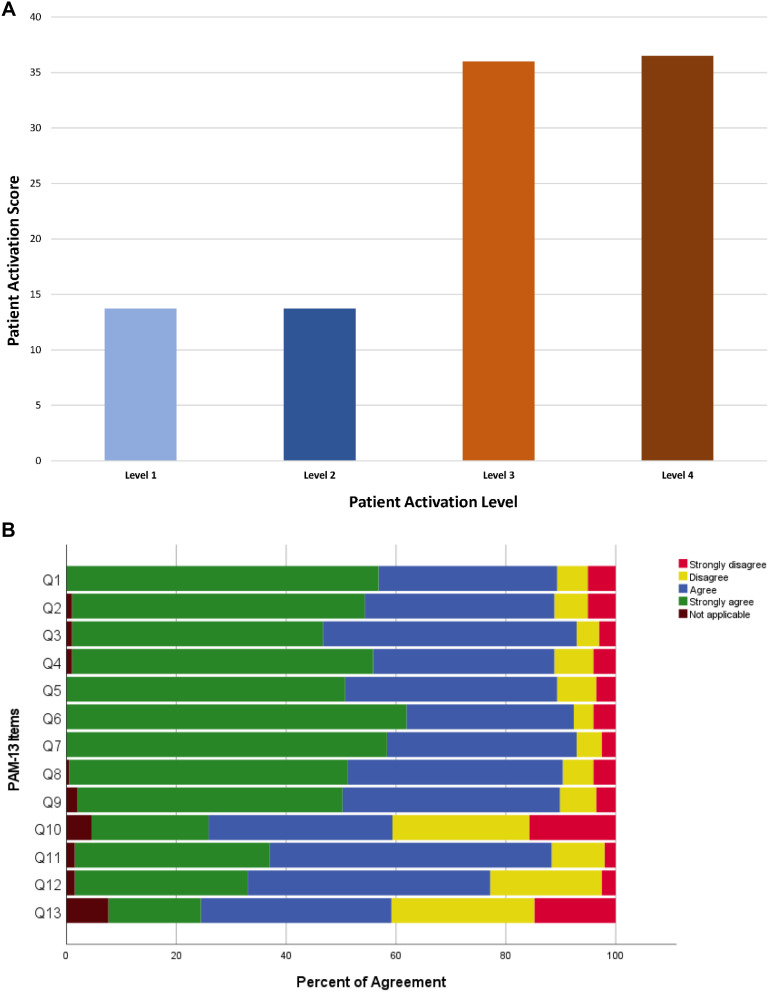
Nineteen studies, published between 2012 and 2022, met the inclusion criteria. The studies in this review had inconsistent results and quality, with patient activation in RA ranging from 29 to 76. A total of 197 patients with confirmed RA diagnoses were interviewed (response rate, 88%). Most were female (n=173, 88%) and older than 40 years (n=150, 76%). The average patient activation score was 64.9 (standard deviation, 15.7). Most participants had level 3 and 4 patient activation measures (n=71 [36%] and n=72[37%], respectively). Patients who were attending SRCs also had borderline higher PAM levels. Patients with high PAM scores tended to be older, have active disease, and were taking corticosteroids.
Adequate activation of patients was observed from our center, which was higher than that reported in most published literature. The PAM of patients with RA was variable according to the systematic review. Longitudinal interventional studies should be considered to improve activation in patients with low scores.
引言/目的:患者激活度量表(PAM)被认为是衡量患者激活度的可靠工具。本研究旨在系统回顾关于在风湿病患者中使用PAM -13的科学文献,并将单机构中两种不同诊疗方式下类风湿关节炎(RA)患者的PAM评分与先前发表的研究进行比较。
本研究包括对报告RA患者PAM-13的文章进行系统回顾,随后进行一项横断面研究,评估标准风湿病诊所和专科风湿病诊所(SRCs)之间的PAM评分。评估了PAM水平与其他变量(如人口统计学、疾病特征和治疗)之间的相关性。
2012年至2022年间发表的19项研究符合纳入标准。本综述中的研究结果和质量不一致,RA患者的激活度范围为29至76。共采访了197例确诊为RA的患者(应答率为88%)。大多数为女性(n = 173,88%)且年龄超过40岁(n = 150,76%)。患者激活度平均评分为64.9(标准差为15.7)。大多数参与者的患者激活度为3级和4级(分别为n = 71 [36%]和n = 72 [37%])。在SRCs就诊的患者PAM水平也略高。PAM评分高的患者往往年龄较大、患有活动性疾病且正在服用皮质类固醇。
我们中心观察到患者有足够的激活度,高于大多数已发表文献报道的水平。根据系统回顾,RA患者的PAM存在差异。应考虑进行纵向干预研究以提高低分患者的激活度。