Department of Comparative Biosciences, University of Illinois at Urbana-Champaign, Champaign, Urbana, USA.
Division of Animal Sciences, University of Missouri, Missouri, Columbia, USA.
Cell Prolif. 2023 Feb;56(2):e13353. doi: 10.1111/cpr.13353. Epub 2022 Oct 27.
Per- and polyfluoroalkyl substances (PFAS) are man-made chemicals that are widely used in various products. PFAS are characterized by their fluorinated carbon chains that make them hard to degrade and bioaccumulate in human and animals. Toxicological studies have shown PFAS toxic effects: cytotoxicity, immunotoxicity, neurotoxicity, and reproductive toxicity. However, it is still unclear how the structures of PFAS, such as carbon-chain length and functional groups, determine their reproductive toxicity.
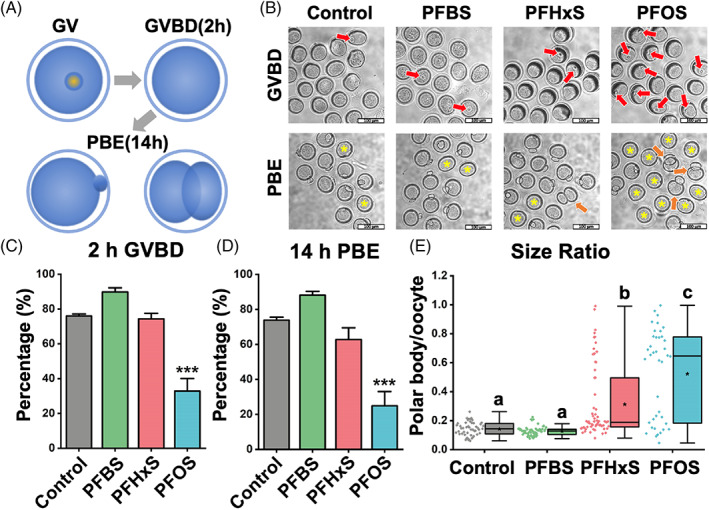
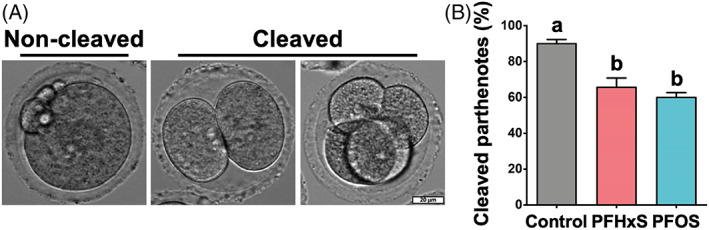
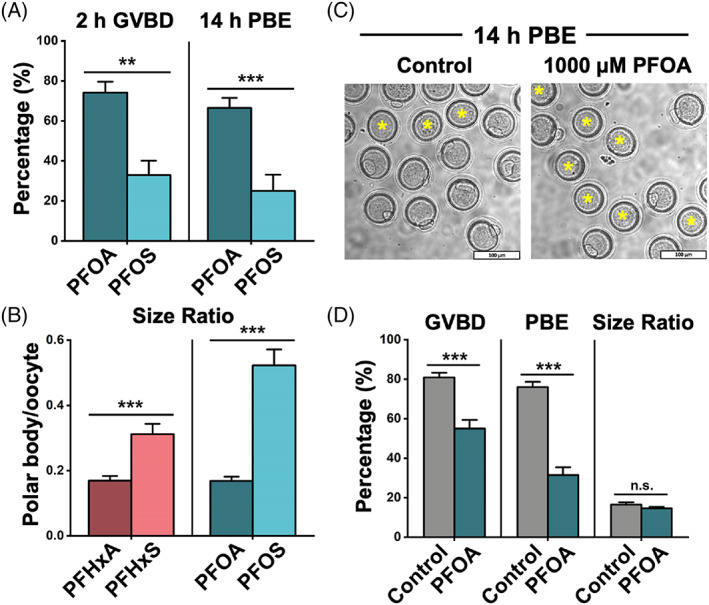
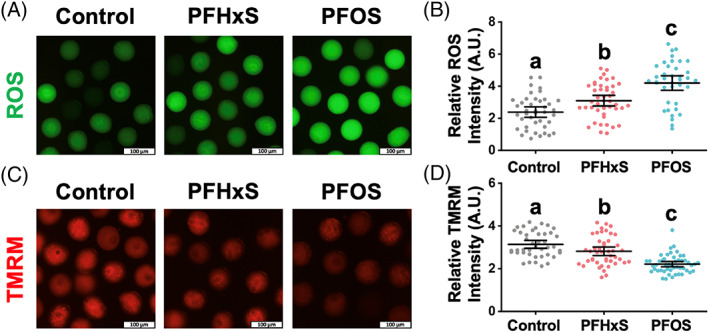
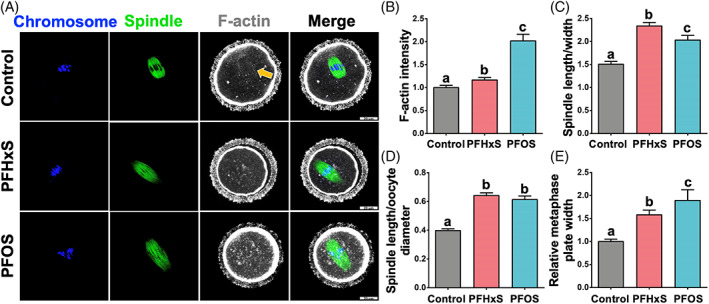
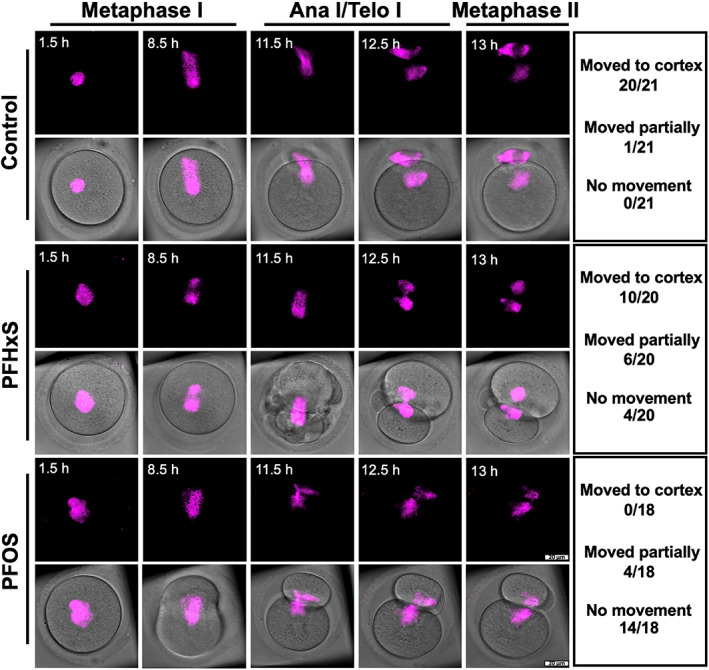
By using a mouse-oocyte-in-vitro-maturation (IVM) system, we found the toxicity of two major categories of PFAS, perfluoroalkyl carboxylic acid (PFCA) and perfluoroalkyl sulfonic acid (PFSA), is elevated with increasing carbon-chain length and the inclusion of the sulfonate group. Specifically, at 600 μM, perfluorohexanesulfonic acid (PFHxS) and perfluorooctanesulfonic acid (PFOS) reduced the rates of both germinal-vesicle breakdown (GVBD) and polar-body extrusion (PBE) as well as enlarged polar bodies. However, the shorter PFSA, perfluorobutanesulfonic acid (PFBS), and all PFCA did not show similar adverse cytotoxicity. Further, we found that 600 μM PFHxS and PFOS exposure induced excess reactive oxygen species (ROS) and decreased mitochondrial membrane potential (MMP). Cytoskeleton analysis revealed that PFHxS and PFOS exposure induced chromosome misalignment, abnormal F-actin organization, elongated spindle formation, and symmetric division in the treated oocytes. These meiotic defects compromised oocyte developmental competence after parthenogenetic activation.
Our study provides new information on the structure-toxicity relationship of PFAS.
全氟和多氟烷基物质(PFAS)是一种人工合成的化学物质,广泛应用于各种产品中。PFAS 的特点是其氟化碳链,这使得它们难以降解并在人类和动物体内生物累积。毒理学研究表明,PFAS 具有细胞毒性、免疫毒性、神经毒性和生殖毒性。然而,PFAS 的结构,如碳链长度和官能团,如何决定其生殖毒性仍不清楚。
通过使用小鼠卵母细胞体外成熟(IVM)系统,我们发现两种主要类别的 PFAS,全氟烷基羧酸(PFCA)和全氟烷基磺酸(PFSA)的毒性随着碳链长度的增加和磺酸盐基团的包含而升高。具体来说,在 600μM 时,全氟己烷磺酸(PFHxS)和全氟辛烷磺酸(PFOS)降低了卵母细胞生发泡破裂(GVBD)和极体排出(PBE)的比率,并使极体增大。然而,较短的 PFSA,全氟丁烷磺酸(PFBS)和所有 PFCA 并没有表现出类似的不良细胞毒性。此外,我们发现 600μM PFHxS 和 PFOS 暴露会诱导过量的活性氧(ROS)并降低线粒体膜电位(MMP)。细胞骨架分析显示,PFHxS 和 PFOS 暴露会导致染色体错位、异常 F-肌动蛋白组织、纺锤体拉长和处理卵母细胞的对称分裂。这些减数分裂缺陷会损害孤雌激活后卵母细胞的发育能力。
我们的研究提供了关于 PFAS 结构-毒性关系的新信息。