Institut de Ciències del Mar, Consejo Superior de Investigaciones Científicas (CSIC), Barcelona, Spain.
IHPE, Univ Montpellier, CNRS, IFREMER, Univ Perpignan Via Domitia, Montpellier, France.
Mol Ecol Resour. 2023 Feb;23(2):453-470. doi: 10.1111/1755-0998.13725. Epub 2022 Nov 15.
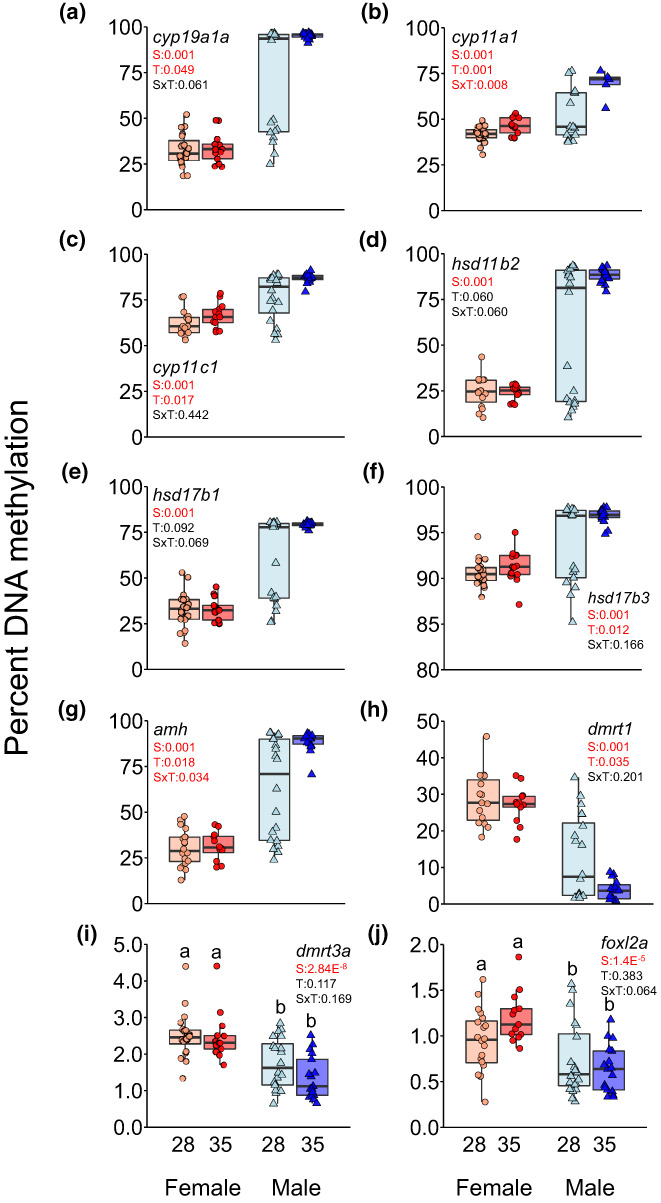
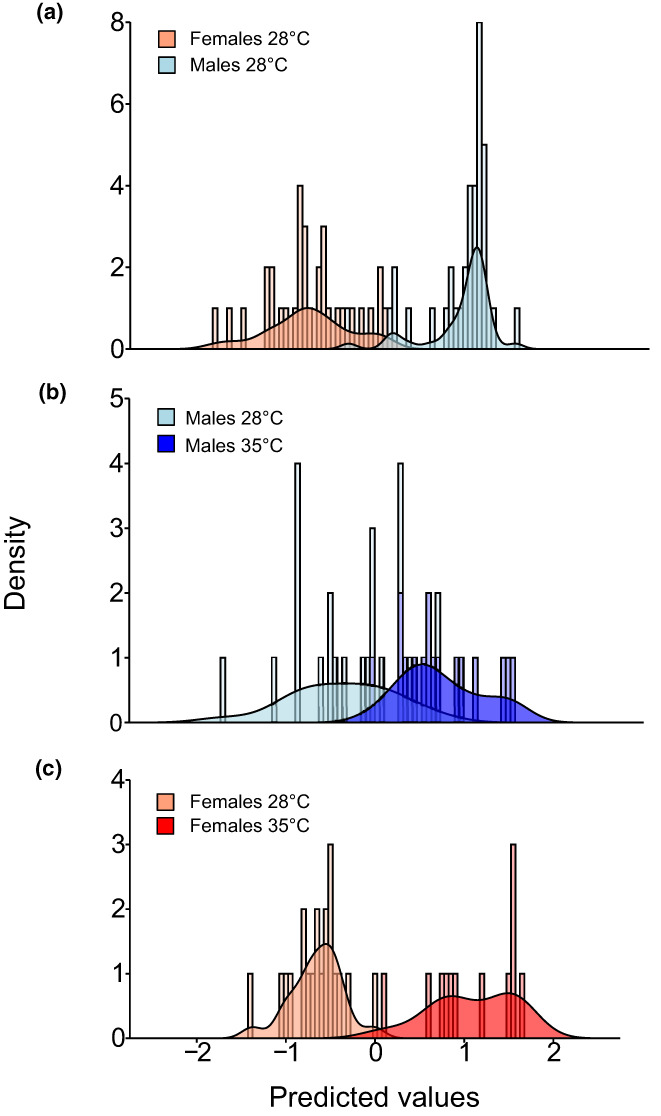
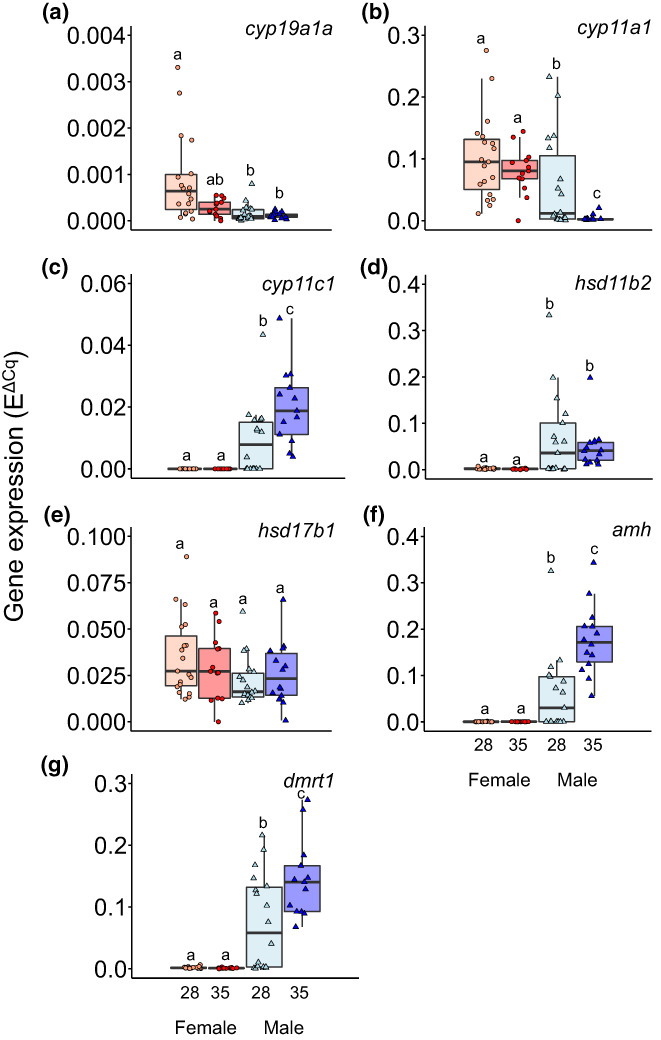
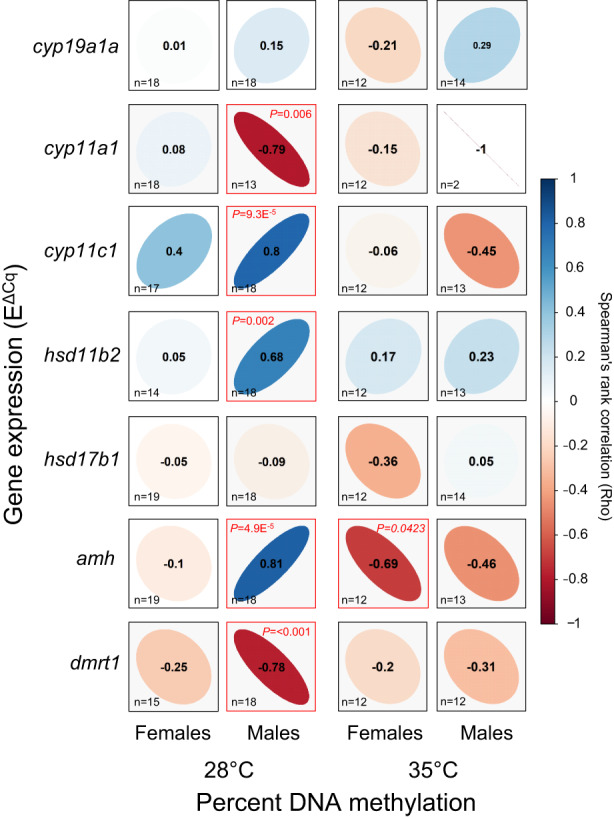
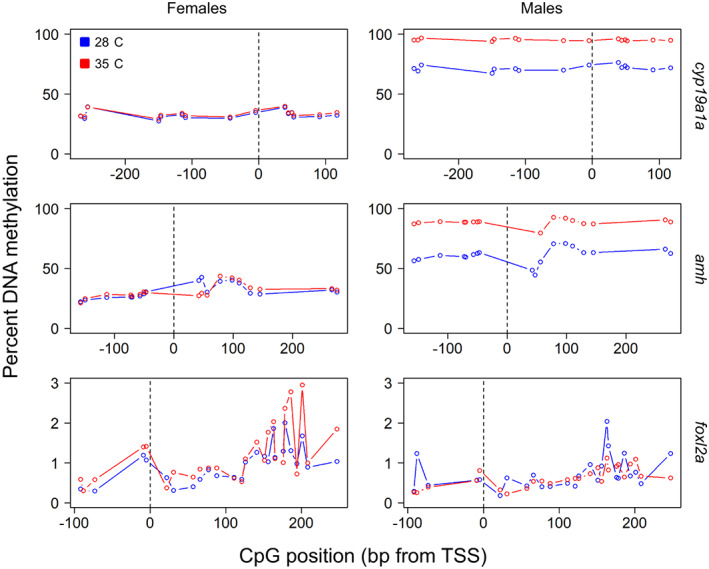
The sex ratio is a key ecological demographic parameter crucial for population viability. However, the epigenetic mechanisms operating during gonadal development regulating gene expression and the sex ratio remain poorly understood. Moreover, there is interest in the development of epigenetic markers associated with a particular phenotype or as sentinels of environmental effects. Here, we profiled DNA methylation and gene expression of 10 key genes related to sex development and stress, including steroidogenic enzymes, and growth and transcription factors. We provide novel information on the sex-related differences and on the influence of elevated temperature on these genes in zebrafish, a species with mixed genetic and environmental influences on sex ratios. We identified both positive (e.g., amh, cyp11c and hsd11b2) and negative (e.g., cyp11a1 and dmrt1) correlations in unexposed males, and negative correlation (amh) in exposed females between DNA methylation and gene expression levels. Further, we combined DNA methylation analysis with machine learning procedures and found a series of informative CpGs capable not only of correctly identifying sex (based on cyp19a1a DNA methylation levels) but also of identifying whether males and females had been exposed to abnormally elevated temperature when young (based on amh and foxl2a DNA methylation levels, respectively). This was achieved in the absence of conspicuous morphological alterations of the gonads. These DNA methylation-based epigenetic biomarkers represent molecular resources that can correctly recapitulate past thermal history and pave the way for similar findings in other species to assess potential ecological effects of environmental disturbances in the context of climate change.
性别比例是一个关键的生态人口参数,对种群生存力至关重要。然而,在调节基因表达和性别比例的性腺发育过程中,表观遗传机制仍知之甚少。此外,人们对与特定表型相关或作为环境影响哨兵的表观遗传标记的发展也很感兴趣。在这里,我们对与性别发育和应激相关的 10 个关键基因的 DNA 甲基化和基因表达进行了分析,包括类固醇生成酶以及生长和转录因子。我们提供了关于性相关差异的新信息,以及在斑马鱼中,升高的温度对这些基因的影响,斑马鱼是一种性别比例受遗传和环境影响混合的物种。我们在未暴露的雄性中发现了阳性(例如,amh、cyp11c 和 hsd11b2)和阴性(例如,cyp11a1 和 dmrt1)相关性,在暴露的雌性中发现了 amh 与基因表达水平之间的负相关。此外,我们将 DNA 甲基化分析与机器学习程序相结合,发现了一系列有信息的 CpG 不仅能够正确识别性别(基于 cyp19a1a 的 DNA 甲基化水平),还能够识别雄性和雌性在年轻时是否暴露于异常升高的温度(基于 amh 和 foxl2a 的 DNA 甲基化水平)。这是在性腺没有明显形态改变的情况下实现的。这些基于 DNA 甲基化的表观遗传生物标志物代表了分子资源,可以正确地再现过去的热历史,并为在气候变化背景下评估环境干扰对其他物种的潜在生态影响铺平道路。