Oral Medicine, Periodontology, Oral Diagnosis and Oral Radiology Department, Faculty of Dentistry, Alexandria University, Alexandria, 21521, Egypt.
Odontology. 2023 Apr;111(2):511-521. doi: 10.1007/s10266-022-00759-9. Epub 2022 Oct 28.
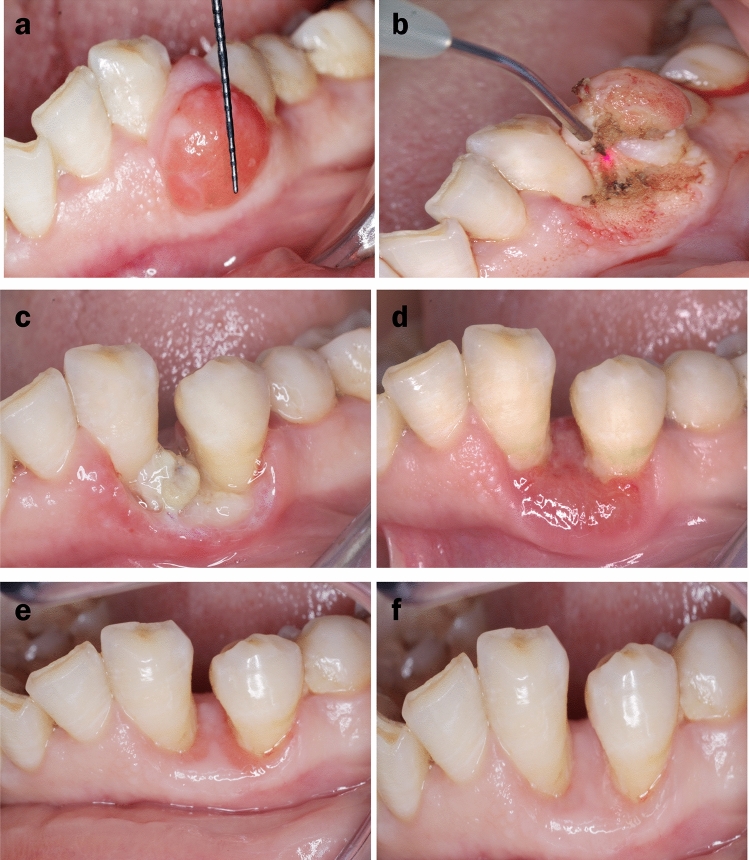
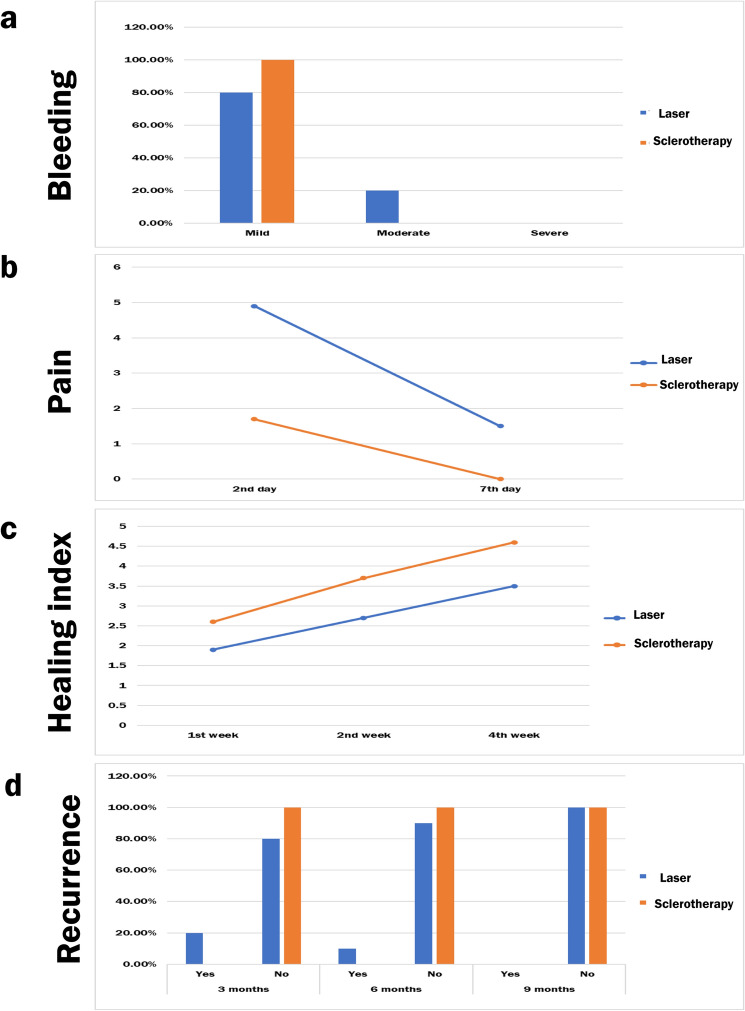
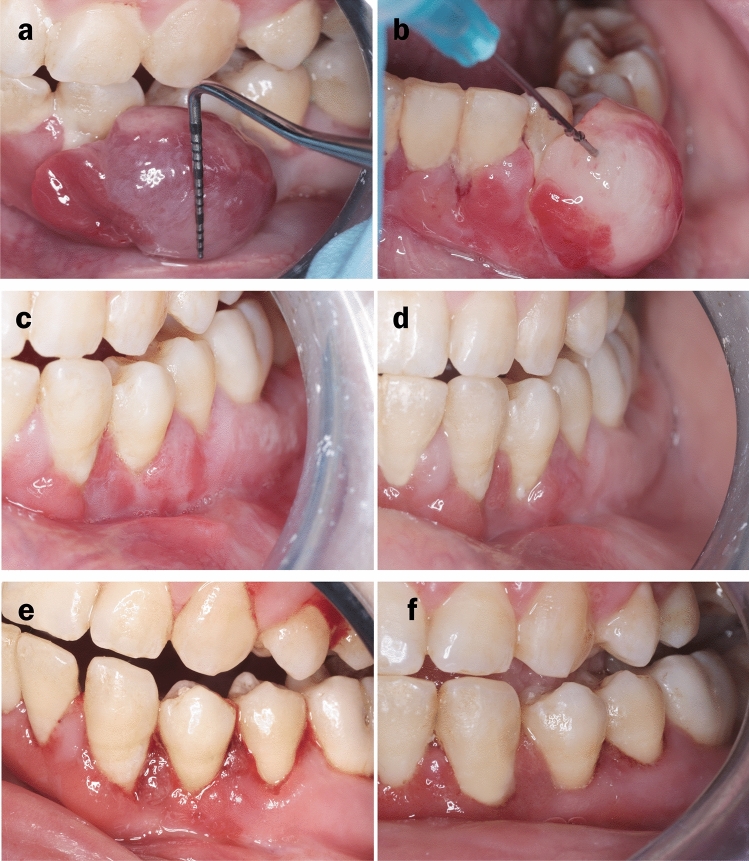
Oral pyogenic granuloma (PG) is traditionally treated by surgical excision which is associated with bleeding, pain and a high rate of recurrence. Our research aimed to clinically assess the effectiveness of diode laser versus sclerotherapy, as bloodless approach, in the treatment of oral PG. We randomly divided 20 patients with oral PG into two groups, with those in the test group being managed via diode laser application and those in the control group via injections of ethanolamine oleate as a sclerosing agent. All patients were evaluated intraoperatively for bleeding severity and postoperatively for pain. The quality of healing was also assessed using Landry healing index after the 1st, 2nd and 4th weeks. Additionally, the patients were recalled after 3, 6 and 9 months from the end of treatment for recurrence evaluation. Our results revealed that intraoperative bleeding did not differ significantly between both groups while postoperative pain decreased significantly in the sclerotherapy group compared to the laser group. For different intervals, the sclerotherapy group had a higher healing quality index than the laser group, although the difference was not statistically significant. However, recurrence occurred in the laser group, there were no cases of recurrence in the sclerotherapy group in all intervals. In conclusion, diode laser treatment of PG is a reliable, less invasive, and sensitive procedure that requires an experienced operator and specialised equipment. However, ethanolamine oleate sclerotherapy is an inexpensive, simple technique besides being less prone to recurrence problems, especially when treatment duration is not a concern.
口腔化脓性肉芽肿(PG)传统上采用手术切除治疗,这种方法会导致出血、疼痛且复发率较高。我们的研究旨在临床评估二极管激光与硬化剂注射(作为一种无血方法)治疗口腔 PG 的效果。我们将 20 名口腔 PG 患者随机分为两组,实验组采用二极管激光治疗,对照组采用乙醇胺油酸作为硬化剂进行注射。所有患者在术中评估出血严重程度,术后评估疼痛。在第 1、2 和 4 周后使用 Landry 愈合指数评估愈合质量。此外,在治疗结束后 3、6 和 9 个月时,我们对患者进行随访以评估复发情况。我们的结果表明,两组术中出血无显著差异,而硬化剂组术后疼痛明显低于激光组。在不同时间点,硬化剂组的愈合质量指数高于激光组,但差异无统计学意义。然而,激光组出现了复发,硬化剂组在所有时间点均无复发。总之,二极管激光治疗 PG 是一种可靠、微创且敏感的方法,但需要有经验的操作人员和专用设备。然而,乙醇胺油酸硬化剂治疗是一种廉价、简单的技术,且不易复发,特别是在不考虑治疗持续时间的情况下。