Medical Entomology & Zoonoses Ecology, UK Health Security Agency, Porton Down, UK.
Med Vet Entomol. 2023 Mar;37(1):152-163. doi: 10.1111/mve.12621. Epub 2022 Oct 30.
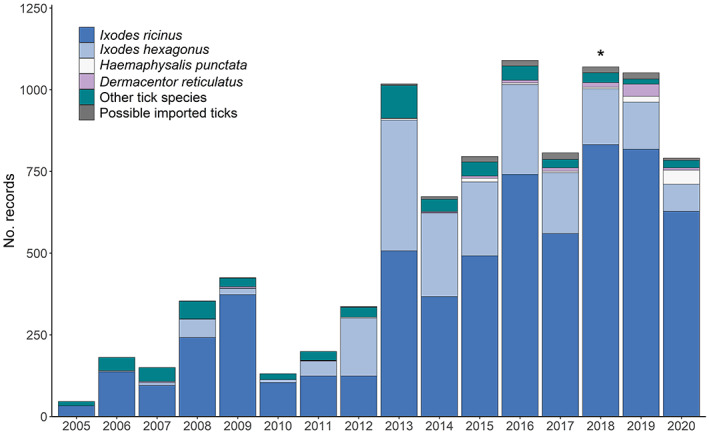
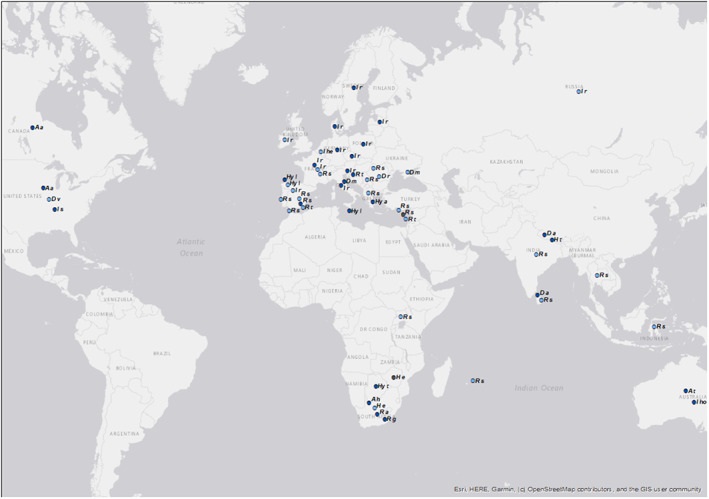
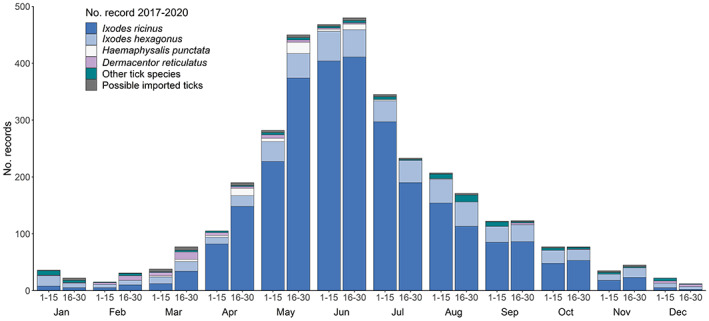
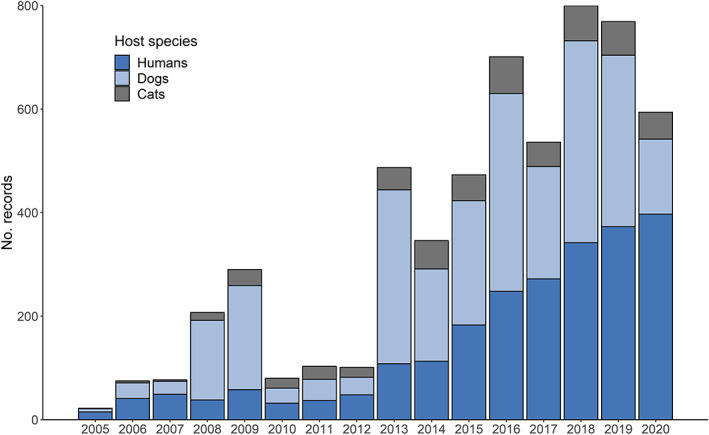
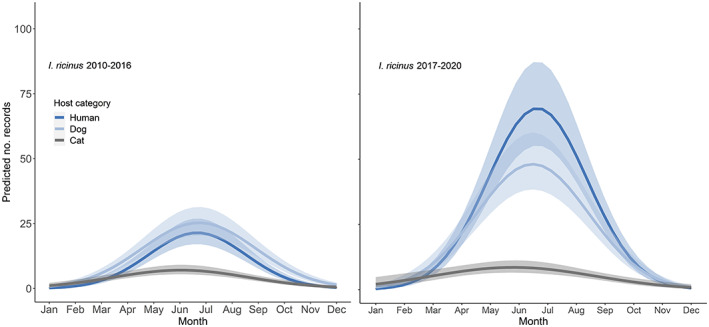
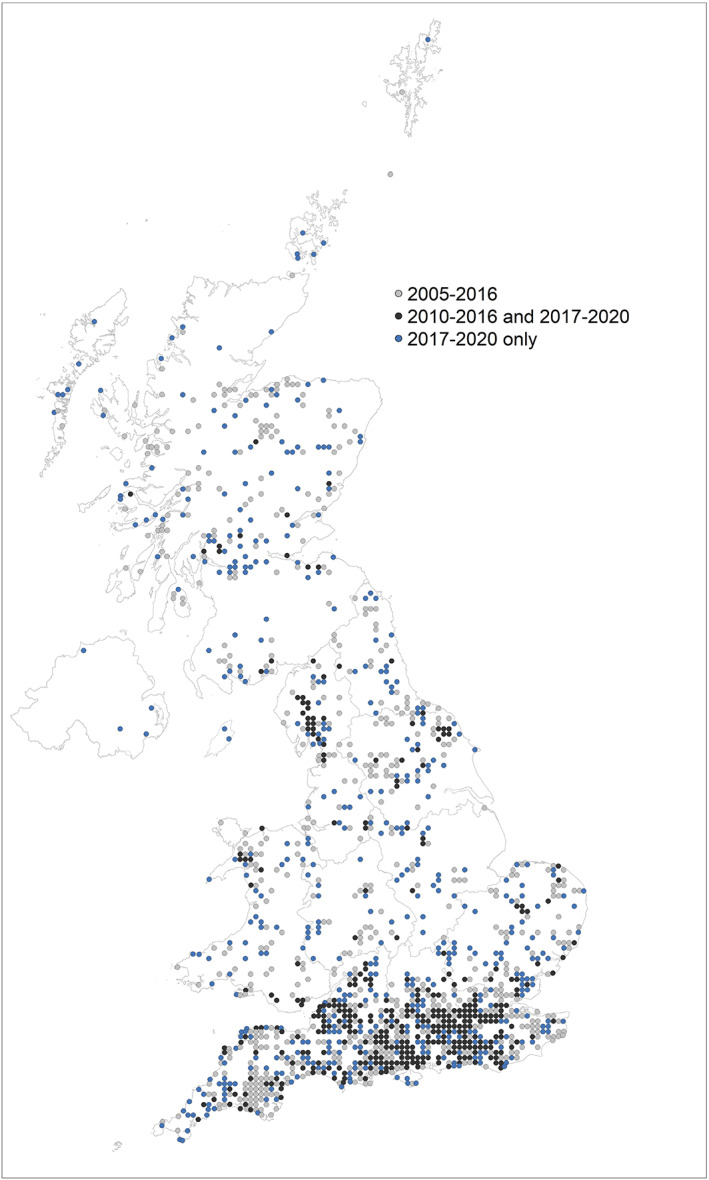
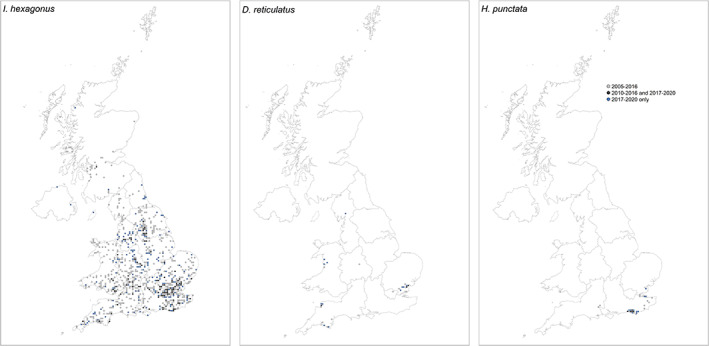
Tick-borne disease risk is intrinsically linked to the distribution of tick vector species. To assess risk and anticipate disease emergence, an understanding of tick distribution, host associations, and seasonality is needed. This can be achieved, to some extent, using passive surveillance supported by engagement with the public, animal health, and public health experts. The Tick Surveillance Scheme (TSS) collects data and maps tick distribution across the United Kingdom (UK). Between 2017 and 2020, 3720 tick records were received and 39 tick species were detected. Most records were acquired in the UK, with a subset associated with recent overseas travel. The dominant UK acquired species was Ixodes ricinus (Ixodida: Ixodidae, Linnaeus), the main vector of Lyme borreliosis. Records peaked during May and June, highlighting a key risk period for tick bites. Other key UK species were detected, including Dermacentor reticulatus (Ixodida: Ixodidae, Fabricius) and Haemaphysalis punctata (Ixodida: Ixodidae, Canestrini & Fanzago) as well as several rarer species that may present novel tick-borne disease risk to humans and other animals. Updated tick distribution maps highlight areas in the UK where tick exposure has occurred. There is evidence of increasing human tick exposure over time, including during the COVID-19 pandemic, but seasonal patterns remain unchanged.
蜱传疾病的风险与蜱媒介物种的分布密切相关。为了评估风险和预测疾病的出现,需要了解蜱的分布、宿主关联性和季节性。这在一定程度上可以通过公众、动物健康和公共卫生专家参与的被动监测来实现。Tick Surveillance Scheme(TSS)收集了英国(UK)各地的蜱分布数据并绘制了分布图。在 2017 年至 2020 年间,共收到了 3720 份蜱记录,检测到 39 种蜱。大多数记录来自英国,其中一部分与最近的海外旅行有关。英国主要的获得性物种是Ixodes ricinus(Ixodida:Ixodidae,Linnaeus),这是莱姆病的主要传播媒介。记录的高峰期在 5 月和 6 月,突出了蜱叮咬的关键风险期。还检测到了其他关键的英国物种,包括 Dermacentor reticulatus(Ixodida:Ixodidae,Fabricius)和 Haemaphysalis punctata(Ixodida:Ixodidae,Canestrini & Fanzago),以及一些可能对人类和其他动物构成新型蜱传疾病风险的罕见物种。更新的蜱分布图突出显示了英国发生蜱暴露的地区。有证据表明,随着时间的推移,人类接触蜱的情况有所增加,包括在 COVID-19 大流行期间,但季节性模式没有变化。