Shanmugham Velmurugan, Subban Ravi
Department of Chemistry, Karpagam Academy of Higher Education, Salem-Kochi Highway, Eachanari, 641 021 Coimbatore, India.
Food Technol Biotechnol. 2022 Sep;60(3):350-360. doi: 10.17113/ftb.60.03.22.7405.
Breast cancer is one of the most common cancers and remains a major cause of morbidity and mortality among women worldwide. In developed countries, breast cancer as a multifactorial disease is a major health concern, and its incidence is constantly rising in low and middle-income countries. Numerous studies have demonstrated that phytochemicals such as carotenoids inhibit breast cancer growth and induce apoptosis. We recently enhanced the solubility of capsanthin in water by encapsulating it in diosgenin polyethylene glycol succinate, a novel non-ionic surfactant. Thus, this study aims to evaluate the cytotoxicity of water-soluble capsanthin-loaded micelles in MDA-MB-231 cells through tetrazolium dye MTT assay.
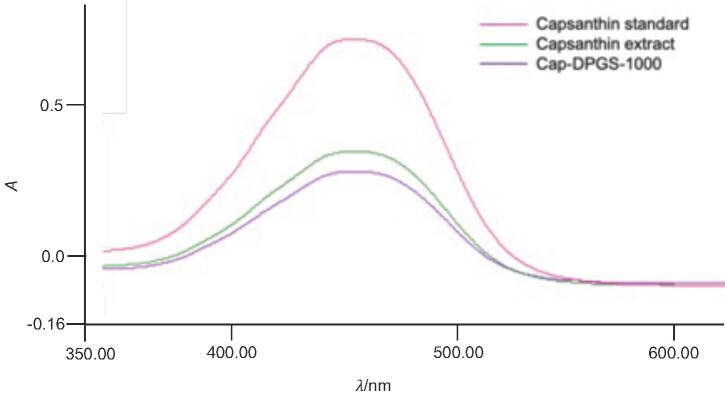
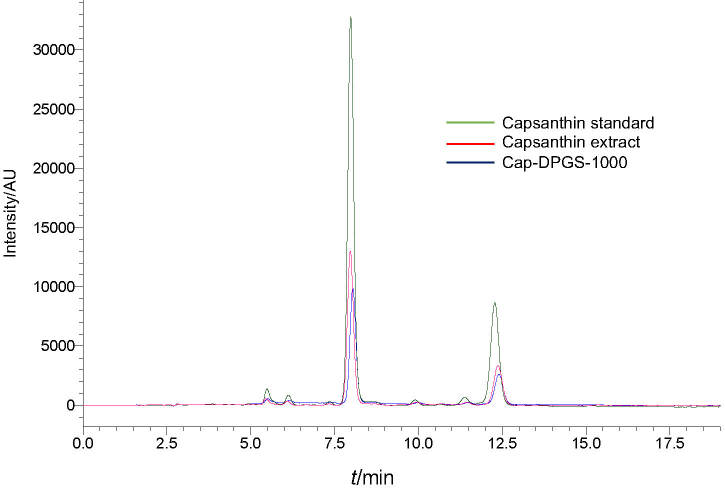
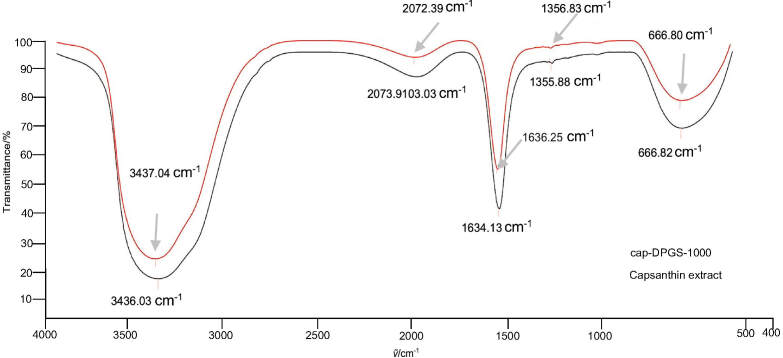
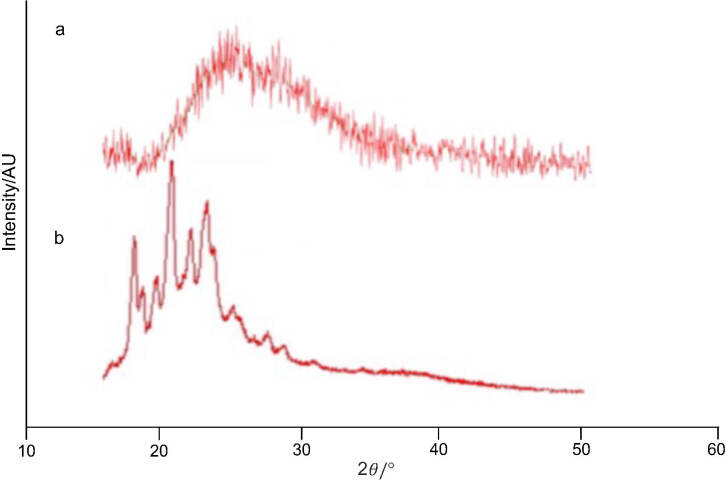
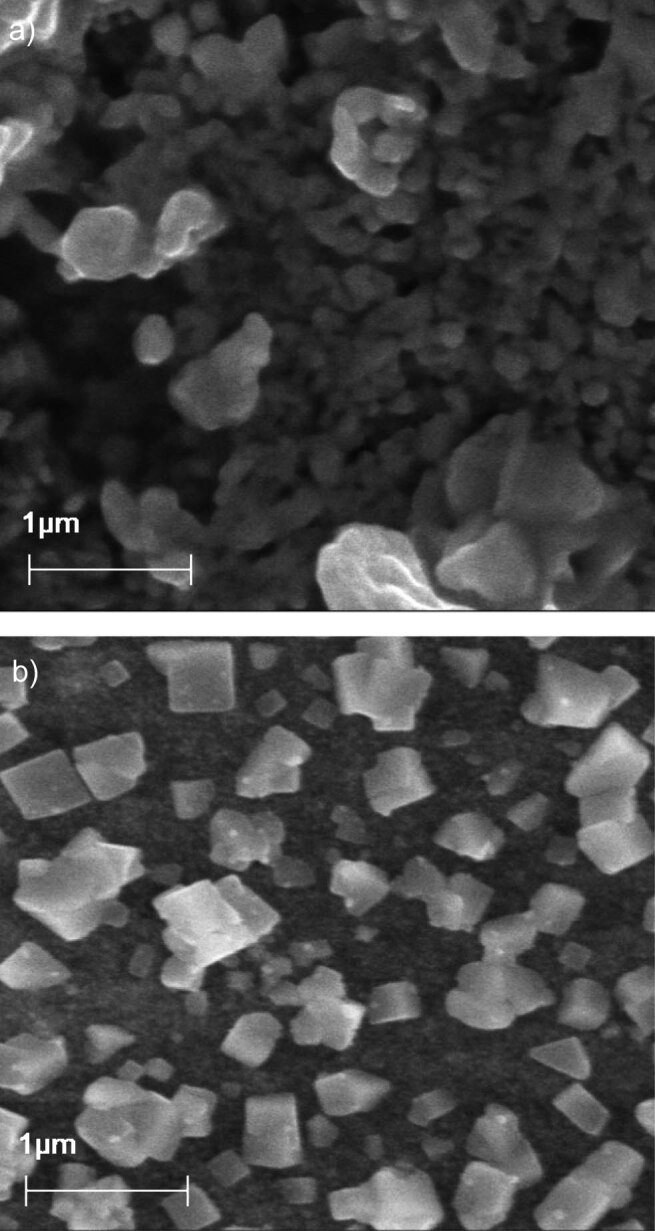
In the current study, capsanthin, a hydrophobic carotenoid, is extracted from sweet red pepper (). Capsanthin-loaded diosgenin polyethylene glycol succinate 1000 (cap-DPGS-1000) micelles were prepared from capsanthin extract (cap) and diosgenin polyethylene glycol succinate 1000 (DPGS-1000) using the solid dispersion method. The capsanthin extract and cap-DPGS-1000 micelles were characterized by UV-visible spectroscopy, high-performance liquid chromatography (HPLC), Fourier-transform infrared spectroscopy (FTIR), X-ray diffraction (XRD), particle size distribution, polydispersity, and scanning electron microscopy (SEM). The effects of capsanthin extract and cap-DPGS-1000 micelles on a human triple-negative breast cancer cell line (MDA-MB-231) were tested to check the cell viability, proliferation and cytotoxicity of the micelles.
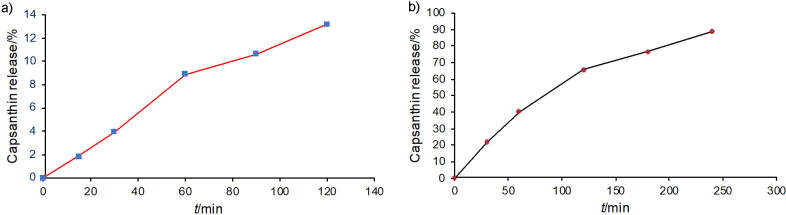
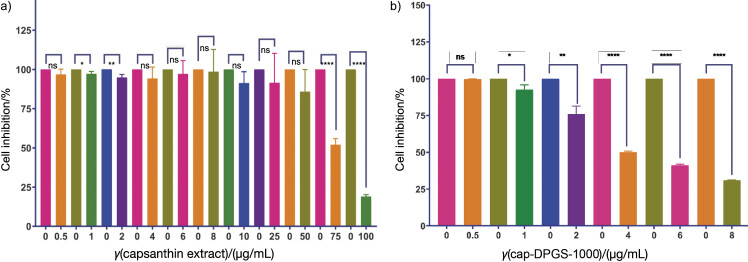
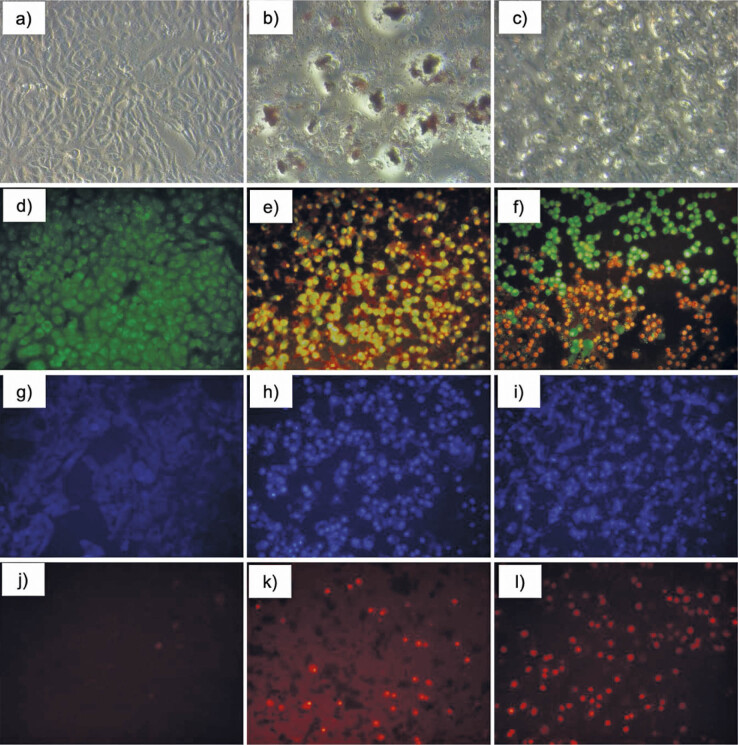
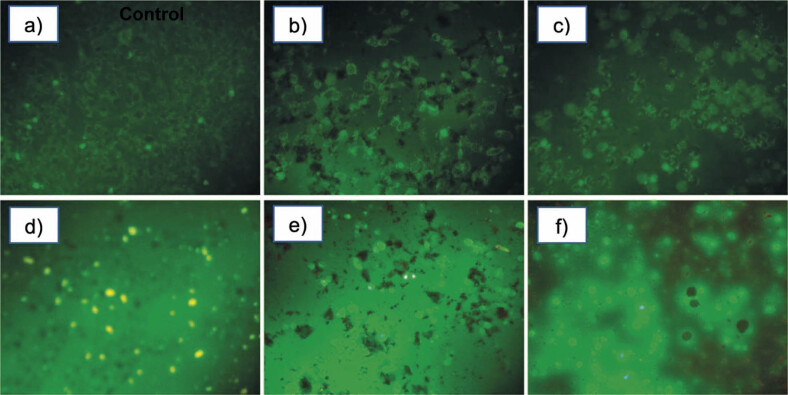
The solubility of encapsulated cap-DPGS-1000 micelles in water is greatly enhanced and leads to an increased scope for localized drug delivery, a better delivery option for treating residual cancerous tumours. The encapsulated capsanthin showed a sustained release in simulated intestinal fluid (pH=6.8). Our research proposes a sustained drug delivery system that ensures effective and controlled release to the affected site. The characterization data revealed no change in the structure and functional groups in the encapsulated capsanthin. The IC value of the cap-DPGS-1000 micelles against MDA-MB-231 breast cancer cells was (3.10±1.09) μg/mL, which is much lower than of capsanthin extract ((81.1±1.5) μg/mL). Capsanthin extract and capsanthin-loaded micelles are promising drug candidates to induce apoptosis and increase reactive oxygen species (ROS) in cancer cells.
The result shows the cytotoxic effect of capsanthin and capsanthin-loaded micelles on MDA-MB-231 cell line for the first time. Capsanthin from sweet red pepper () showed remarkable cytotoxic effect on the triple-negative MDA-MB-231 cell line.
乳腺癌是最常见的癌症之一,仍是全球女性发病和死亡的主要原因。在发达国家,乳腺癌作为一种多因素疾病是主要的健康问题,在低收入和中等收入国家其发病率也在不断上升。大量研究表明,类胡萝卜素等植物化学物质可抑制乳腺癌生长并诱导细胞凋亡。我们最近通过将辣椒红素包裹在新型非离子表面活性剂薯蓣皂苷元聚乙二醇琥珀酸酯中,提高了其在水中的溶解度。因此,本研究旨在通过四唑盐染料MTT法评估水溶性辣椒红素负载胶束对MDA-MB-231细胞的细胞毒性。
在本研究中,疏水性类胡萝卜素辣椒红素从甜红椒中提取。采用固体分散法,由辣椒红素提取物(cap)和薯蓣皂苷元聚乙二醇琥珀酸酯1000(DPGS-1000)制备负载辣椒红素的薯蓣皂苷元聚乙二醇琥珀酸酯1000(cap-DPGS-1000)胶束。通过紫外可见光谱、高效液相色谱(HPLC)、傅里叶变换红外光谱(FTIR)、X射线衍射(XRD)、粒度分布、多分散性和扫描电子显微镜(SEM)对辣椒红素提取物和cap-DPGS-1000胶束进行表征。测试了辣椒红素提取物和cap-DPGS-1000胶束对人三阴性乳腺癌细胞系(MDA-MB-231)的影响,以检测胶束的细胞活力、增殖和细胞毒性。
包裹的cap-DPGS-1000胶束在水中的溶解度大大提高,导致局部给药范围扩大,这是治疗残留癌性肿瘤的更好给药选择。包裹的辣椒红素在模拟肠液(pH=6.8)中显示出持续释放。我们的研究提出了一种持续给药系统,可确保有效且可控地释放到受影响部位。表征数据显示包裹的辣椒红素的结构和官能团没有变化。cap-DPGS-1000胶束对MDA-MB-231乳腺癌细胞的IC值为(3.10±1.09)μg/mL,远低于辣椒红素提取物的IC值((81.1±1.5)μg/mL)。辣椒红素提取物和负载辣椒红素的胶束有望成为诱导癌细胞凋亡和增加活性氧(ROS)的候选药物。
结果首次显示了辣椒红素和负载辣椒红素的胶束对MDA-MB-231细胞系的细胞毒性作用。甜红椒中的辣椒红素对三阴性MDA-MB-231细胞系显示出显著的细胞毒性作用。