Warrick Joshua I, Hu Wenhuo, Yamashita Hironobu, Walter Vonn, Shuman Lauren, Craig Jenna M, Gellert Lan L, Castro Mauro A A, Robertson A Gordon, Kuo Fengshen, Ostrovnaya Irina, Sarungbam Judy, Chen Ying-Bei, Gopalan Anuradha, Sirintrapun Sahussapont J, Fine Samson W, Tickoo Satish K, Kim Kwanghee, Thomas Jasmine, Karan Nagar, Gao Sizhi Paul, Clinton Timothy N, Lenis Andrew T, Chan Timothy A, Chen Ziyu, Rao Manisha, Hollman Travis J, Li Yanyun, Socci Nicholas D, Chavan Shweta, Viale Agnes, Mohibullah Neeman, Bochner Bernard H, Pietzak Eugene J, Teo Min Yuen, Iyer Gopa, Rosenberg Jonathan E, Bajorin Dean F, Kaag Matthew, Merrill Suzanne B, Joshi Monika, Adam Rosalyn, Taylor John A, Clark Peter E, Raman Jay D, Reuter Victor E, Chen Yu, Funt Samuel A, Solit David B, DeGraff David J, Al-Ahmadie Hikmat A
Department of Pathology and Laboratory Medicine, Pennsylvania State University College of Medicine, Hershey, PA, USA.
Human Oncology and Pathogenesis Program, Memorial Sloan Kettering Cancer Center, New York, NY, USA.
Nat Commun. 2022 Nov 2;13(1):6575. doi: 10.1038/s41467-022-34251-3.
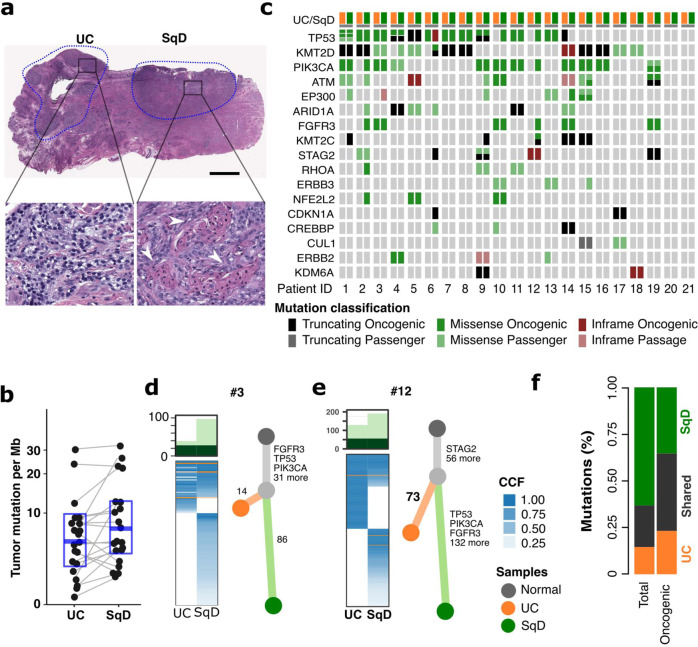
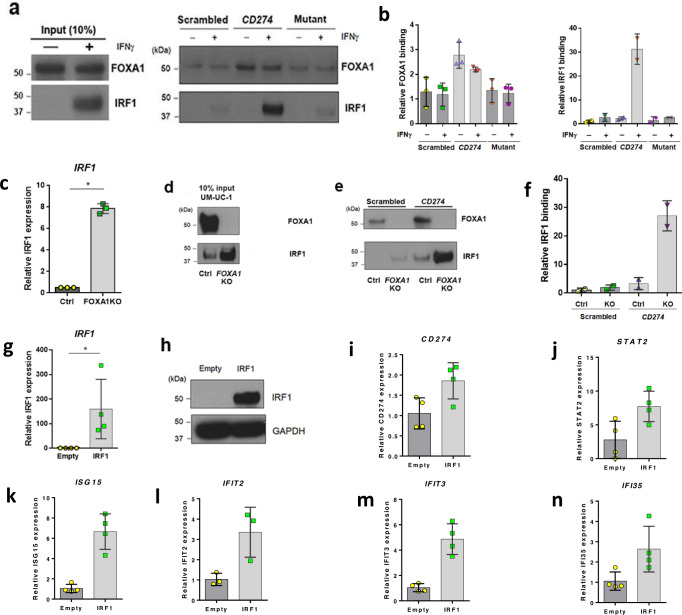
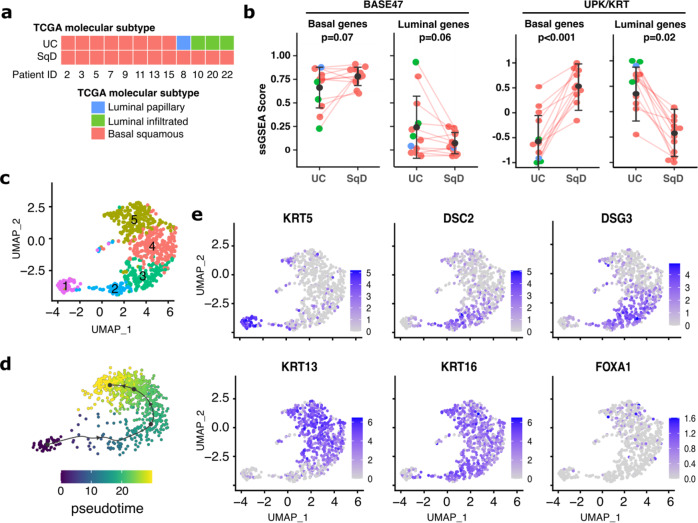
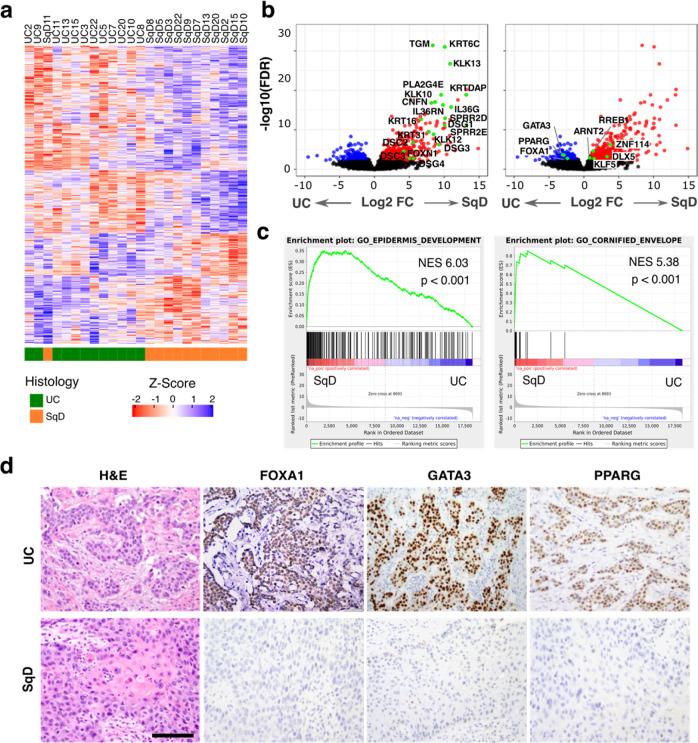
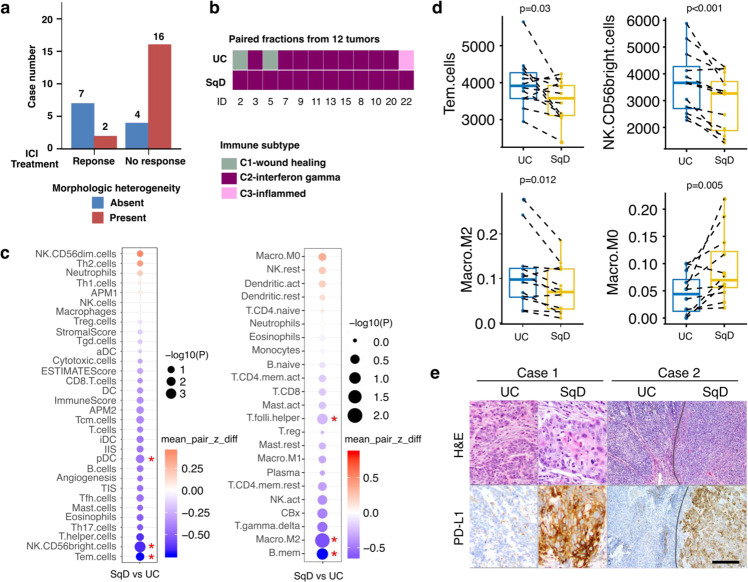
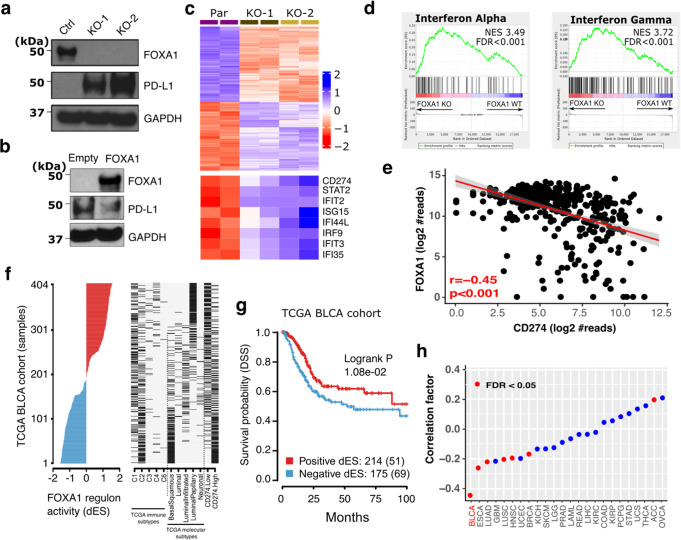
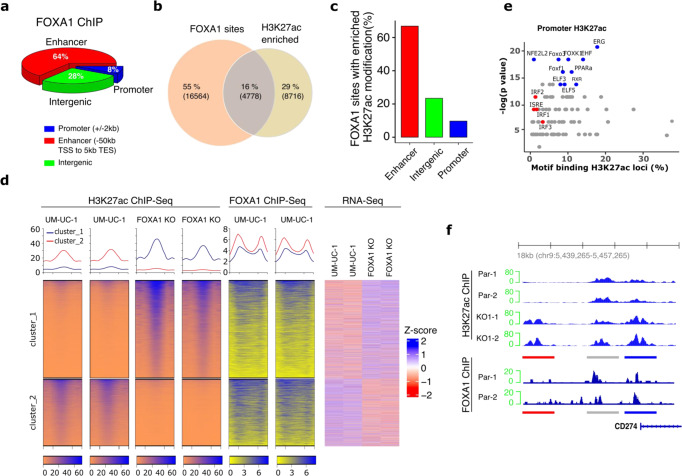
Cancers arising from the bladder urothelium often exhibit lineage plasticity with regions of urothelial carcinoma adjacent to or admixed with regions of divergent histomorphology, most commonly squamous differentiation. To define the biologic basis for and clinical significance of this morphologic heterogeneity, here we perform integrated genomic analyses of mixed histology bladder cancers with separable regions of urothelial and squamous differentiation. We find that squamous differentiation is a marker of intratumoral genomic and immunologic heterogeneity in patients with bladder cancer and a biomarker of intrinsic immunotherapy resistance. Phylogenetic analysis confirms that in all cases the urothelial and squamous regions are derived from a common shared precursor. Despite the presence of marked genomic heterogeneity between co-existent urothelial and squamous differentiated regions, no recurrent genomic alteration exclusive to the urothelial or squamous morphologies is identified. Rather, lineage plasticity in bladder cancers with squamous differentiation is associated with loss of expression of FOXA1, GATA3, and PPARG, transcription factors critical for maintenance of urothelial cell identity. Of clinical significance, lineage plasticity and PD-L1 expression is coordinately dysregulated via FOXA1, with patients exhibiting morphologic heterogeneity pre-treatment significantly less likely to respond to immune checkpoint inhibitors.
起源于膀胱尿路上皮的癌症通常表现出谱系可塑性,尿路上皮癌区域与不同组织形态学区域相邻或混合,最常见的是鳞状分化。为了确定这种形态学异质性的生物学基础和临床意义,我们对具有可分离的尿路上皮和鳞状分化区域的混合组织学膀胱癌进行了综合基因组分析。我们发现鳞状分化是膀胱癌患者肿瘤内基因组和免疫异质性的标志物,也是内在免疫治疗耐药性的生物标志物。系统发育分析证实,在所有病例中,尿路上皮和鳞状区域均源自共同的前体。尽管共存的尿路上皮和鳞状分化区域之间存在明显的基因组异质性,但未发现仅存在于尿路上皮或鳞状形态中的复发性基因组改变。相反,具有鳞状分化的膀胱癌中的谱系可塑性与维持尿路上皮细胞特性至关重要的转录因子FOXA1、GATA3和PPARG的表达缺失有关。具有临床意义的是,谱系可塑性和PD-L1表达通过FOXA1协同失调,治疗前表现出形态学异质性的患者对免疫检查点抑制剂的反应可能性显著降低。