Baselmans Bart, Hammerschlag Anke R, Noordijk Stephany, Ip Hill, van der Zee Matthijs, de Geus Eco, Abdellaoui Abdel, Treur Jorien L, van 't Ent Dennis
Institute for Molecular Bioscience, The University of Queensland, Brisbane, Queensland, Australia.
Child Health Research Centre, The University of Queensland, Brisbane, Queensland, Australia.
Biol Psychiatry Glob Open Sci. 2021 Oct 6;2(4):389-399. doi: 10.1016/j.bpsgos.2021.09.007. eCollection 2022 Oct.
To gain more insight into the biological factors that mediate vulnerability to display externalizing behaviors, we leveraged genome-wide association study summary statistics on 13 externalizing phenotypes.
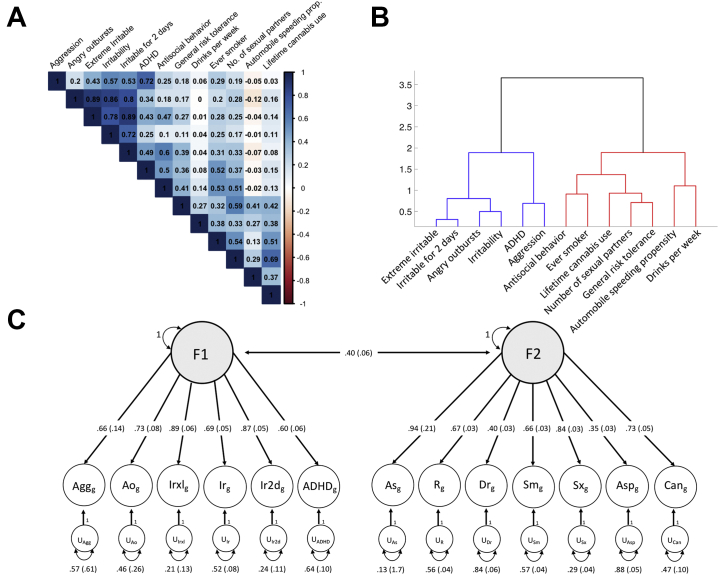
After data classification based on genetic resemblance, we performed multivariate genome-wide association meta-analyses and conducted extensive bioinformatic analyses, including genetic correlation assessment with other traits, Mendelian randomization, and gene set and gene expression analyses.
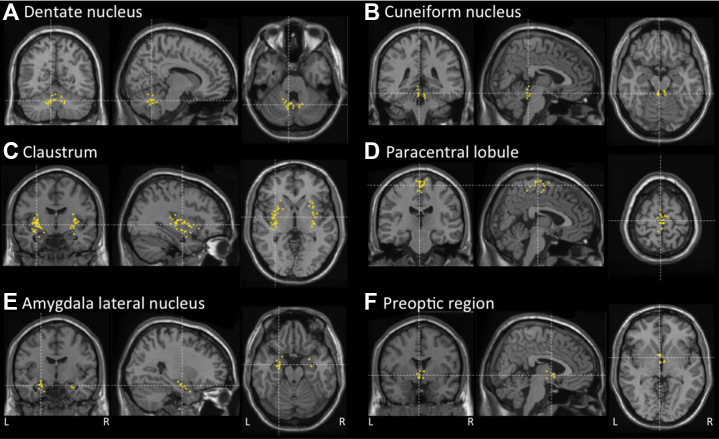
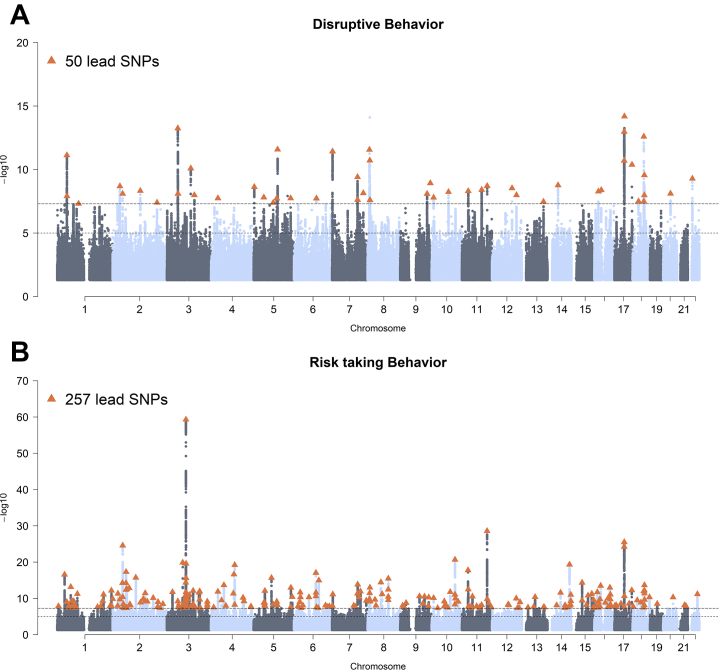
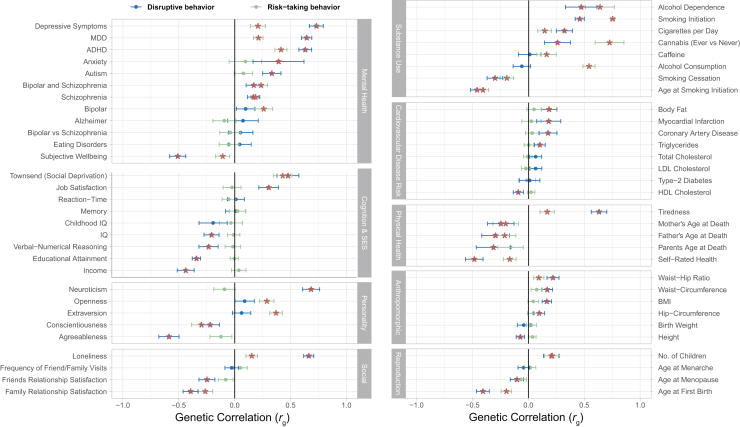
The genetic data could be categorized into disruptive behavior (DB) and risk-taking behavior (RTB) factors, and subsequent genome-wide association meta-analyses provided association statistics for DB and RTB ( = 523,150 and 1,506,537, respectively), yielding 50 and 257 independent genetic signals. The statistics of DB, much more than RTB, signaled genetic predisposition to adverse cognitive, mental health, and personality outcomes. We found evidence for bidirectional causal influences between DB and substance use behaviors. Gene set analyses implicated contributions of neuronal cell development (DB/RTB) and synapse formation and transcription (RTB) mechanisms. Gene-brain mapping confirmed involvement of the amygdala and hypothalamus and highlighted other candidate regions (cerebellar dentate, cuneiform nucleus, claustrum, paracentral cortex). At the cell-type level, we noted enrichment of glutamatergic neurons for DB and RTB.
This bottom-up, data-driven study provides new insights into the genetic signals of externalizing behaviors and indicates that commonalities in genetic architecture contribute to the frequent co-occurrence of different DBs and different RTBs, respectively. Bioinformatic analyses supported the DB versus RTB categorization and indicated relevant biological mechanisms. Generally similar gene-brain mappings indicate that neuroanatomical differences, if any, escaped the resolution of our methods.
为了更深入地了解介导外化行为易感性的生物学因素,我们利用了13种外化表型的全基因组关联研究汇总统计数据。
在基于遗传相似性进行数据分类后,我们进行了多变量全基因组关联荟萃分析,并进行了广泛的生物信息学分析,包括与其他性状的遗传相关性评估、孟德尔随机化以及基因集和基因表达分析。
遗传数据可分为破坏性行为(DB)和冒险行为(RTB)因素,随后的全基因组关联荟萃分析提供了DB和RTB的关联统计数据(分别为 = 523,150和1,506,537),产生了50个和257个独立的遗传信号。DB的统计数据比RTB的统计数据更能表明对不良认知、心理健康和人格结果的遗传易感性。我们发现了DB与物质使用行为之间双向因果影响的证据。基因集分析表明神经元细胞发育(DB/RTB)以及突触形成和转录(RTB)机制的作用。基因-脑图谱证实杏仁核和下丘脑参与其中,并突出了其他候选区域(小脑齿状核、楔形核、屏状核、中央旁皮质)。在细胞类型水平上,我们注意到DB和RTB中谷氨酸能神经元的富集。
这项自下而上、数据驱动的研究为外化行为的遗传信号提供了新的见解,并表明遗传结构的共性分别导致了不同的破坏性行为和不同的冒险行为频繁共现。生物信息学分析支持了DB与RTB的分类,并指出了相关的生物学机制。总体上相似的基因-脑图谱表明,神经解剖学差异(如果有的话)超出了我们方法的分辨率。