Department of Psychiatry, Amsterdam UMC, University of Amsterdam, Amsterdam, The Netherlands.
Addiction Development and Psychopathology (ADAPT) Lab, Department of Psychology, University of Amsterdam, Amsterdam, The Netherlands.
Addict Biol. 2021 Jan;26(1):e12849. doi: 10.1111/adb.12849. Epub 2019 Nov 16.
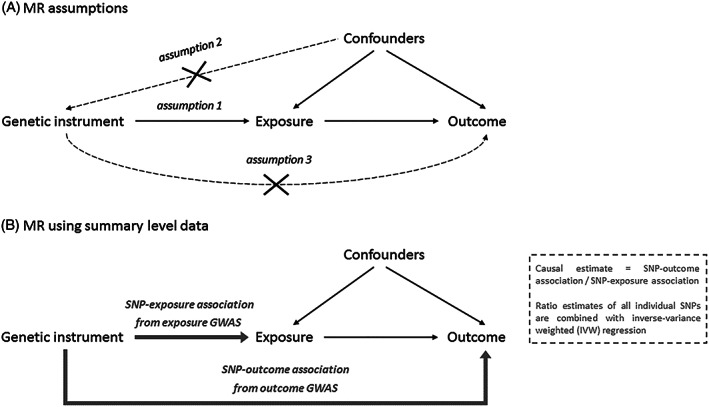
Attention-deficit hyperactivity disorder (ADHD) has consistently been associated with substance use, but the nature of this association is not fully understood. To inform intervention development and public health messages, a vital question is whether there are causal pathways from ADHD to substance use and/or vice versa. We applied bidirectional Mendelian randomization, using summary-level data from the largest available genome-wide association studies (GWAS) on ADHD, smoking (initiation, cigarettes per day, cessation, and a compound measure of lifetime smoking), alcohol use (drinks per week, alcohol problems, and alcohol dependence), cannabis use (initiation), and coffee consumption (cups per day). Genetic variants robustly associated with the "exposure" were selected as instruments and identified in the "outcome" GWAS. Effect estimates from individual genetic variants were combined with inverse-variance weighted regression and five sensitivity analyses (weighted median, weighted mode, MR-Egger, generalized summary data-based MR, and Steiger filtering). We found evidence that liability to ADHD increases likelihood of smoking initiation and heaviness of smoking among smokers, decreases likelihood of smoking cessation, and increases likelihood of cannabis initiation. There was weak evidence that liability to ADHD increases alcohol dependence risk but not drinks per week or alcohol problems. In the other direction, there was weak evidence that smoking initiation increases ADHD risk, but follow-up analyses suggested a high probability of horizontal pleiotropy. There was no clear evidence of causal pathways between ADHD and coffee consumption. Our findings corroborate epidemiological evidence, suggesting causal pathways from liability to ADHD to smoking, cannabis use, and, tentatively, alcohol dependence. Further work is needed to explore the exact mechanisms mediating these causal effects.
注意缺陷多动障碍(ADHD)一直与物质使用有关,但这种关联的性质尚不完全清楚。为了为干预措施的制定和公共卫生信息提供依据,一个至关重要的问题是,ADHD 是否与物质使用之间存在因果关系,或者反之亦然。我们应用了双向孟德尔随机化,使用了最大的可用全基因组关联研究(GWAS)中 ADHD、吸烟(起始、每天吸烟量、戒烟和终生吸烟的综合指标)、饮酒(每周饮酒量、酒精问题和酒精依赖)、大麻使用(起始)和咖啡饮用(每天杯数)的汇总水平数据。与“暴露”强相关的遗传变异被选为工具,并在“结果”GWAS 中确定。从个体遗传变异中得出的效应估计值与逆方差加权回归和五种敏感性分析(加权中位数、加权模式、MR-Egger、广义汇总数据基于 MR 和 Steiger 过滤)相结合。我们发现,ADHD 的易感性增加了吸烟起始和吸烟者吸烟量的可能性,降低了戒烟的可能性,并增加了大麻起始的可能性。有微弱的证据表明,ADHD 的易感性增加了酒精依赖的风险,但不会增加每周饮酒量或酒精问题。在另一方面,有微弱的证据表明,吸烟起始增加了 ADHD 的风险,但后续分析表明存在高水平的水平多效性。ADHD 和咖啡饮用之间没有明确的因果关系的证据。我们的研究结果与流行病学证据相吻合,表明 ADHD 的易感性与吸烟、大麻使用以及暂定的酒精依赖之间存在因果关系。需要进一步的工作来探索介导这些因果效应的确切机制。