Department of Orthopaedics and Trauma, Medical University of Graz, Auenbruggerplatz 5, 8036, Graz, Austria.
Department of Trauma Surgery, Medical University of Vienna, Währinger Gürtel 18-20, 1090, Vienna, Austria.
Arch Orthop Trauma Surg. 2023 Jun;143(6):3219-3227. doi: 10.1007/s00402-022-04682-0. Epub 2022 Nov 4.
Multiple options for individual anterior cruciate ligament (ACL) reconstruction exist; still, there are no guidelines for the preoperative preparation. The aim of this study was to assess the correlation between patients' anthropometric data (height, weight, and age) and measurements of potential tendons (quadriceps-, patella, hamstrings tendon) for an anterior cruciate ligament reconstruction.
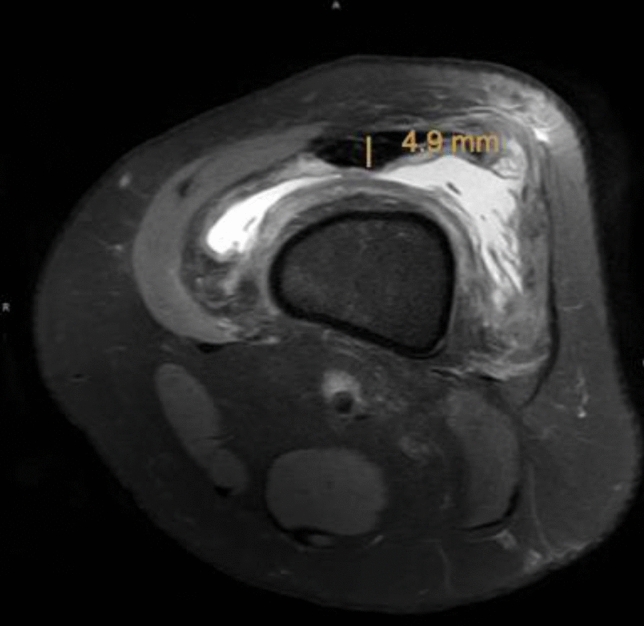
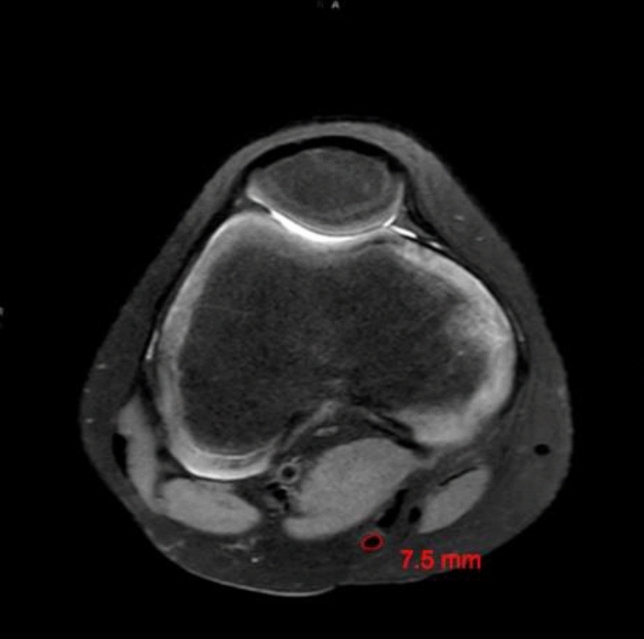
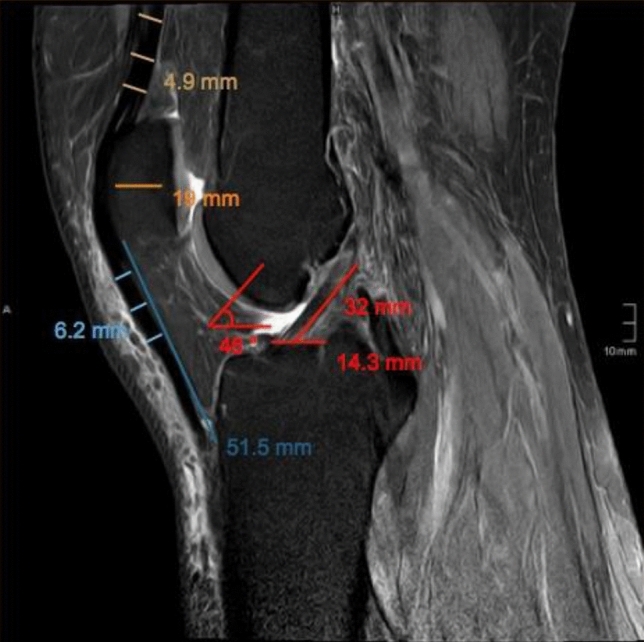
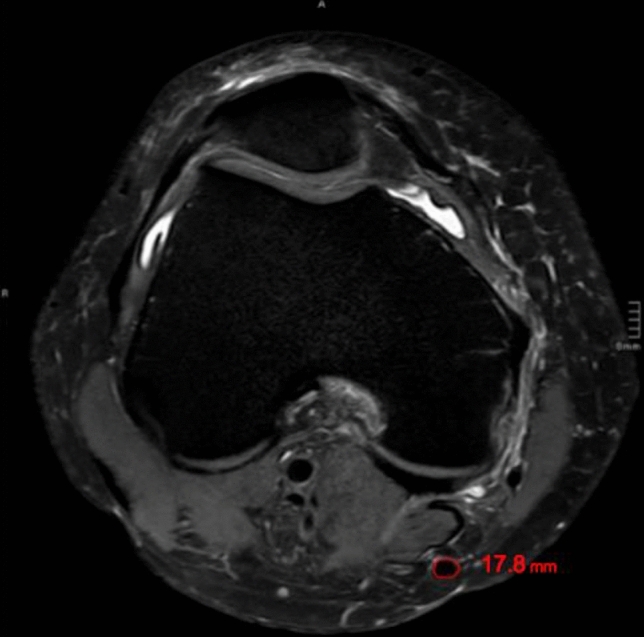
MR images of 102 patients have been analyzed. Measurements of the ACL were performed with respect to its length and angle. The diameter and length as well as width of the quadriceps and patella tendon, the cross-sectional area (CSA) and diameter of the hamstring tendons have been assessed. Patients' height, weight, BMI, sex and age have been recorded. The correlations of these measurements with the patients' anthropometric data have been calculated. Inter-rater and intra-rater reliability based on intra-class correlation (ICC) was evaluated.
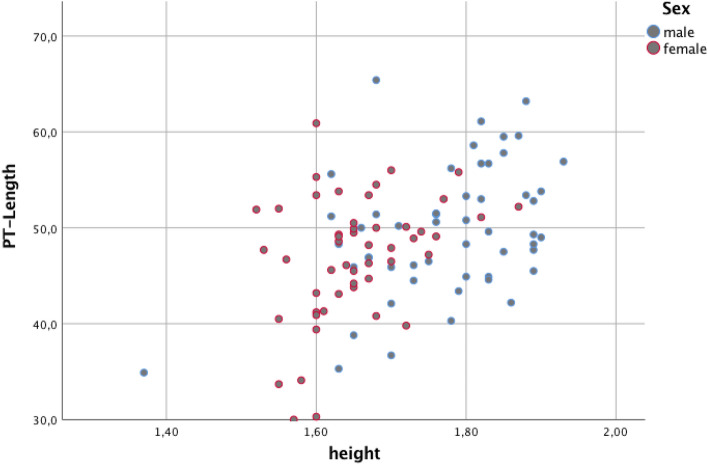
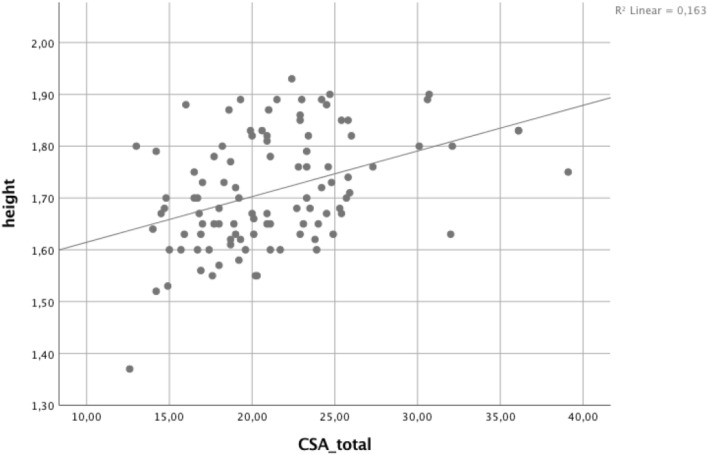
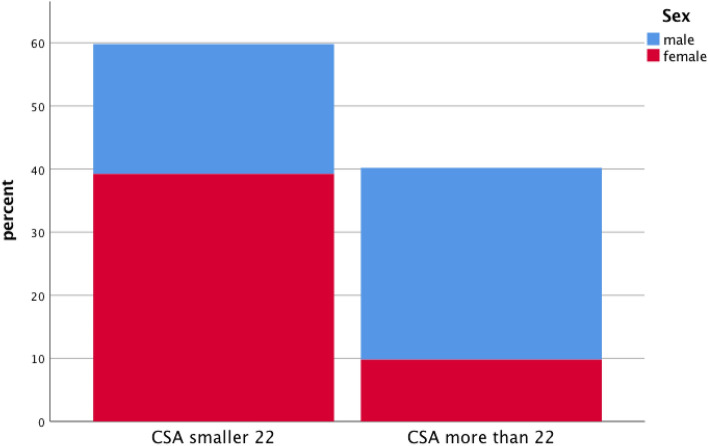
The mean lengths of the ACL were 29.8 ± 3.5 mm, tibial insertion sites 15.8 ± 2.5 mm and femoral insertion sites 15.2 ± 3.0 mm. Thickness of the quadriceps tendons was 4.7 ± 1.1 mm and patella tendon 3.2 ± 0.7 mm. The patients' height showed significant positive correlations with the CSA of the hamstring tendon measurements, the length of the ACL, and the insertion sites of the ACL. Patients' weight showed significant positive correlations with patella tendon thickness, the CSA of the hamstring tendons, the length of the ACL, and the tibial and femoral insertion sites. Patients' age showed a significant positive correlation with patella tendon thickness. The ICCs for intra- and inter-rater reliability were 0.98 (95% CI 0.95-0.99, p < 0.001) and 0.94 (95% CI 0.88-0.99, p < 0.001).
Anthropometric data with respect to height, weight, and sex can help to predict the dimension of tendons for ACL reconstruction and do correlate with ACL tendon. Patients at risk for small graft dimensions and failure are younger than 20 years and physically active. MRIs of patients at risk for small graft dimensions should be analyzed on tendon length and cross section areas preoperatively to determine the appropriate tendon harvest and fixation technique.
前交叉韧带(ACL)重建有多种选择,但仍没有术前准备的指南。本研究旨在评估患者的人体测量学数据(身高、体重和年龄)与潜在肌腱(股四头肌、髌骨、腘绳肌肌腱)测量值之间的相关性,以进行 ACL 重建。
对 102 例患者的 MRI 图像进行了分析。ACL 的测量包括其长度和角度。评估了股四头肌和髌骨肌腱的直径和长度以及宽度、腘绳肌肌腱的横截面积(CSA)和直径。记录了患者的身高、体重、BMI、性别和年龄。计算了这些测量值与患者人体测量学数据的相关性。基于组内相关系数(ICC)评估了内部和外部可靠性。
ACL 的平均长度为 29.8 ± 3.5mm,胫骨止点为 15.8 ± 2.5mm,股骨止点为 15.2 ± 3.0mm。股四头肌肌腱的厚度为 4.7 ± 1.1mm,髌骨肌腱的厚度为 3.2 ± 0.7mm。患者的身高与腘绳肌肌腱 CSA 测量值、ACL 长度和 ACL 止点呈显著正相关。患者的体重与髌骨肌腱厚度、腘绳肌肌腱 CSA、ACL 长度以及胫骨和股骨止点呈显著正相关。患者的年龄与髌骨肌腱厚度呈显著正相关。内部和外部观察者的 ICC 分别为 0.98(95%CI 0.95-0.99,p<0.001)和 0.94(95%CI 0.88-0.99,p<0.001)。
身高、体重和性别等人体测量学数据有助于预测 ACL 重建中肌腱的尺寸,并与 ACL 肌腱相关。有小移植物尺寸和失败风险的患者年龄小于 20 岁且活跃。对于有小移植物尺寸风险的患者,术前应通过 MRI 分析肌腱长度和横截面积,以确定适当的肌腱采集和固定技术。