Chemical Biology Program, Memorial Sloan Kettering Cancer Center, New York, NY 10065, USA.
Pharmacology Program of the Weill Cornell Graduate School of Medical Sciences, Memorial Sloan Kettering Cancer Center, New York, NY 10065, USA.
Sci Immunol. 2022 Nov 11;7(77):eabm7200. doi: 10.1126/sciimmunol.abm7200. Epub 2022 Nov 4.
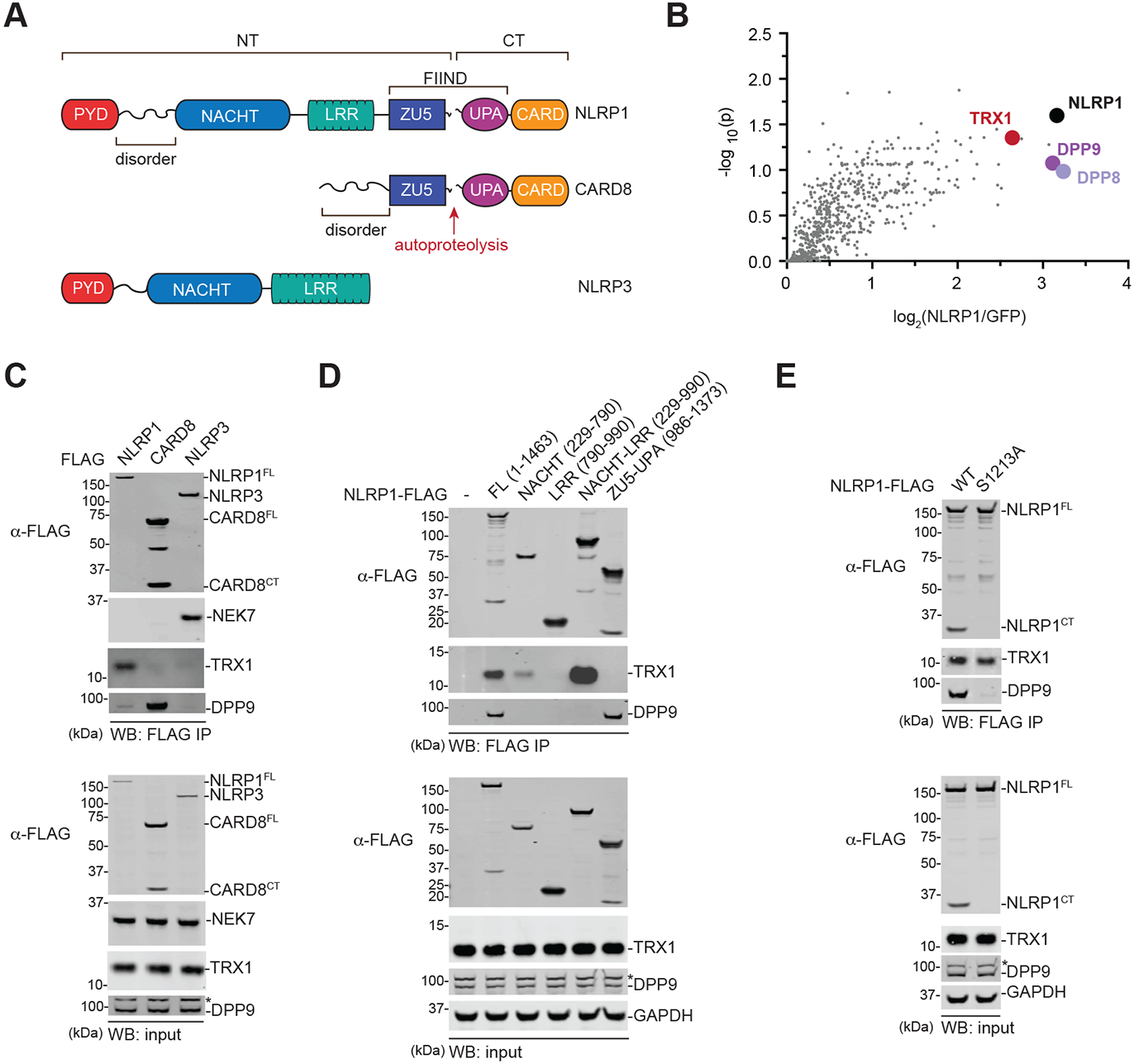
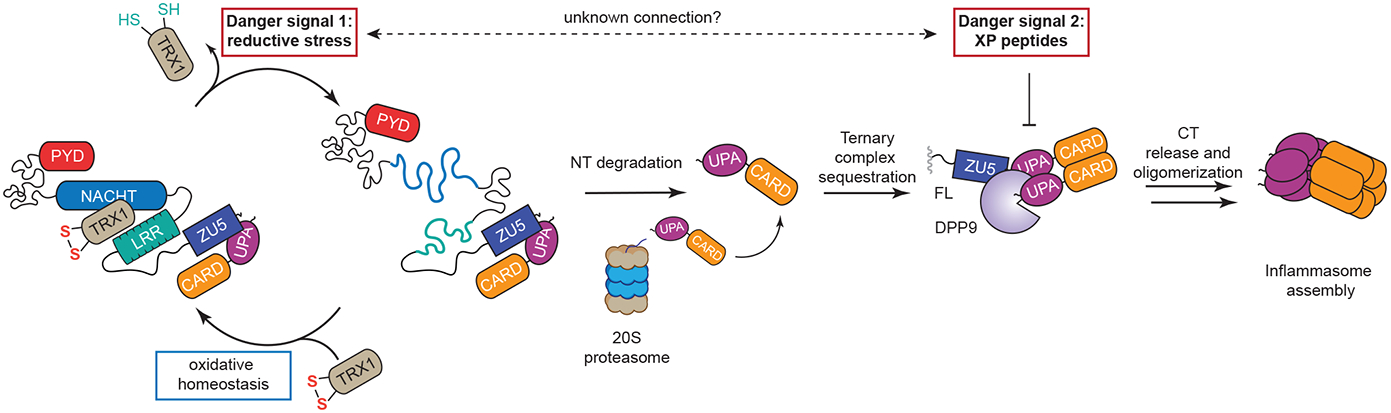
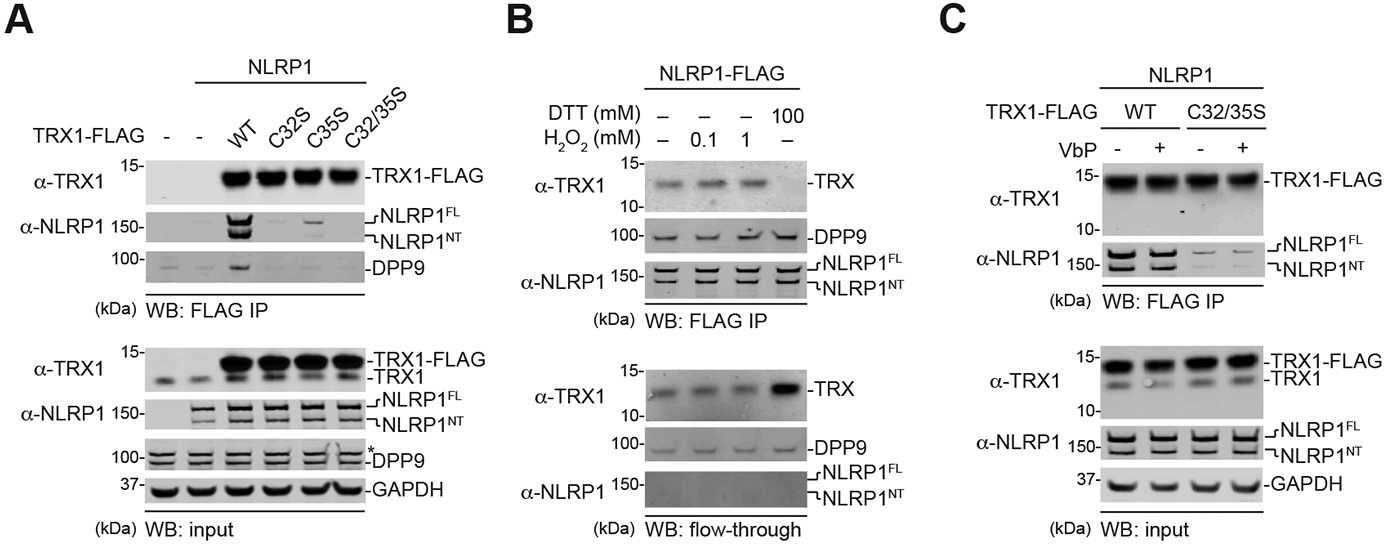
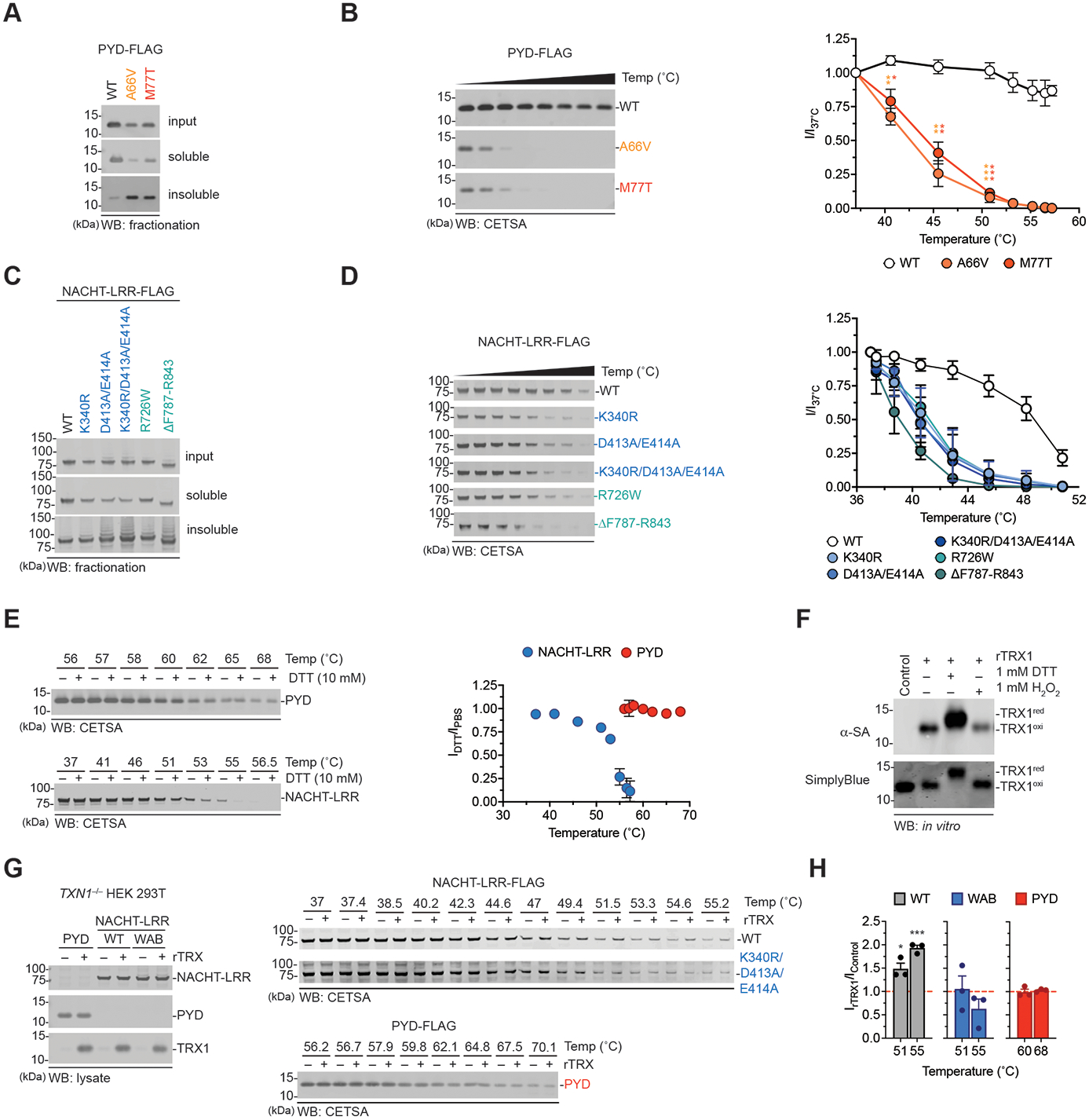
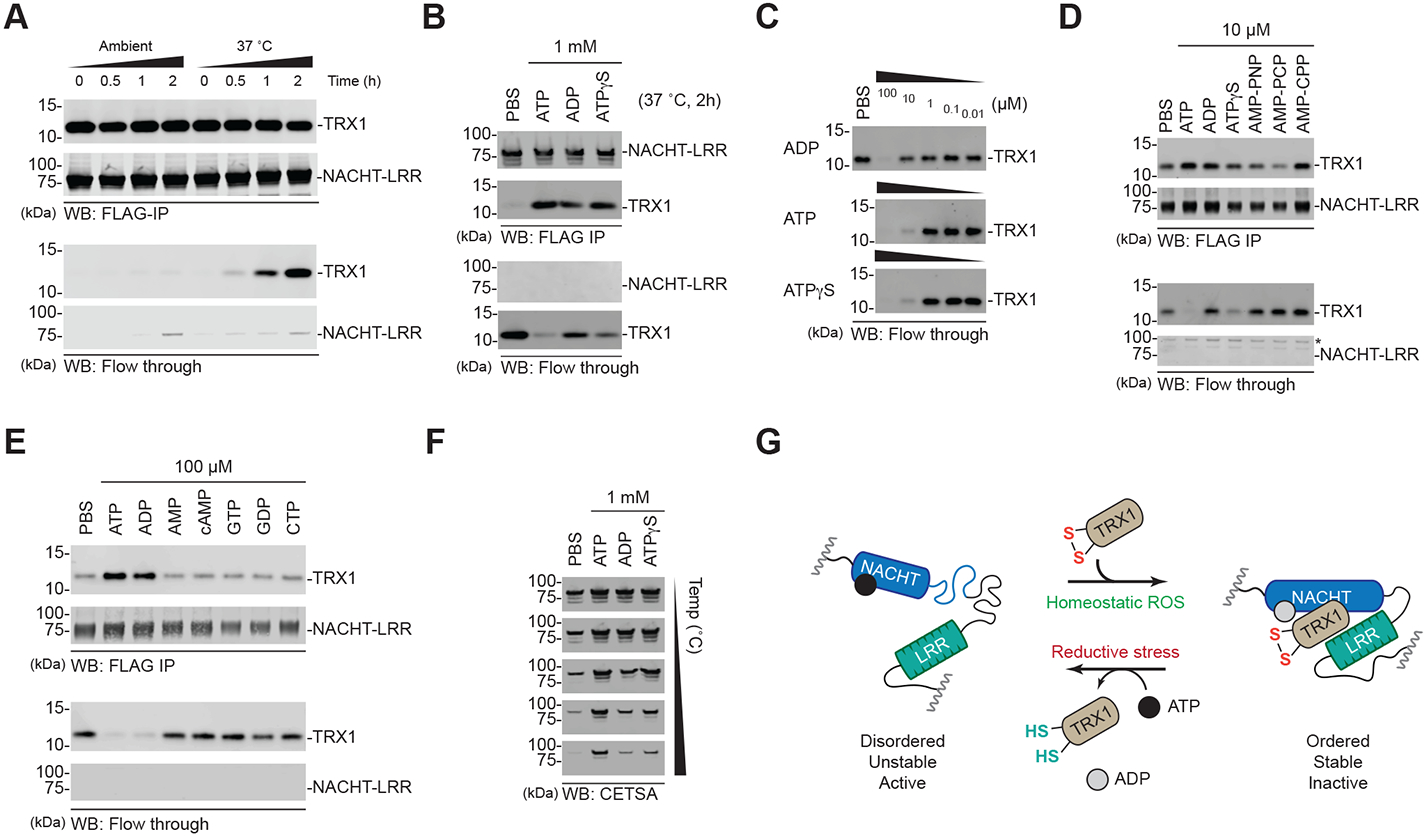
The danger signals that activate the NLRP1 inflammasome have not been established. Here, we report that the oxidized, but not the reduced, form of thioredoxin-1 (TRX1) binds to NLRP1. We found that oxidized TRX1 associates with the NACHT-LRR region of NLRP1 in an ATP-dependent process, forming a stable complex that restrains inflammasome activation. Consistent with these findings, patient-derived and ATPase-inactivating mutations in the NACHT-LRR region that cause hyperactive inflammasome formation interfere with TRX1 binding. Overall, this work strongly suggests that reductive stress, the cellular perturbation that will eliminate oxidized TRX1 and abrogate the TRX1-NLRP1 interaction, is a danger signal that activates the NLRP1 inflammasome.
NLRP1 炎性小体被激活的危险信号尚未确定。在这里,我们报告,氧化型而非还原型硫氧还蛋白-1(TRX1)与 NLRP1 结合。我们发现,氧化型 TRX1 通过依赖于 ATP 的过程与 NLRP1 的 NACHT-LRR 区域结合,形成一种稳定的复合物,从而抑制炎性小体的激活。这些发现与以下结果一致:导致炎性小体过度活跃形成的源自患者的和使 NACHT-LRR 区域中 ATP 酶失活的突变会干扰 TRX1 的结合。总的来说,这项工作强烈表明,还原性应激,即消除氧化型 TRX1 并终止 TRX1-NLRP1 相互作用的细胞扰动,是激活 NLRP1 炎性小体的危险信号。