Molecular and Clinical Pharmacology Program, Institute of Biomedical Science, Faculty of Medicine, Universidad de Chile, Santiago, Chile.
Center for Regenerative Medicine, Faculty of Medicine Clínica Alemana-Universidad del Desarrollo, Santiago, Chile.
Transl Psychiatry. 2022 Nov 4;12(1):462. doi: 10.1038/s41398-022-02225-0.
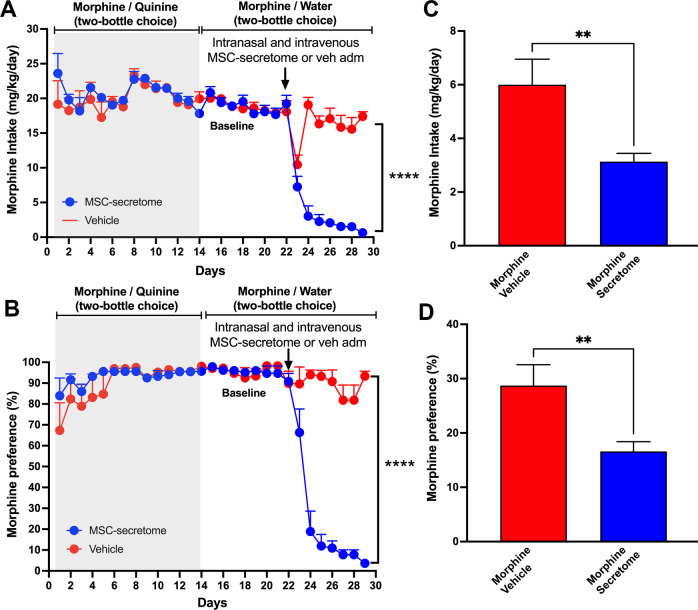
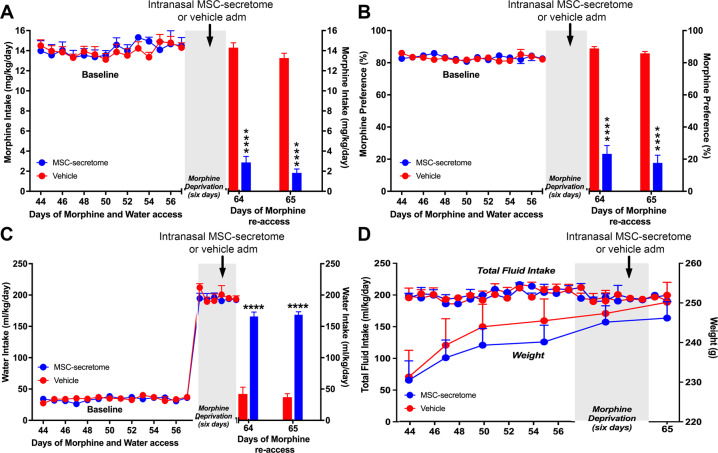
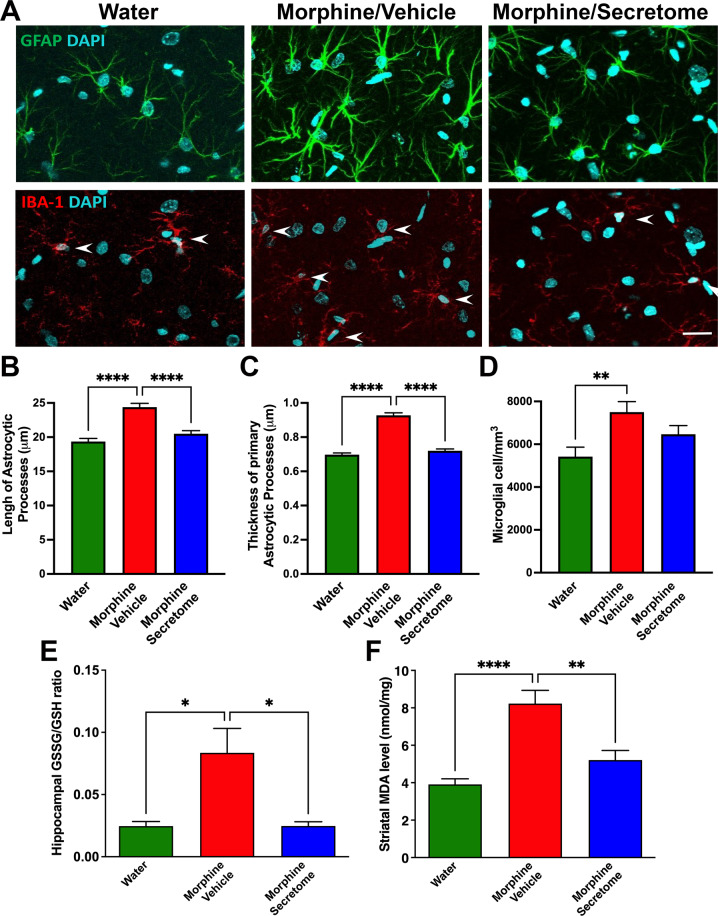
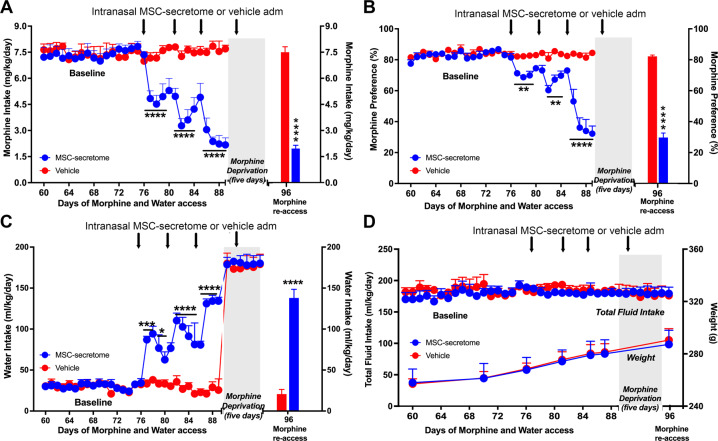
The present study investigates the possible therapeutic effects of human mesenchymal stem cell-derived secretome on morphine dependence and relapse. This was studied in a new model of chronic voluntary morphine intake in Wistar rats which shows classic signs of morphine intoxication and a severe naloxone-induced withdrawal syndrome. A single intranasal-systemic administration of MSCs secretome fully inhibited (>95%; p < 0.001) voluntary morphine intake and reduced the post-deprivation relapse intake by 50% (p < 0.02). Since several studies suggest a significant genetic contribution to the chronic use of many addictive drugs, the effect of MSCs secretome on morphine self-administration was further studied in rats bred as high alcohol consumers (UChB rats). Sub-chronic intraperitoneal administration of morphine before access to increasing concentrations of morphine solutions and water were available to the animals, led UChB rats to prefer ingesting morphine solutions over water, attaining levels of oral morphine intake in the range of those in the Wistar model. Intranasally administered MSCs secretome to UChB rats dose-dependently inhibited morphine self-administration by 72% (p < 0.001); while a single intranasal dose of MSC-secretome administered during a morphine deprivation period imposed on chronic morphine consumer UChB rats inhibited re-access morphine relapse intake by 80 to 85% (p < 0.0001). Both in the Wistar and the UChB rat models, MSCs-secretome administration reversed the morphine-induced increases in brain oxidative stress and neuroinflammation, considered as key engines perpetuating drug relapse. Overall, present preclinical studies suggest that products secreted by human mesenchymal stem cells may be of value in the treatment of opioid addiction.
本研究探讨了人骨髓间充质干细胞分泌组对吗啡依赖和复吸的可能治疗作用。这是在一种新的慢性自愿摄入吗啡的 Wistar 大鼠模型中进行的,该模型显示出典型的吗啡中毒迹象和严重的纳洛酮诱导的戒断综合征。单次鼻内-全身给予 MSC 分泌组完全抑制(>95%;p < 0.001)自愿摄入吗啡,并将剥夺后复吸摄入减少 50%(p < 0.02)。由于几项研究表明,许多成瘾药物的慢性使用与遗传有显著相关性,因此进一步研究了 MSC 分泌组对吗啡自我给药的影响在作为高酒精消费者(UChB 大鼠)饲养的大鼠中。在动物获得递增浓度的吗啡溶液和水之前,亚慢性腹腔内给予吗啡,导致 UChB 大鼠更喜欢摄入吗啡溶液而不是水,达到口服吗啡摄入量范围与 Wistar 模型中的水平相当。鼻内给予 UChB 大鼠 MSC 分泌组剂量依赖性地抑制吗啡自我给药 72%(p < 0.001);而在慢性吗啡消费 UChB 大鼠经历的吗啡剥夺期间给予单次鼻内剂量的 MSC 分泌组抑制复吸吗啡摄入量 80%至 85%(p < 0.0001)。在 Wistar 和 UChB 大鼠模型中,MSC 分泌组给药逆转了吗啡诱导的大脑氧化应激和神经炎症增加,这些被认为是维持药物复吸的关键因素。总之,目前的临床前研究表明,人骨髓间充质干细胞分泌的产物可能对治疗阿片类药物成瘾有价值。