Department of Psychology, University of Almeria, Almeria, Spain.
Health Research Center, University of Almeria, Almeria, Spain.
Sci Rep. 2022 Nov 5;12(1):18756. doi: 10.1038/s41598-022-23301-x.
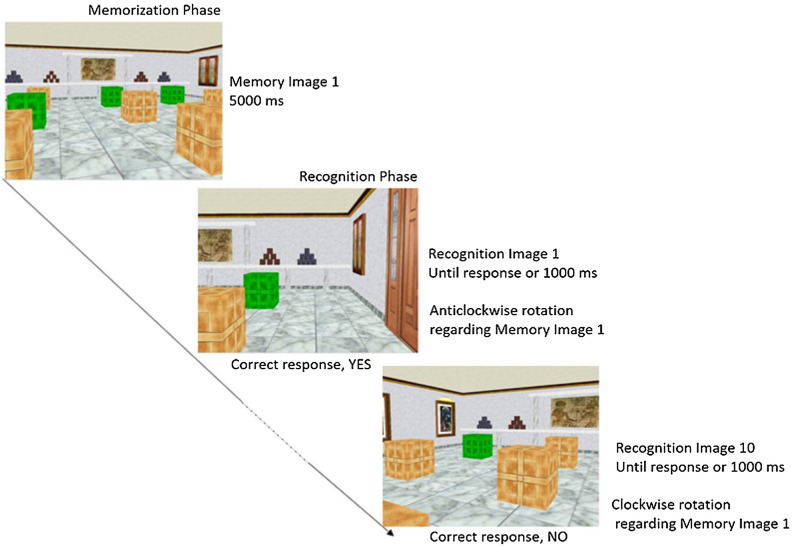
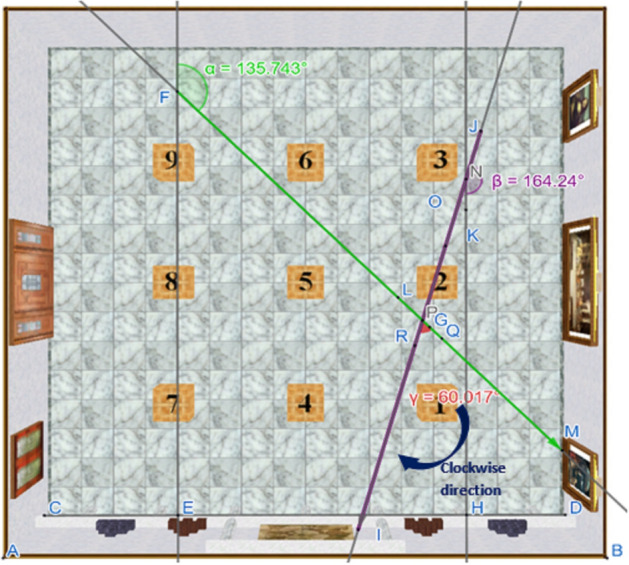
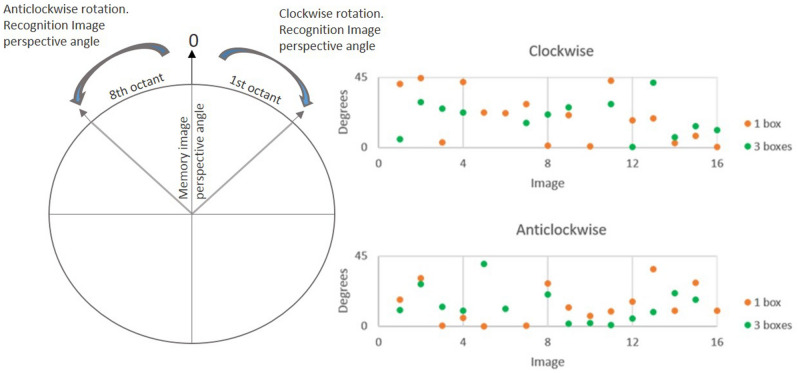
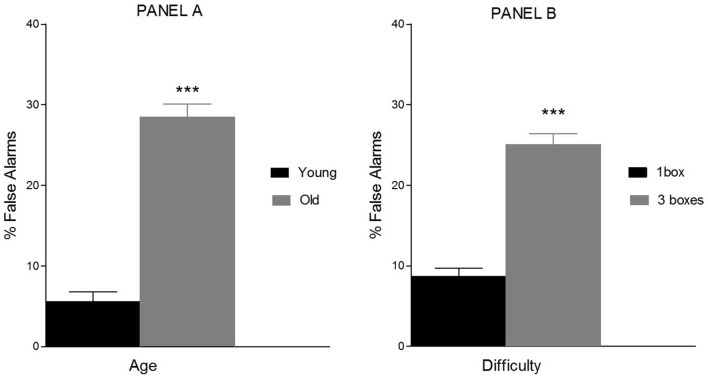
Deciphering the human spatial cognition system involves the development of simple tasks to assess how our brain works with shapes and forms. Prior studies in the mental rotation field disclosed a clockwise rotation bias on how basic stimuli are perceived and processed. However, there is a lack of a substantial scientific background for complex stimuli and how factors like sex or aging could influence them. Regarding the latter point, it is well known that our spatial skills tend to decline as we grow older. Hence, the hippocampal system is especially sensitive to aging. These neural changes underlie difficulties for the elderly in landmark orientation or mental rotation tasks. Thus, our study aimed to check whether the effect of clockwise and anticlockwise rotations in the spatial recognition of complex environments could be modulated by aging. To do so, 40 young adults and 40 old adults performed the ASMRT, a virtual spatial memory recognition test. Results showed that young adults outperformed old adults in all difficulty conditions (i.e., encoding one or three boxes positions). In addition, old adults were affected more than young adults by rotation direction, showing better performance in clockwise rotations. In conclusion, our study provides evidence that aging is particularly affected by the direction of rotation. We suggest that clockwise bias could be linked with the cognitive decline associated with aging. Future studies could address this with brain imaging measures.
破译人类空间认知系统需要开发简单的任务来评估我们的大脑如何处理形状和形式。先前在心理旋转领域的研究揭示了基本刺激被感知和处理的顺时针旋转偏向。然而,对于复杂刺激以及性别或年龄等因素如何影响它们,缺乏实质性的科学背景。关于后者,众所周知,随着年龄的增长,我们的空间技能往往会下降。因此,海马体系统对衰老特别敏感。这些神经变化是老年人在地标定向或心理旋转任务中遇到困难的基础。因此,我们的研究旨在检查在复杂环境的空间识别中,顺时针和逆时针旋转的效果是否可以通过衰老来调节。为此,40 名年轻成年人和 40 名老年成年人进行了 ASMRT,这是一项虚拟空间记忆识别测试。结果表明,在所有难度条件下(即,编码一个或三个盒子位置),年轻成年人的表现都优于老年成年人。此外,旋转方向对老年成年人的影响大于年轻成年人,他们在顺时针旋转中表现更好。总之,我们的研究提供了证据表明,衰老特别受到旋转方向的影响。我们认为,顺时针偏向可能与衰老相关的认知能力下降有关。未来的研究可以通过脑成像测量来解决这个问题。