Guillette T C, Jackson Thomas W, Guillette Matthew, McCord James, Belcher Scott M
Department of Biological Sciences, North Carolina State University, Raleigh, NC, United States.
Center for Environmental Measurement and Modeling, Office of Research and Development, U.S. Environmental Protection Agency, Durham, NC, United States.
Front Toxicol. 2022 Oct 20;4:1010185. doi: 10.3389/ftox.2022.1010185. eCollection 2022.
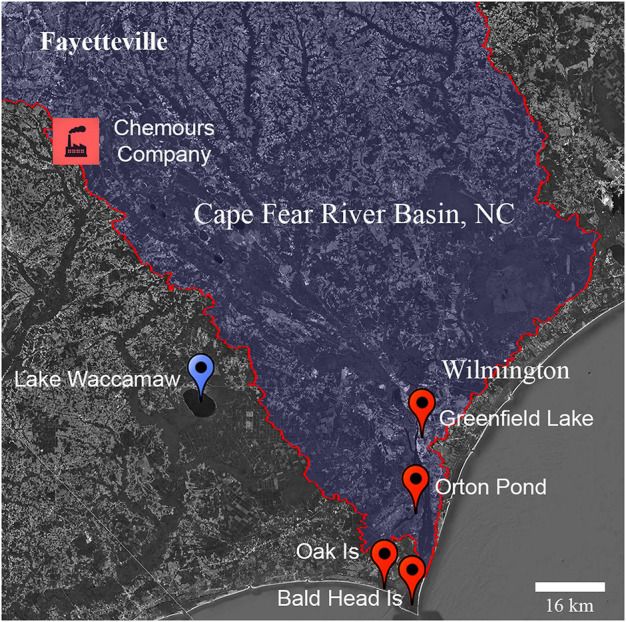
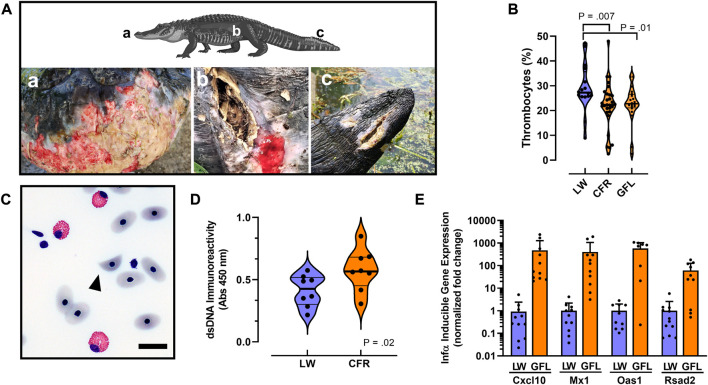
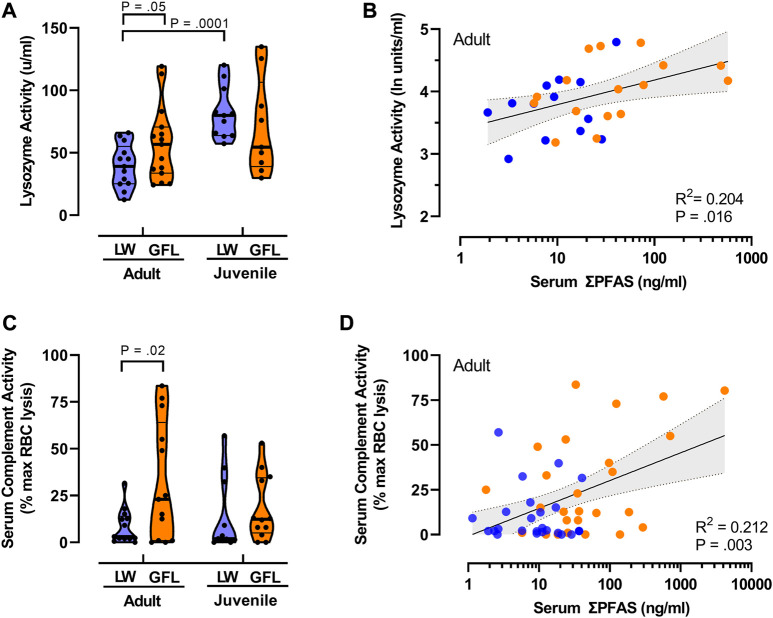
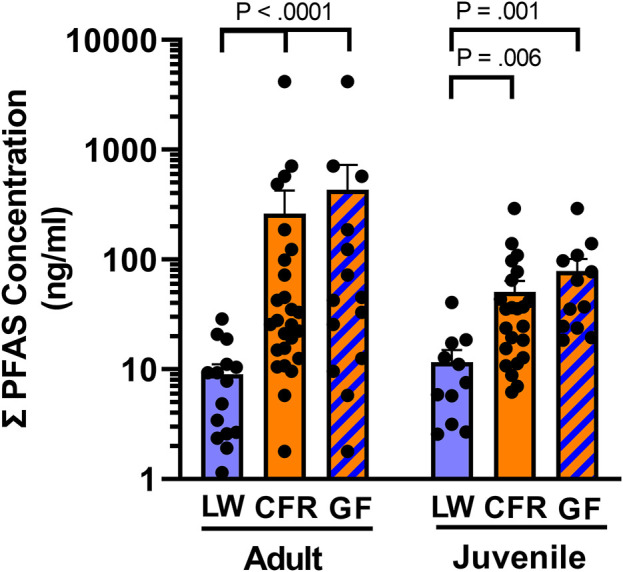
Surface and groundwater of the Cape Fear River basin in central and coastal North Carolina is contaminated with high levels of per- and polyfluoroalkyl substances (PFAS). Elevated levels of PFAS have also been found in blood of fish and wildlife from the Cape Fear River, and in the blood of human populations reliant on contaminated well or surface water from the Cape Fear River basin as a source of drinking water. While the public and environmental health impacts of long-term PFAS exposures are poorly understood, elevated blood concentrations of some PFAS are linked with immunotoxicity and increased incidence of some chronic autoimmune diseases in human populations. The goal of this One Environmental Health study was to evaluate PFAS exposure and biomarkers related to immune health in populations of American alligators (), a protected and predictive sentinel species of adverse effects caused by persistent toxic pollutants. We found that serum PFAS concentrations in alligator populations from the Cape Fear River were increased compared to a reference population of alligators from the adjoining Lumber River basin. The elevated serum PFAS concentrations in the Cape Fear River alligators were associated with increased innate immune activities, and autoimmune-like phenotypes in this population. In addition to evidence of significantly higher double stranded-DNA binding autoantibodies in adult Cape Fear River alligators, our qRT-PCR analysis found remarkably high induction of Interferon-α signature genes implicated in the pathology of human autoimmune disease. We interpret the association of increased PFAS exposure with disrupted immune functions to suggest that PFAS broadly alters immune activities resulting in autoimmune-like pathology in American alligators. This work substantiates and extends evidence from experimental models and human epidemiology studies showing that some PFAS are immune toxicants.
北卡罗来纳州中部和沿海地区的开普菲尔河流域的地表水和地下水受到高浓度的全氟和多氟烷基物质(PFAS)污染。在开普菲尔河的鱼类和野生动物血液中,以及依赖开普菲尔河流域受污染的井水或地表水作为饮用水源的人群血液中,也发现了高浓度的PFAS。虽然长期接触PFAS对公众和环境健康的影响尚不清楚,但血液中某些PFAS浓度升高与人群的免疫毒性和一些慢性自身免疫性疾病发病率增加有关。这项环境卫生研究的目的是评估美国短吻鳄种群中PFAS暴露情况以及与免疫健康相关的生物标志物,美国短吻鳄是一种受保护的、可预测持久性有毒污染物所造成不良影响的指示物种。我们发现,与毗邻的拉姆伯河流域的短吻鳄参考种群相比,开普菲尔河短吻鳄种群的血清PFAS浓度有所升高。开普菲尔河短吻鳄血清PFAS浓度升高与该种群先天性免疫活动增加和自身免疫样表型有关。除了成年开普菲尔河短吻鳄中双链DNA结合自身抗体显著更高的证据外,我们的qRT-PCR分析发现,与人类自身免疫性疾病病理学相关的干扰素-α特征基因有显著高表达。我们将PFAS暴露增加与免疫功能紊乱之间的关联解释为,PFAS广泛改变免疫活动,导致美国短吻鳄出现自身免疫样病理。这项工作证实并扩展了实验模型和人类流行病学研究的证据,表明某些PFAS是免疫毒物。