Njume Ferdinand Ngale, Razzauti Adria, Soler Miguel, Perschin Veronika, Fazeli Gholamreza, Bourez Axelle, Delporte Cedric, Ghogomu Stephen M, Poelvoorde Philippe, Pichard Simon, Birck Catherine, Poterszman Arnaud, Souopgui Jacob, Van Antwerpen Pierre, Stigloher Christian, Vanhamme Luc, Laurent Patrick
Department of Molecular Biology, Institute of Biology and Molecular Medicine, IBMM, Université Libre de Bruxelles, Bruxelles, Belgium.
Molecular and Cell Biology Laboratory, Biotechnology Unit, University of Buea, Buea, Cameroon.
iScience. 2022 Oct 14;25(11):105357. doi: 10.1016/j.isci.2022.105357. eCollection 2022 Nov 18.
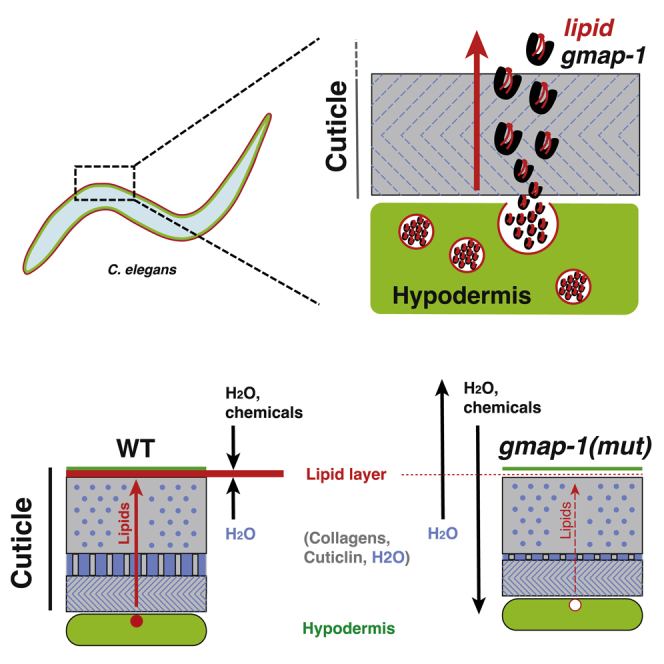
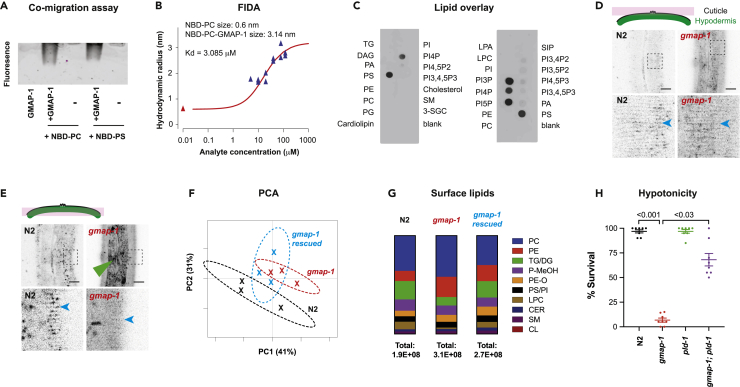
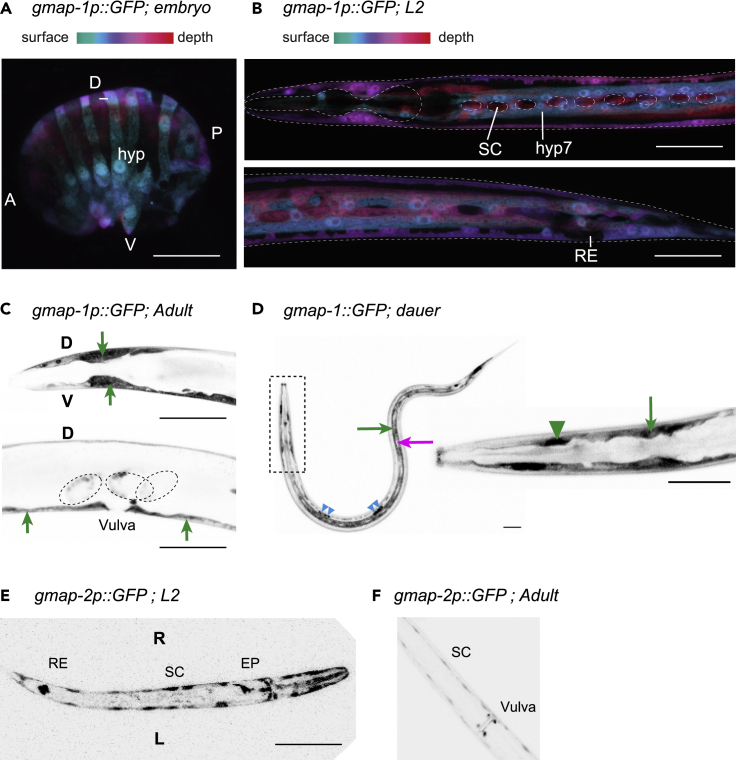
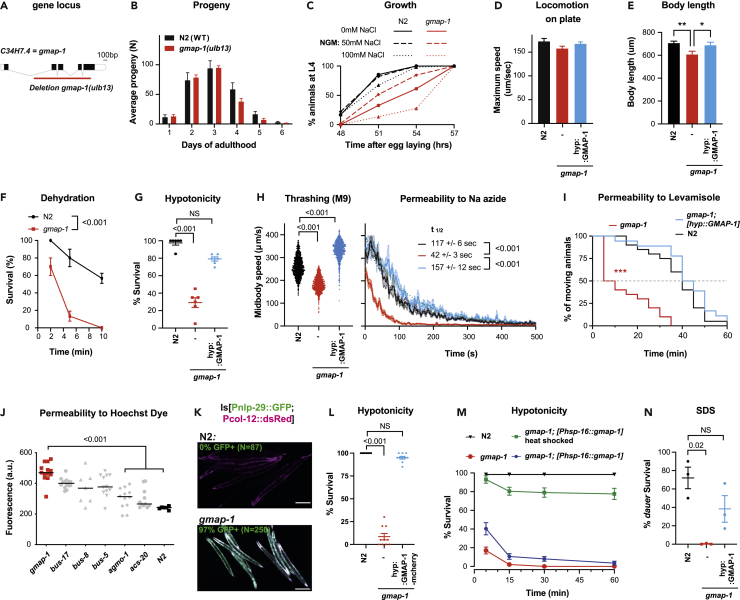
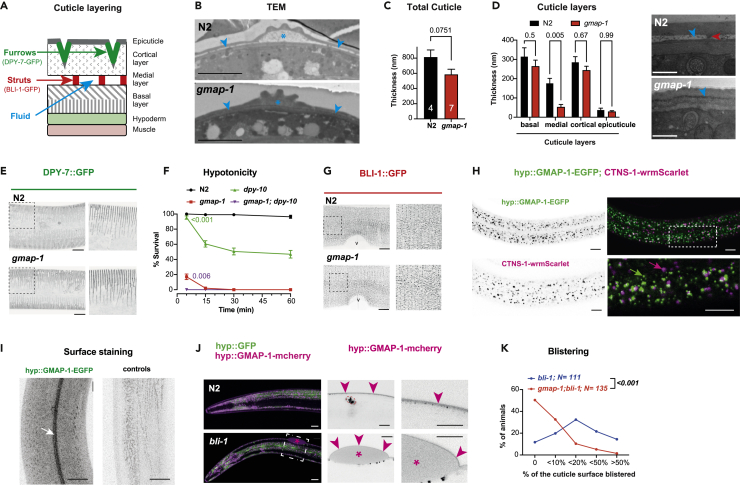
The cuticle of is impermeable to chemicals, toxins, and pathogens. However, increased permeability is a desirable phenotype because it facilitates chemical uptake. Surface lipids contribute to the permeability barrier. Here, we identify the lipid transfer protein GMAP-1 as a critical element setting the permeability of the cuticle. A deletion mutant increases cuticular permeability to sodium azide, levamisole, Hoechst, and DiI. Expressing GMAP-1 in the hypodermis or transiently in the adults is sufficient to rescue this permeability phenotype. GMAP-1 protein is secreted from the hypodermis to the aqueous fluid filling the space between collagen fibers of the cuticle. , GMAP-1 protein binds phosphatidylserine and phosphatidylcholine while , GMAP-1 sets the surface lipid composition and organization Altogether, our results suggest GMAP-1 secreted by hypodermis shuttles lipids to the surface to form the permeability barrier of .
[具体生物名称]的角质层对化学物质、毒素和病原体具有不透性。然而,增加通透性是一种理想的表型,因为它有助于化学物质的吸收。表面脂质构成了通透性屏障。在这里,我们鉴定出脂质转运蛋白GMAP-1是决定[具体生物名称]角质层通透性的关键因素。一个[具体生物名称]缺失突变体增加了角质层对叠氮化钠、左旋咪唑、Hoechst和DiI的通透性。在皮下表达GMAP-1或在成虫中短暂表达足以挽救这种[具体生物名称]通透性表型。GMAP-1蛋白从皮下分泌到填充角质层胶原纤维之间空间的水性流体中。此外,GMAP-1蛋白结合磷脂酰丝氨酸和磷脂酰胆碱,同时,GMAP-1决定表面脂质的组成和组织。总之,我们的结果表明,皮下分泌的GMAP-1将脂质转运到表面以形成[具体生物名称]的通透性屏障。