Instituto de Ecología, Universidad Nacional Autónoma de México, Mexico City, Mexico.
Facultad de Ciencias, Universidad Nacional Autónoma de México, Mexico City, Mexico.
Glob Chang Biol. 2023 Feb;29(4):1062-1079. doi: 10.1111/gcb.16516. Epub 2022 Nov 16.
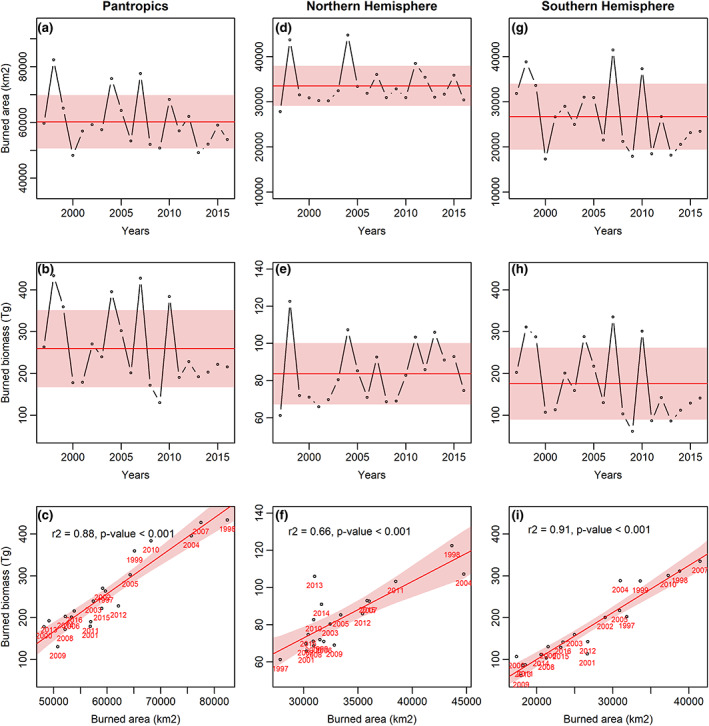
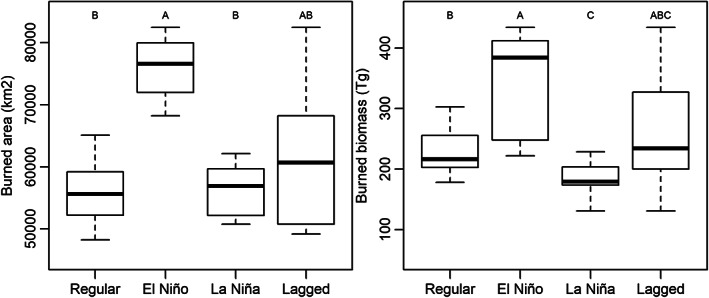
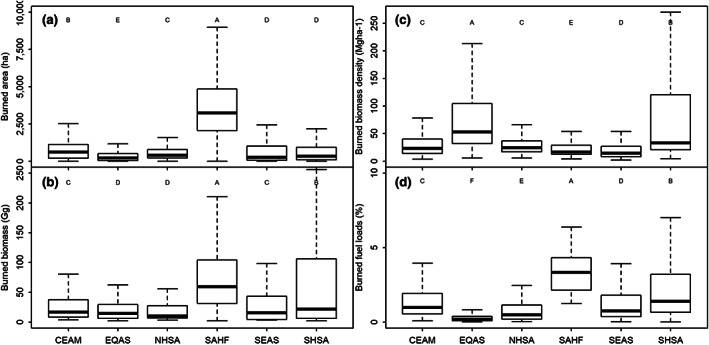
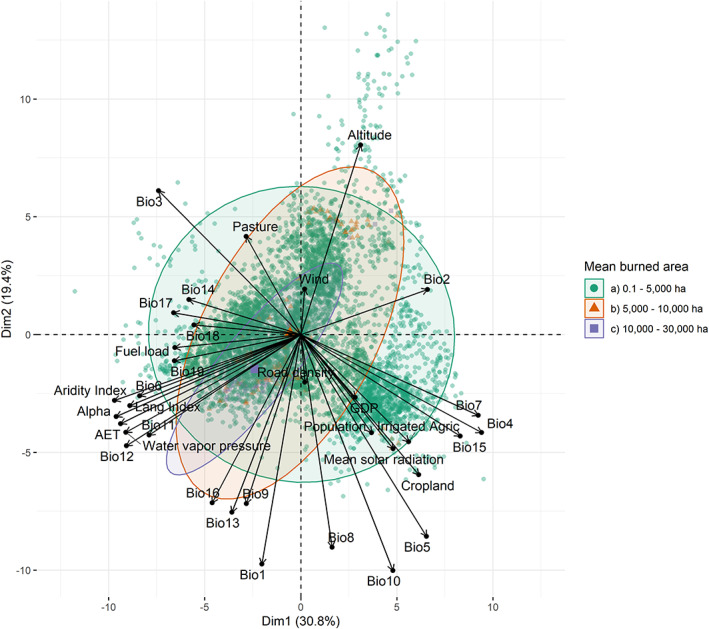
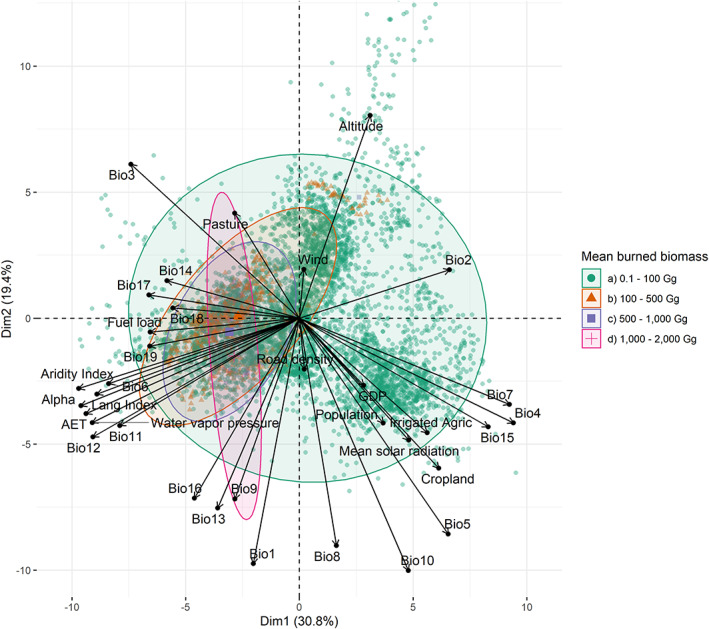
Global burned area has declined by nearly one quarter between 1998 and 2015. Drylands contain a large proportion of these global fires but there are important differences within the drylands, for example, savannas and tropical dry forests (TDF). Savannas, a biome fire-prone and fire-adapted, have reduced the burned area, while the fire in the TDF is one of the most critical factors impacting biodiversity and carbon emissions. Moreover, under climate change scenarios TDF is expected to increase its current extent and raise the risk of fires. Despite regional and global scale effects, and the influence of this ecosystem on the global carbon cycle, little effort has been dedicated to studying the influence of climate (seasonality and extreme events) and socioeconomic conditions of fire regimen in TDF. Here we use the Global Fire Emissions Database and, climate and socioeconomic metrics to better understand long-term factors explaining the variation in burned area and biomass in TDF at Pantropical scale. On average, fires affected 1.4% of the total TDF' area (60,208 km ) and burned 24.4% (259.6 Tg) of the global burned biomass annually at Pantropical scales. Climate modulators largely influence local and regional fire regimes. Inter-annual variation in fire regime is shaped by El Niño and La Niña. During the El Niño and the forthcoming year of La Niña, there is an increment in extension (35.2% and 10.3%) and carbon emissions (42.9% and 10.6%). Socioeconomic indicators such as land-management and population were modulators of the size of both, burned area and carbon emissions. Moreover, fires may reduce the capability to reach the target of "half protected species" in the globe, that is, high-severity fires are recorded in ecoregions classified as nature could reach half protected. These observations may contribute to improving fire-management.
全球燃烧面积在 1998 年至 2015 年间减少了近四分之一。旱地包含了这些全球火灾的很大一部分,但旱地内部存在重要差异,例如草原和热带干旱林(TDF)。草原是一个容易发生火灾和适应火灾的生物群落,其燃烧面积已经减少,而 TDF 的火灾是影响生物多样性和碳排放的最关键因素之一。此外,在气候变化情景下,TDF 的面积预计将增加,并增加火灾的风险。尽管存在区域和全球规模的影响,以及该生态系统对全球碳循环的影响,但在 TDF 中,气候(季节性和极端事件)和火灾发生的社会经济条件的影响方面,几乎没有进行过研究。在这里,我们使用全球火灾排放数据库以及气候和社会经济指标,更好地了解长期因素,这些因素解释了泛热带范围内 TDF 燃烧面积和生物量变化的原因。平均而言,火灾每年影响 TDF 总面积的 1.4%(60208 平方公里),燃烧了全球燃烧生物量的 24.4%(259.6 吨)。气候调节剂在很大程度上影响当地和区域火灾制度。火灾制度的年际变化由厄尔尼诺和拉尼娜现象塑造。在厄尔尼诺和即将到来的拉尼娜年份,其蔓延面积增加了 35.2%和 10.3%,碳排放增加了 42.9%和 10.6%。土地管理和人口等社会经济指标是燃烧面积和碳排放规模的调节剂。此外,火灾可能会降低在全球范围内实现“保护物种过半”目标的能力,即在被归类为自然的生态区域中,高严重程度的火灾正在发生,而这些生态区域可能有一半受到保护。这些观察结果可能有助于改善火灾管理。