Behaviour and Health Research Unit, University of Cambridge, Cambridge, United Kingdom.
School of Psychology, Aston University, Birmingham, United Kingdom.
PLoS Med. 2022 Nov 8;19(11):e1004116. doi: 10.1371/journal.pmed.1004116. eCollection 2022 Nov.
A recent meta-analysis suggested that using physical activity calorie equivalent (PACE) labels results in people selecting and consuming less energy. However, the meta-analysis included only 1 study in a naturalistic setting, conducted in 4 convenience stores. We therefore aimed to estimate the effect of PACE labels on energy purchased in worksite cafeterias in the context of a randomised study design.
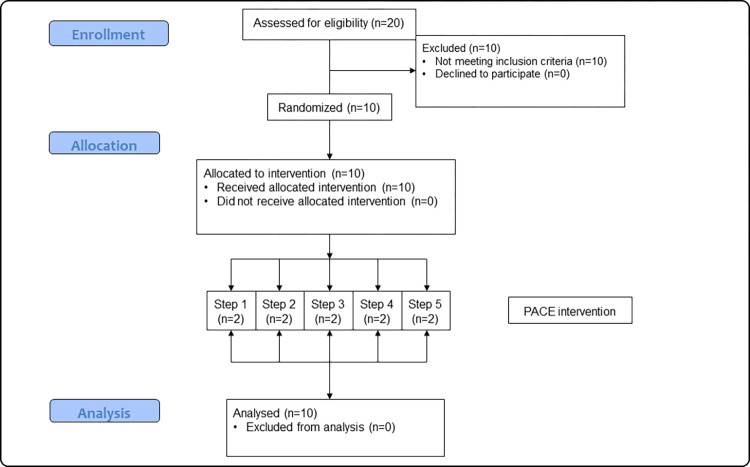
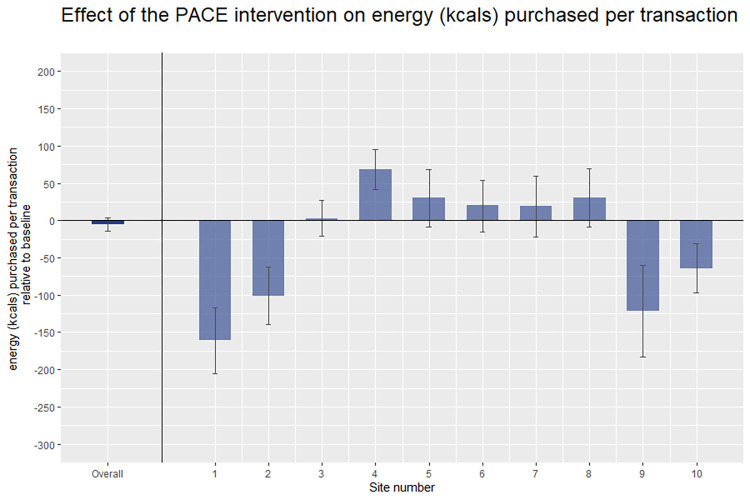
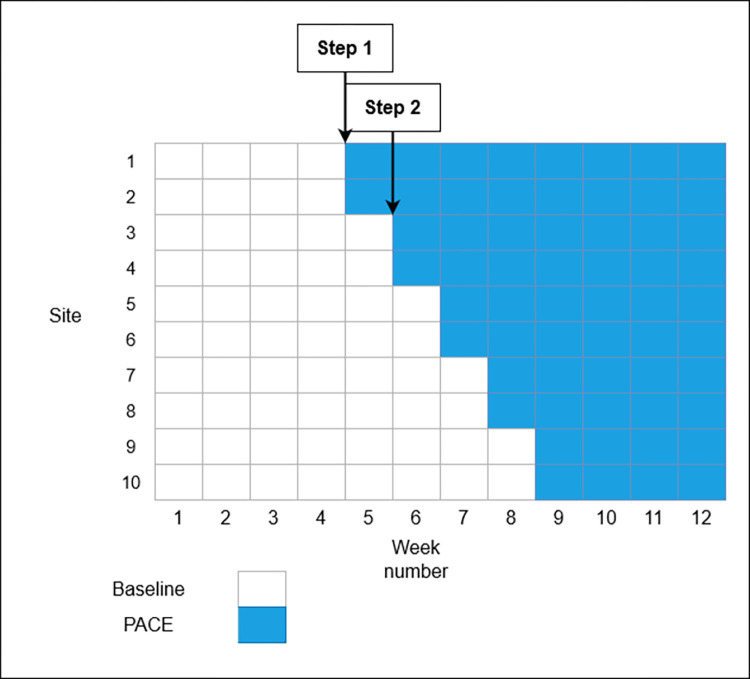
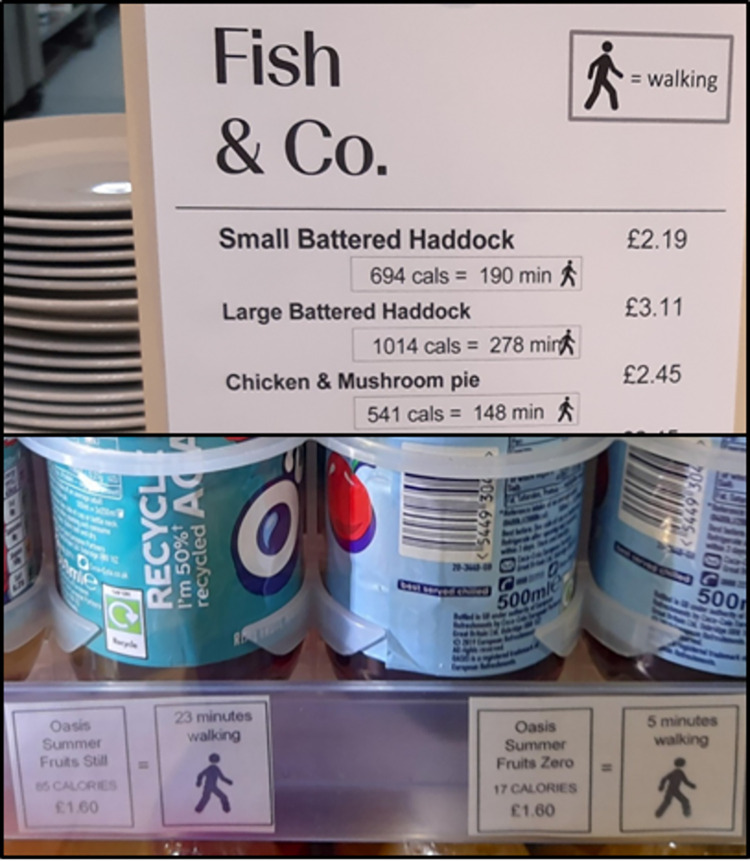
A stepped-wedge randomised controlled trial (RCT) was conducted to investigate the effect of PACE labels (which include kcal content and minutes of walking required to expend the energy content of the labelled food) on energy purchased. The setting was 10 worksite cafeterias in England, which were randomised to the order in which they introduced PACE labels on selected food and drinks following a baseline period. There were approximately 19,000 workers employed at the sites, 72% male, with an average age of 40. The study ran for 12 weeks (06 April 2021 to 28 June 2021) with over 250,000 transactions recorded on electronic tills. The primary outcome was total energy (kcal) purchased from intervention items per day. The secondary outcomes were: energy purchased from non-intervention items per day, total energy purchased per day, and revenue. Regression models showed no evidence of an overall effect on energy purchased from intervention items, -1,934 kcals per site per day (95% CI -5,131 to 1,262), p = 0.236, during the intervention relative to baseline, equivalent to -5 kcals per transaction (95% CI -14 to 4). There was also no evidence for an effect on energy purchased from non-intervention items, -5 kcals per site per day (95% CI -513 to 504), p = 0.986, equivalent to 0 kcals per transaction (95% CI -1 to 1), and no clear evidence for total energy purchased -2,899 kcals per site (95% CI -5,810 to 11), p = 0.051, equivalent to -8 kcals per transaction (95% CI -16 to 0). Study limitations include using energy purchased and not energy consumed as the primary outcome and access only to transaction-level sales, rather than individual-level data.
Overall, the evidence was consistent with PACE labels not changing energy purchased in worksite cafeterias. There was considerable variation in effects between cafeterias, suggesting important unmeasured moderators.
The study was prospectively registered on ISRCTN (date: 30.03.21; ISRCTN31315776).
最近的一项荟萃分析表明,使用身体活动卡路里等效(PACE)标签会导致人们选择和消耗更少的能量。然而,该荟萃分析仅包括在自然环境中进行的 1 项研究,该研究在 4 家便利店进行。因此,我们旨在通过随机研究设计估计 PACE 标签对工作场所自助餐厅购买能量的影响。
一项阶梯式随机对照试验(RCT)旨在调查 PACE 标签(包括卡路里含量和消耗标签食物能量所需的步行分钟数)对购买能量的影响。该研究在英国的 10 个工作场所自助餐厅进行,这些餐厅根据选择的食物和饮料引入 PACE 标签的顺序进行随机分组,然后在基线期之后进行。这些地点约有 19,000 名工人,其中 72%为男性,平均年龄为 40 岁。该研究持续了 12 周(2021 年 4 月 6 日至 6 月 28 日),电子收银机记录了超过 250,000 笔交易。主要结局是干预项目每天购买的总能量(卡路里)。次要结局是:每天购买的非干预项目的能量、每天购买的总能量和收入。回归模型显示,干预期间与基线相比,干预项目购买的能量没有总体影响,每天每个地点减少 1,934 卡路里(95%CI-5,131 至 1,262),p=0.236,相当于每笔交易减少 5 卡路里(95%CI-14 至 4)。也没有证据表明干预项目购买的能量有影响,每天每个地点减少 5 卡路里(95%CI-513 至 504),p=0.986,相当于每笔交易减少 0 卡路里(95%CI-1 至 1),也没有明确证据表明总能量购买减少-2,899 卡路里(95%CI-5,810 至 11),p=0.051,相当于每笔交易减少 8 卡路里(95%CI-16 至 0)。研究的局限性包括将购买的能量而不是消耗的能量作为主要结局,并且仅获得交易级别的销售数据,而不是个人级别的数据。
总体而言,证据表明 PACE 标签不会改变工作场所自助餐厅购买的能量。自助餐厅之间的影响存在相当大的差异,表明存在重要的未测量的调节剂。
该研究于 2021 年 3 月 30 日在 ISRCTN 进行了前瞻性注册(日期:30.03.21;ISRCTN31315776)。