Jang Sun Woo, Song Sang Woo, Kim Young-Hoon, Cho Young Hyun, Hong Seok Ho, Kim Jeong Hoon, Ra Young-Shin, Chong Sangjoon
Department of Neurological Surgery, Asan Medical Center, University of Ulsan College of Medicine, Seoul, Korea.
Brain Tumor Res Treat. 2022 Oct;10(4):255-264. doi: 10.14791/btrt.2022.0035.
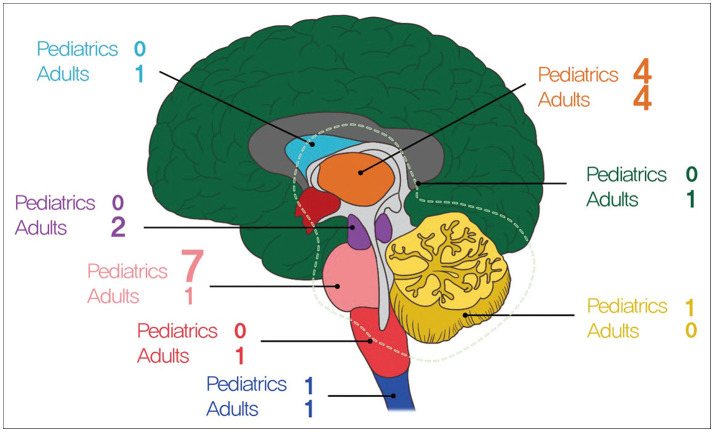
Diffuse midline glioma (DMG) which occurs in midline structures and characterized by harboring K27M mutation in genes encoding the histone 3 protein is classified as World Health Organization (WHO) grade IV regardless of histological findings and has a poor prognosis. Nevertheless, because of its relatively rare incidence compared with other high-grade gliomas, a comprehensive description encompassing clinical features and genomic profiles of DMG is still lacking.
In this study, we analyzed data of 24 patients who were diagnosed as DMG which was confirmed by surgical specimens in both pediatric and adult patients. We described the clinical outcomes of patients with DMG and their genomic profiles through a retrospective analysis of 24 patients with DMG.
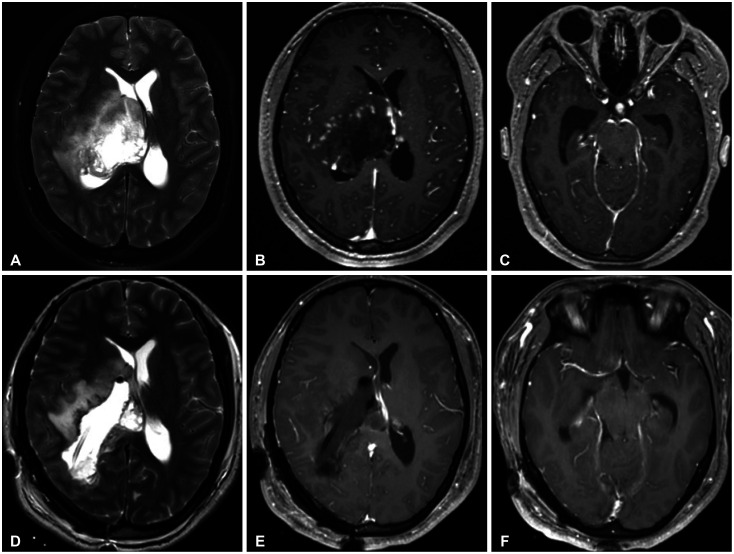
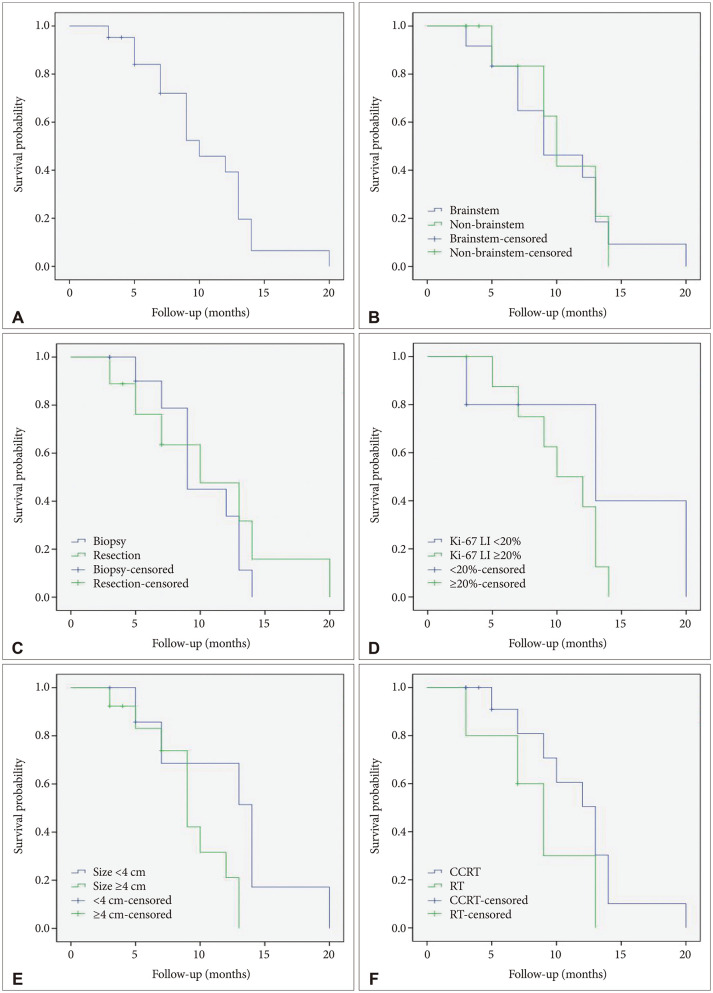
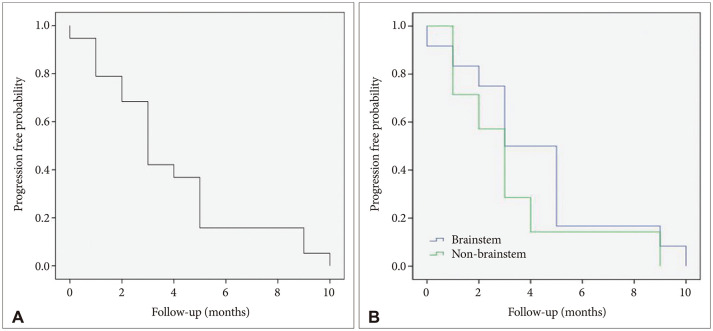
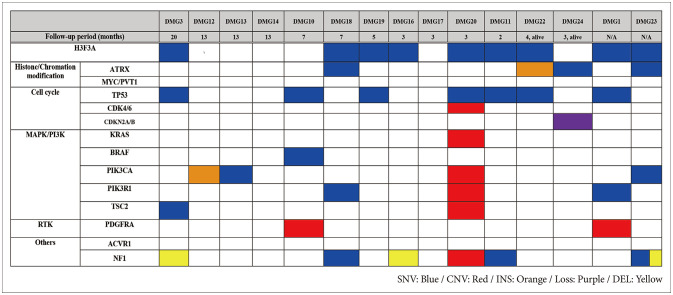
The clinical characteristics of the 24 patients with DMG were analyzed. Ten patients (41%) underwent tumor resection and 14 patients (59%) underwent tumor biopsy. The median overall survival was 10.4 months (95% confidence interval [CI], 8.4 to 12.5) and progression free survival was 3.9 months (95% CI, 2.6 to 5.2). Fifteen patients (62%) were accompanied by hydrocephalus. None of the patient, tumor, or treatment factors had any significant associated with survival. In both immunohistochemistry staining (n=24) and targeted next generation sequencing (n=15), TP53 mutation was the most common genetic mutation (25% and 46%, respectively) found in the patients except alterations in histone 3 protein.
Although surgical treatment of patient with DMG does not affect the overall survival prognosis, it can help improve the patient's accompanying neurological symptoms in some limited cases. Hydrocephalus is often accompanied with DMG and treatment for hydrocephalus is often also required. Multidisciplinary therapeutic approach is needed.
弥漫性中线胶质瘤(DMG)发生于中线结构,其特征是编码组蛋白3蛋白的基因中存在K27M突变,无论组织学结果如何,均被归类为世界卫生组织(WHO)IV级,预后较差。然而,由于其发病率与其他高级别胶质瘤相比相对较低,目前仍缺乏对DMG临床特征和基因组图谱的全面描述。
在本研究中,我们分析了24例经手术标本确诊为DMG的患者的数据,这些患者包括儿童和成人。我们通过对24例DMG患者的回顾性分析,描述了DMG患者的临床结局及其基因组图谱。
分析了24例DMG患者的临床特征。10例患者(41%)接受了肿瘤切除,14例患者(59%)接受了肿瘤活检。中位总生存期为10.4个月(95%置信区间[CI],8.4至12.5),无进展生存期为3.9个月(95%CI,2.6至5.2)。15例患者(62%)伴有脑积水。患者、肿瘤或治疗因素均与生存无显著相关性。在免疫组织化学染色(n = 24)和靶向二代测序(n = 15)中,除组蛋白3蛋白改变外,TP53突变是患者中最常见的基因突变(分别为25%和46%)。
虽然DMG患者的手术治疗不影响总生存预后,但在某些有限的情况下,它可以帮助改善患者伴随的神经症状。脑积水常与DMG伴发,通常也需要对脑积水进行治疗。需要多学科治疗方法。