Department of Anesthesiology, The Second Xiangya Hospital, Central South University, Changsha, 410010, Hunan, People's Republic of China.
Department of Ophthalmology, The Second Xiangya Hospital, Central South University, Changsha, 410010, Hunan, People's Republic of China.
Mol Med. 2022 Nov 8;28(1):133. doi: 10.1186/s10020-022-00561-x.
This study probes into the function and mechanism of bone marrow mesenchymal stem cell (BMSC)-derived exosomes loaded with miR-150-5p in mechanical allodynia.
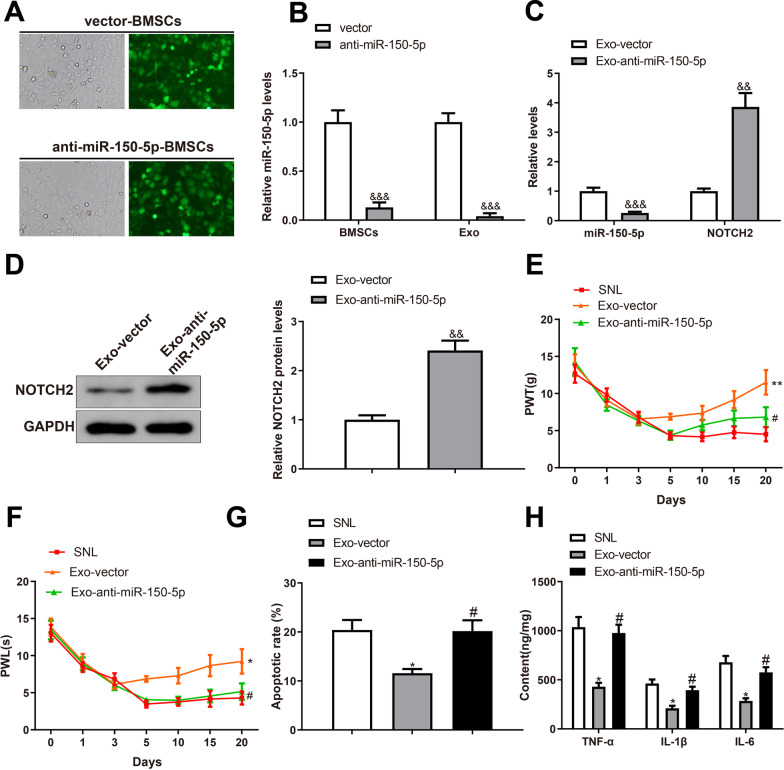
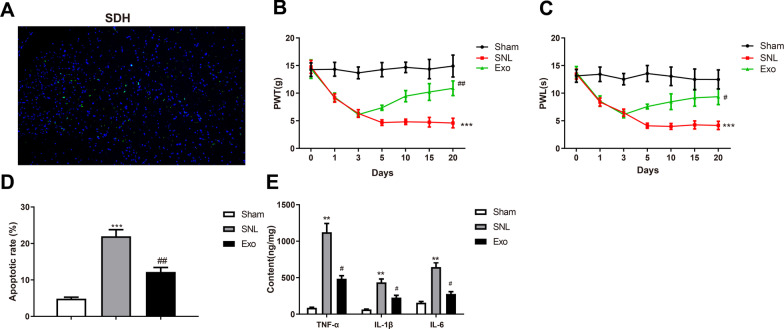
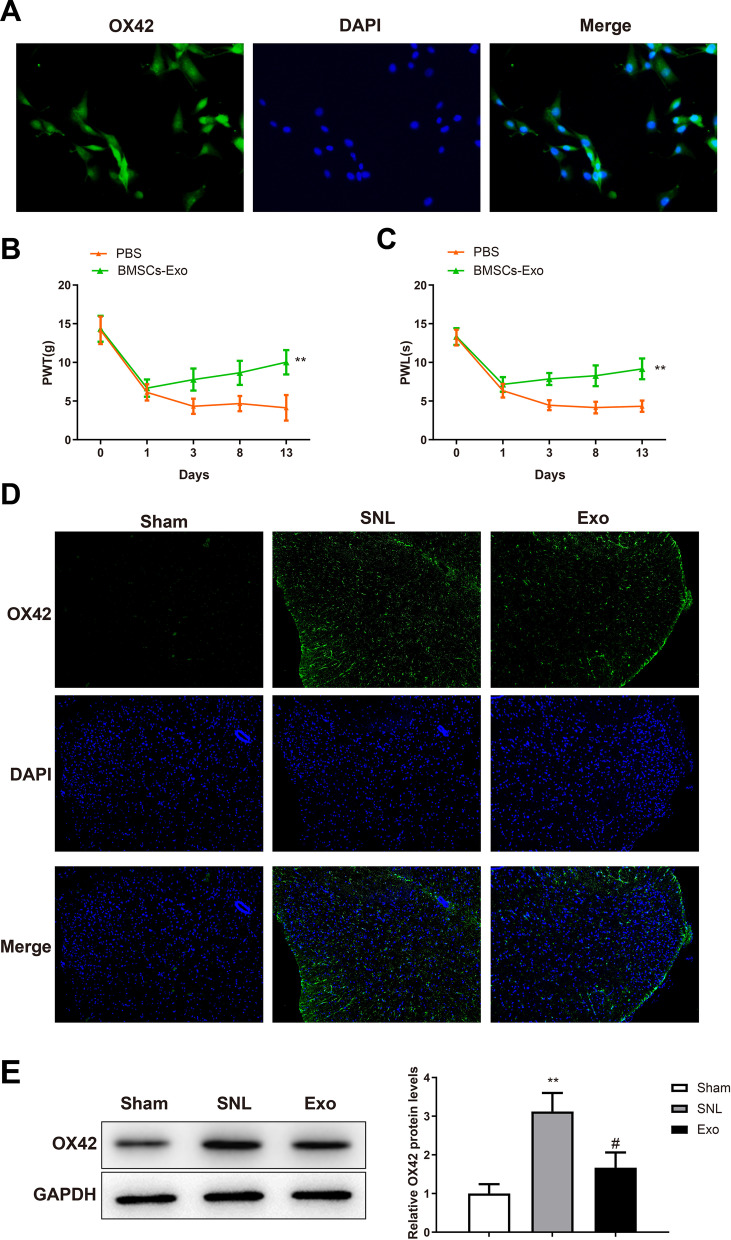
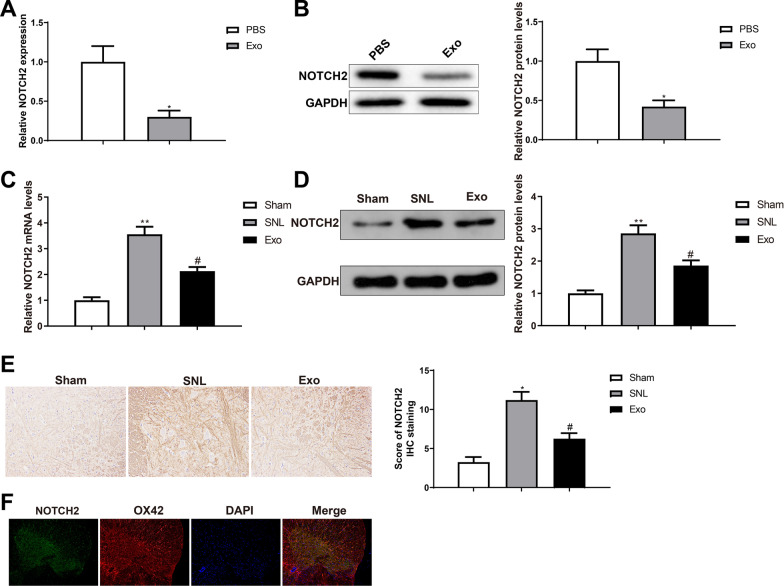
BMSCs were infected with miR-150-5p inhibition lentiviruses to obtain exosomes with low miR-150-5p expression. A L5 spinal nerve ligation (SNL) model was established in rats where exosomes, NOTCH2 overexpression/inhibition plasmids, or microglial cells were intrathecally administered. Hind paw withdrawal threshold (PWT) and paw withdrawal latency (PWL) of rats were measured. TUNEL staining was used to measure the apoptotic rate in rat spinal dorsal horn (SDH), ELISA to evaluate pro-inflammatory factor levels, and RT-qPCR, western blotting, and immunohistochemistry to detect miR-150-5p and NOTCH2 expression. Immunofluorescence was used for localizing exosomes and NOTCH2 and detecting the expression of OX42, a maker for microglia. Dual luciferase reporter and RNA pull down assays were performed to validate the putative binding between miR-150-5p and NOTCH2.
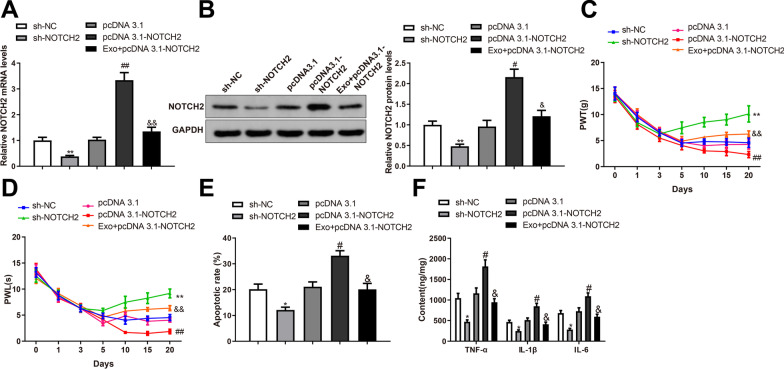
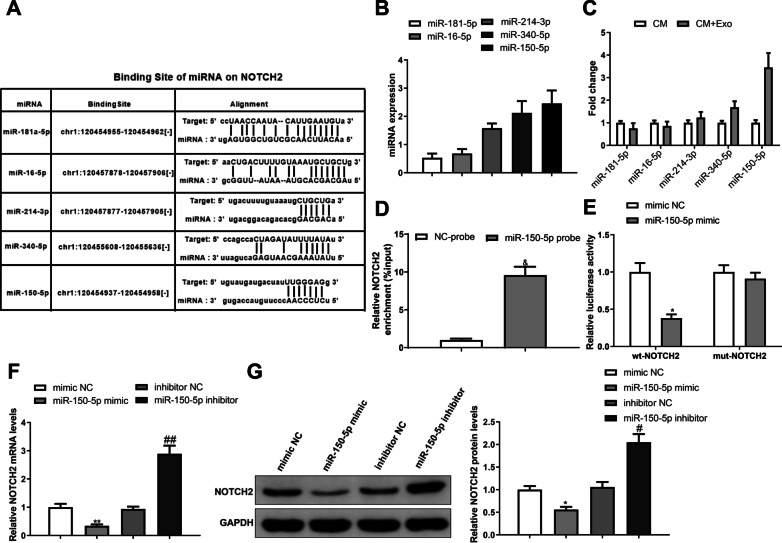
NOTCH2 expressed at a high level and miR-150-5p was downregulated in SDH of SNL rats. Exosomes injected were localized in rat SDH. BMSC-exosomes or NOTCH2 downregulation increased PWT and PWL of SNL rats and reduced apoptosis and inflammation in SDH. In contrast, NOTCH2 overexpression aggravated mechanical allodynia and SDH injury. Moreover, inhibiting miR-150-5p in BMSC-exosomes offset the therapeutic effects of BMSC-exosomes. Microglia activation induced mechanical allodynia in wild rats, while intrathecal injection of microglial cells incubated with BMSC-exosomes showed alleviated mechanical allodynia in SNL rats. NOTCH2 was targeted by miR-150-5p.
BMSC-derived exosomal miR-150-5p alleviates mechanical allodynia by targeting NOTCH2 in microglial cells.
本研究探讨了骨髓间充质干细胞(BMSC)来源的外泌体负载 miR-150-5p 在机械性痛觉过敏中的作用和机制。
BMSC 被 miR-150-5p 抑制慢病毒感染,获得 miR-150-5p 表达低的外泌体。在大鼠中建立 L5 脊神经结扎(SNL)模型,鞘内给予外泌体、NOTCH2 过表达/抑制质粒或小胶质细胞。测量大鼠的后爪退缩阈值(PWT)和后爪退缩潜伏期(PWL)。TUNEL 染色测量大鼠脊髓背角(SDH)的凋亡率,ELISA 评估促炎因子水平,RT-qPCR、western blot 和免疫组化检测 miR-150-5p 和 NOTCH2 的表达。免疫荧光用于定位外泌体和 NOTCH2,并检测 OX42 的表达,OX42 是小胶质细胞的标志物。双荧光素酶报告和 RNA 下拉实验验证了 miR-150-5p 与 NOTCH2 之间的假定结合。
SNL 大鼠 SDH 中 NOTCH2 表达水平升高,miR-150-5p 下调。注射的外泌体定位于大鼠 SDH。BMSC-外泌体或 NOTCH2 下调增加了 SNL 大鼠的 PWT 和 PWL,并减少了 SDH 的凋亡和炎症。相反,NOTCH2 过表达加重了机械性痛觉过敏和 SDH 损伤。此外,BMSC-外泌体中 miR-150-5p 的抑制抵消了 BMSC-外泌体的治疗效果。野生大鼠小胶质细胞激活诱导机械性痛觉过敏,而鞘内注射与 BMSC-外泌体孵育的小胶质细胞可减轻 SNL 大鼠的机械性痛觉过敏。NOTCH2 是 miR-150-5p 的靶标。
BMSC 来源的外泌体 miR-150-5p 通过靶向小胶质细胞中的 NOTCH2 缓解机械性痛觉过敏。