Lehrstuhl für Technische Mikrobiologie, Technische Universität München (TUM), 85354, Freising, Germany.
BMC Microbiol. 2022 Nov 8;22(1):267. doi: 10.1186/s12866-022-02675-y.
Lactic acid bacteria (LAB) are used as starters in a wide variety of food fermentations. While the number of reports of phages infecting other LAB steadily increased over the years, information about phage associated with Latilactobacillus sakei, a frequently used meat starter, remains scarce.
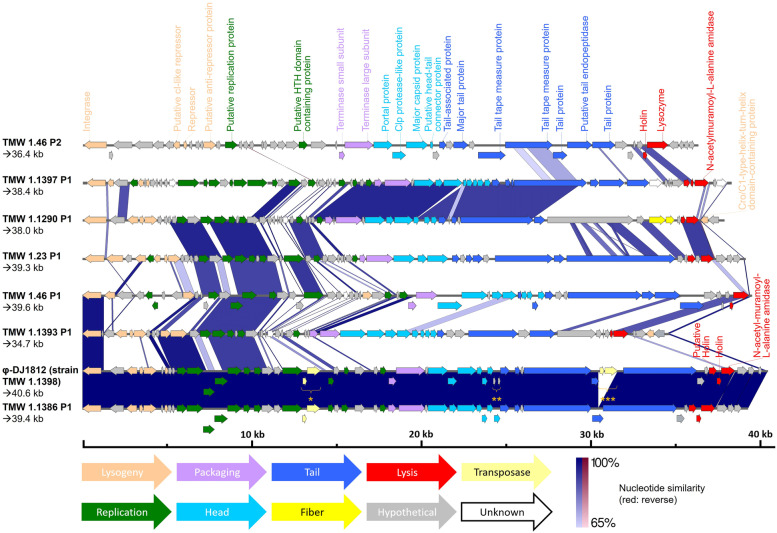
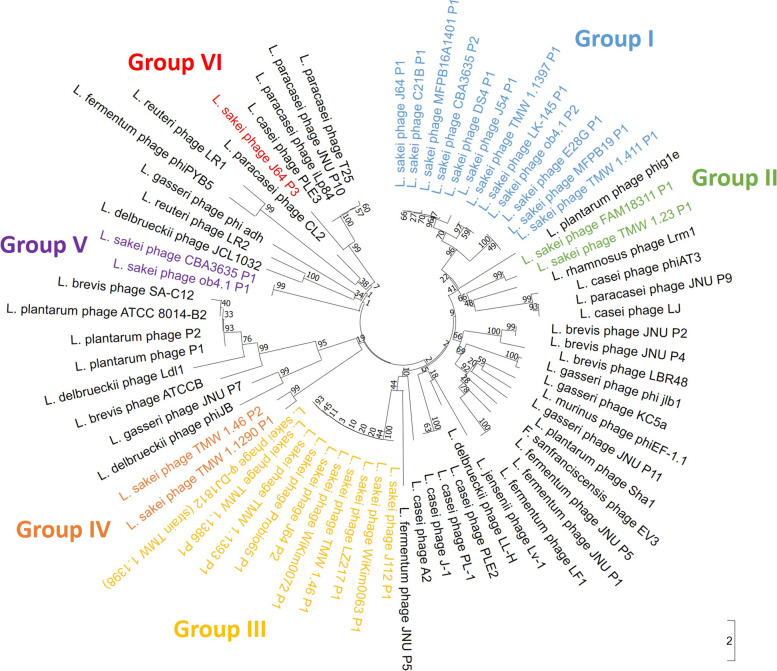
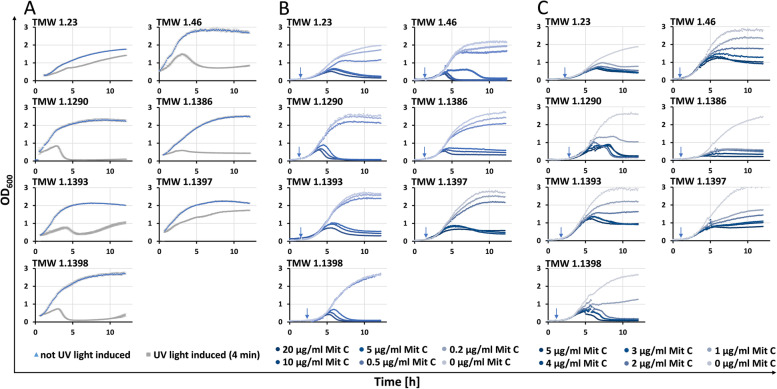
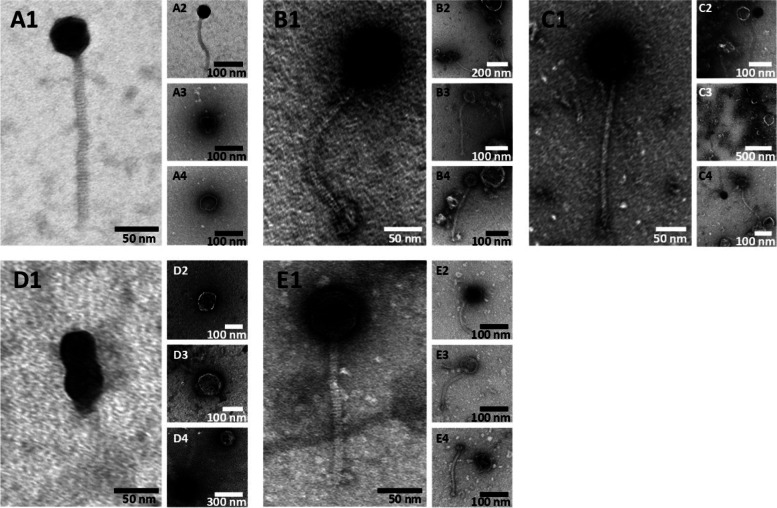
In this study, a predictive genomic analysis of 43 Latilactobacillus sakei genomes revealed the presence of 26 intact, eleven questionable and 52 incomplete prophage sequences across all analysed genomes with a range of one to five predicted prophage sequences per strain. Screening 24 sakei strains for inducible prophages by utilising UV light or mitomycin C, we identified seven lysogenic strains showing lysis after induction during subsequent growth monitoring. Electron microscopic analysis revealed fully assembled virions in the purified lysates of four samples, thus confirming successful prophage induction. All virions featured icosahedral, isomeric heads and long, most likely non-contractile tails indicating siphoviruses. By performing phylogenetic analyses with various marker genes as well as full prophage sequences, we displayed a remarkably high diversity of prophages, that share a similar gene module organisation and six different chromosomal integration sites were identified. By sequencing viral DNA purified from lysates of Latilactobacillus sakei TMW 1.46, we demonstrate that simultaneous induction of multiple prophages is possible.
With this work, we not only provide data about the incidence of prophages harboured by the meat starter Latilactobacillus sakei, we also demonstrated their potential to impact growth of their host after induction, as well as forming seemingly fully assembled virions.
乳酸菌(LAB)被广泛用作各种食品发酵的起始剂。虽然多年来感染其他乳酸菌的噬菌体报告数量稳步增加,但有关与常用于肉类发酵的清酒乳杆菌相关的噬菌体的信息仍然很少。
在这项研究中,对 43 个清酒乳杆菌基因组进行了预测基因组分析,结果显示在所有分析的基因组中存在 26 个完整的、11 个可疑的和 52 个不完整的前噬菌体序列,每个菌株预测有 1 到 5 个前噬菌体序列。通过利用紫外线或丝裂霉素 C筛选 24 个清酒乳杆菌菌株中的诱导性前噬菌体,我们鉴定出了 7 个溶原菌株,在随后的生长监测中诱导后出现裂解。电子显微镜分析显示,在四个样本的纯化裂解物中存在完全组装的病毒粒子,从而证实了成功的前噬菌体诱导。所有病毒粒子均具有二十面体、同构的头部和长的、很可能是非收缩的尾部,表明它们是长尾噬菌体。通过使用各种标记基因以及完整的前噬菌体序列进行系统发育分析,我们展示了前噬菌体的极高多样性,它们具有相似的基因模块组织,并且鉴定出了六个不同的染色体整合位点。通过对从清酒乳杆菌 TMW 1.46 的裂解物中纯化的病毒 DNA 进行测序,我们证明了同时诱导多个前噬菌体是可能的。
通过这项工作,我们不仅提供了关于肉类发酵起始剂清酒乳杆菌所携带的前噬菌体发生率的数据,还证明了它们在诱导后对宿主生长的潜在影响,以及形成看似完全组装的病毒粒子的能力。