Pei Zhangming, Sadiq Faizan Ahmed, Han Xiao, Zhao Jianxin, Zhang Hao, Ross R Paul, Lu Wenwei, Chen Wei
State Key Laboratory of Food Science and Technology, Jiangnan University, Wuxi, Jiangsu, China.
School of Food Science and Technology, Jiangnan University, Wuxi, Jiangsu, China.
mSystems. 2021 Jun 29;6(3):e0121120. doi: 10.1128/mSystems.01211-20. Epub 2021 Jun 1.
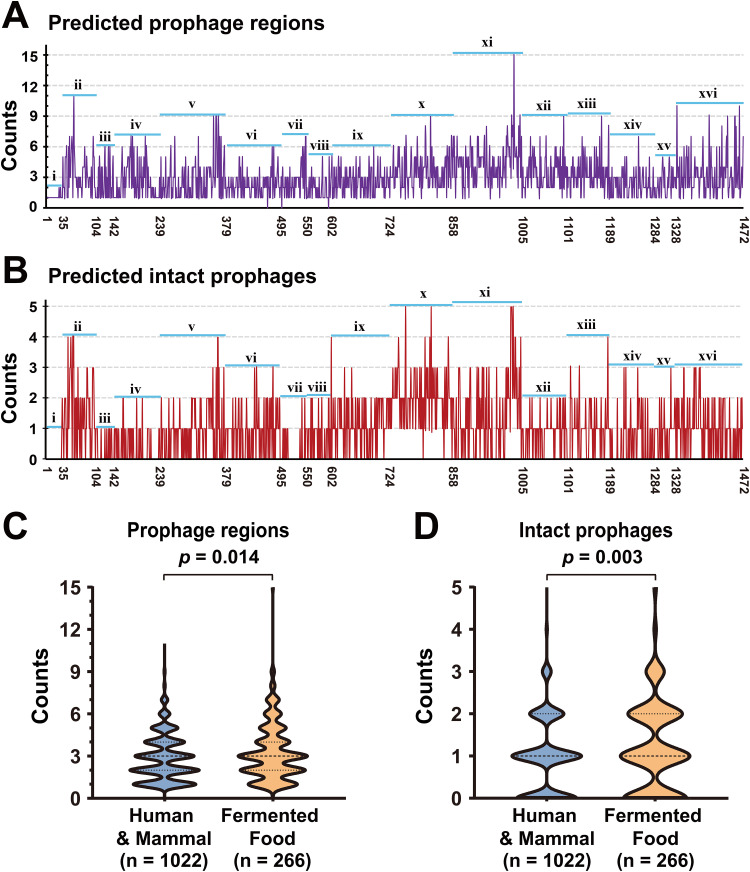
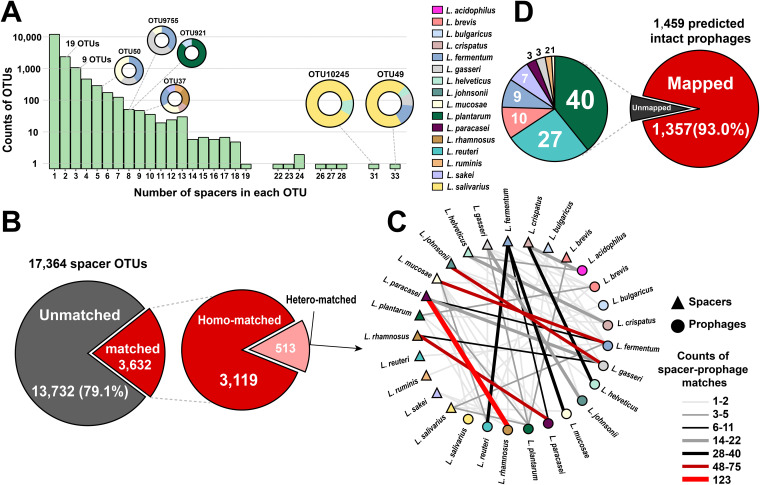
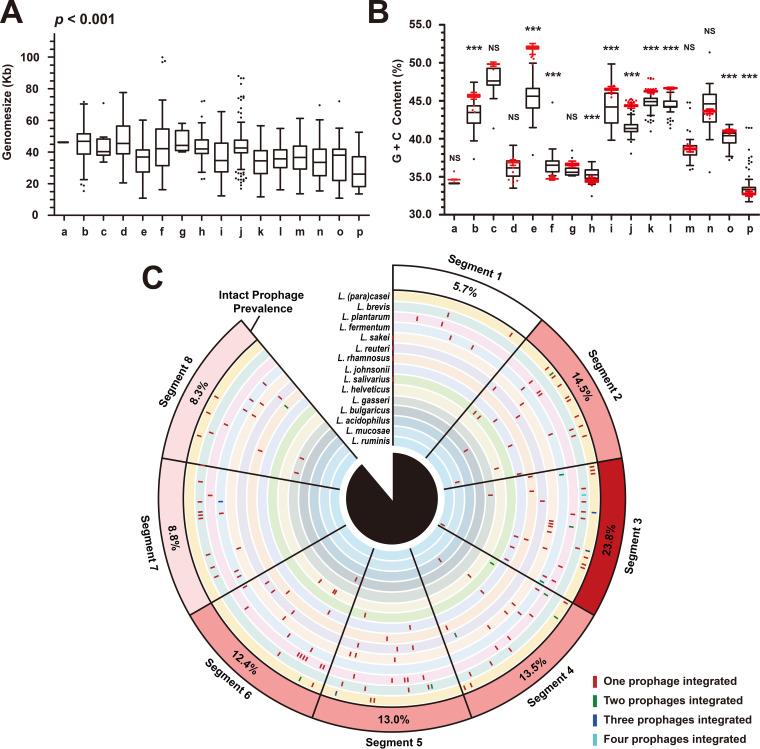
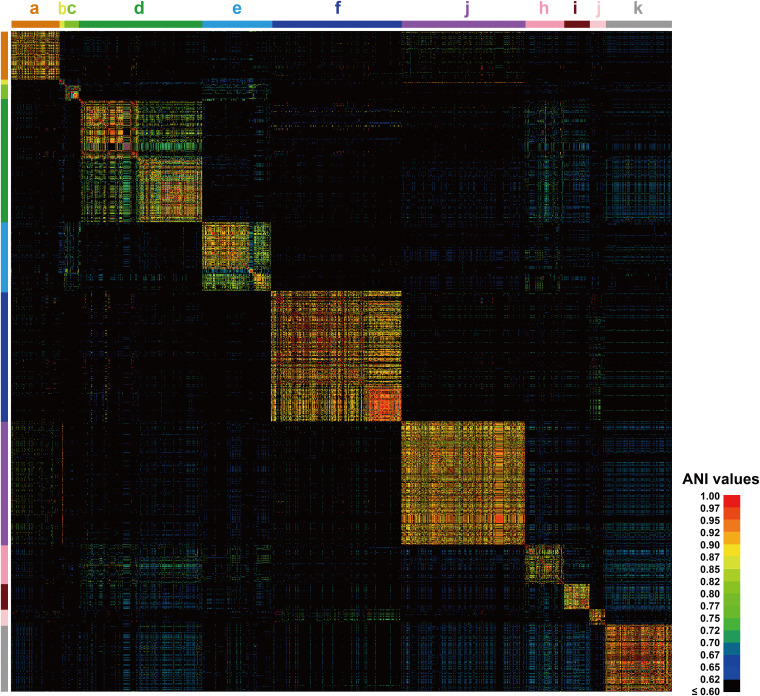
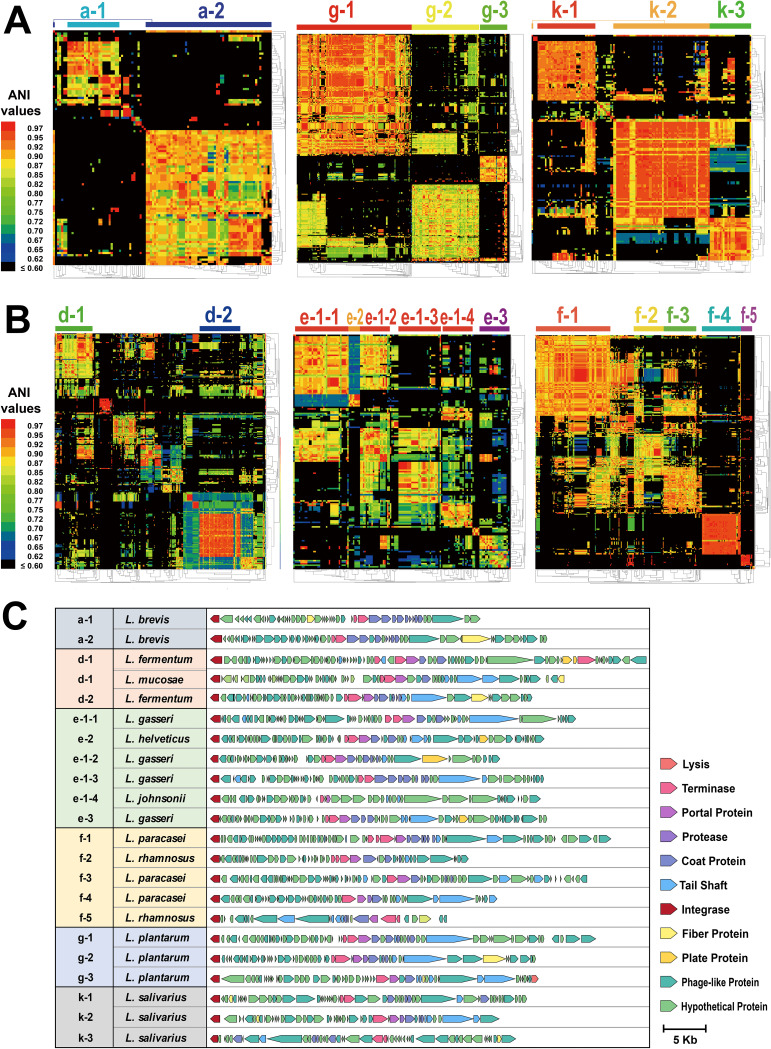
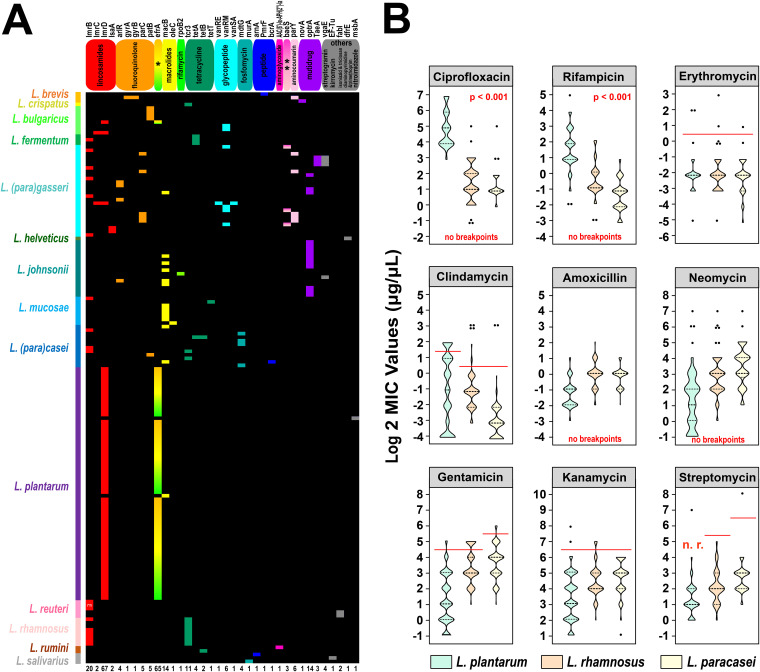
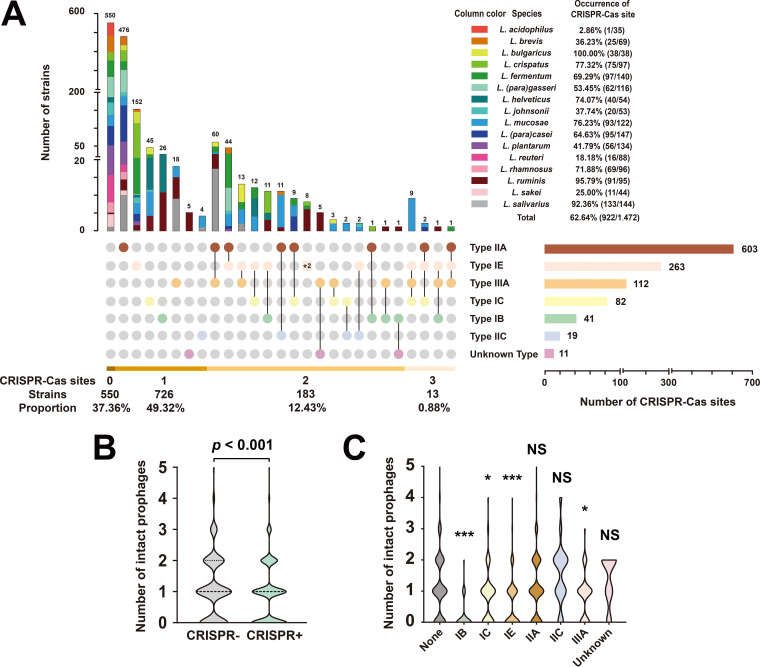
Prophage integration, release, and dissemination exert various effects on host bacteria. In the genus , they may cause bacteriophage contamination during fermentation and even regulate bacterial populations in the gut. However, little is known about their distribution, genetic architecture, and relationships with their hosts. Here, we conducted prophage prediction analysis on 1,472 genomes from 16 different species and found prophage fragments in almost all lactobacilli (99.8%), with 1,459 predicted intact prophages identified in 64.1% of the strains. We present an uneven prophage distribution among species; multihabitat species retained more prophages in their genomes than restricted-habitat species. Characterization of the genome features, average nucleotide identity, and landscape visualization presented a high genome diversity of prophages. We detected antibiotic resistance genes in more than 10% of prophages and validated that the occurrence of resistance genes conferred by prophage integration was possibly associated with phenotypic resistance in Lactobacillus plantarum. Furthermore, our broad and comprehensive examination of the distribution of CRISPR-Cas systems across the genomes predicted type I and type III systems as potential antagonistic elements of prophage. Lactobacilli are inherent microorganisms in the human gut and are widely used in the food processing industries due to their probiotic properties. Prophages were reportedly hidden in numerous genomes and can potentially contaminate entire batches of fermentation or modulate the intestinal microecology once they are released. Therefore, a comprehensive scanning of prophages in is essential for the safety evaluation and application development of probiotic candidates. We show that prophages are widely distributed among lactobacilli; however, intact prophages are more common in multihabitat species and display wide variations in genome feature, integration site, and genomic organization. Our data of the prophage-mediated antibiotic resistance genes (ARGs) and the resistance phenotype of lactobacilli provide evidence for deciphering the putative role of prophages as vectors of the ARGs. Furthermore, understanding the association between prophages and CRISPR-Cas systems is crucial to appreciate the coevolution of phages and
前噬菌体的整合、释放和传播对宿主细菌有多种影响。在乳杆菌属中,它们可能在发酵过程中导致噬菌体污染,甚至调节肠道中的细菌种群。然而,关于它们的分布、遗传结构以及与宿主的关系,我们所知甚少。在这里,我们对来自16种不同乳杆菌物种的1472个基因组进行了前噬菌体预测分析,发现几乎所有的乳杆菌(99.8%)中都有前噬菌体片段,在64.1%的菌株中鉴定出1459个预测完整的前噬菌体。我们发现不同乳杆菌物种之间前噬菌体分布不均;多栖息地物种在其基因组中保留的前噬菌体比栖息地受限的物种更多。对基因组特征、平均核苷酸同一性和图谱可视化的表征显示乳杆菌前噬菌体具有高度的基因组多样性。我们在超过10%的乳杆菌前噬菌体中检测到抗生素抗性基因,并证实前噬菌体整合赋予的抗性基因的出现可能与植物乳杆菌的表型抗性有关。此外,我们对整个基因组中CRISPR-Cas系统分布的广泛而全面的研究预测I型和III型系统是乳杆菌前噬菌体的潜在拮抗元件。乳杆菌是人类肠道中的固有微生物,由于其益生菌特性而被广泛应用于食品加工业。据报道,前噬菌体隐藏在许多乳杆菌基因组中,一旦释放,它们可能会污染整批发酵产品或调节肠道微生态。因此,对乳杆菌前噬菌体进行全面扫描对于益生菌候选物的安全性评估和应用开发至关重要。我们表明前噬菌体广泛分布于乳杆菌中;然而,完整的前噬菌体在多栖息地物种中更常见,并且在基因组特征、整合位点和基因组组织方面表现出广泛的差异。我们关于前噬菌体介导的抗生素抗性基因(ARGs)和乳杆菌抗性表型的数据为解读前噬菌体作为ARGs载体的假定作用提供了证据。此外,了解前噬菌体与CRISPR-Cas系统之间的关联对于理解噬菌体和……的共同进化至关重要