Department for Traumatology and Orthopedics, Bundeswehr Hospital Berlin, Scharnhorststrasse 13, 10115, Berlin, Germany.
Medical Faculty, Charité - Universitätsmedizin Berlin, Corporate Member of Freie Universität Berlin and Humboldt-Universität zu Berlin, Charitéplatz 1, 10117, Berlin, Germany.
BMC Musculoskelet Disord. 2022 Nov 8;23(1):968. doi: 10.1186/s12891-022-05909-2.
Video consultations have proven to be a powerful support tool for patient-doctor interactions in general, not only during the COVID-19 pandemic. This study analyzed the feasibility and usefulness of orthopedic telemedical consultations (OTCs) for orthopedic patients at the interface of a clinic and general practitioners.
The study was carried out at an orthopedic department of a German hospital between April 2020 and October 2020. After written informed consent was obtained, general practitioners (GPs) of a large adjunct health region could present their patients with orthopedic pathologies to specialists at the hospital via OTCs instead of the usual live consultation (LC). The patients, specialists and GPs were evaluated for their OTC experience and attitude (5-point Likert-scale and open questions, 19 to 27 items).
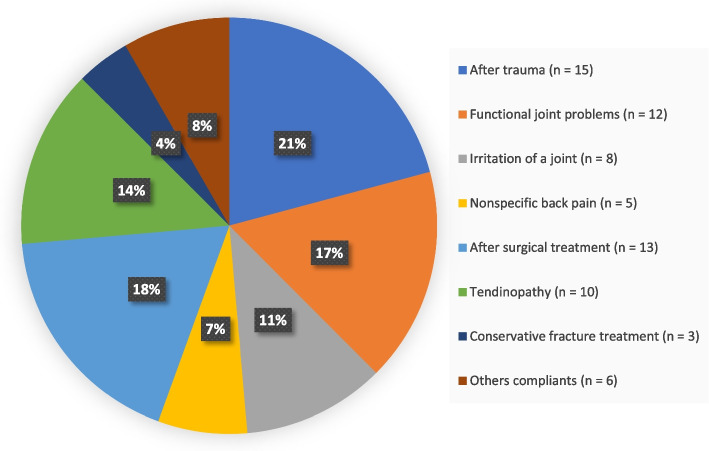
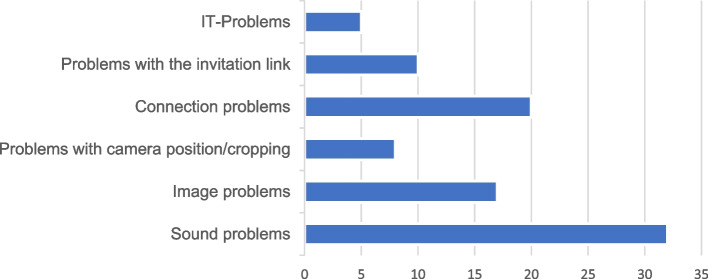
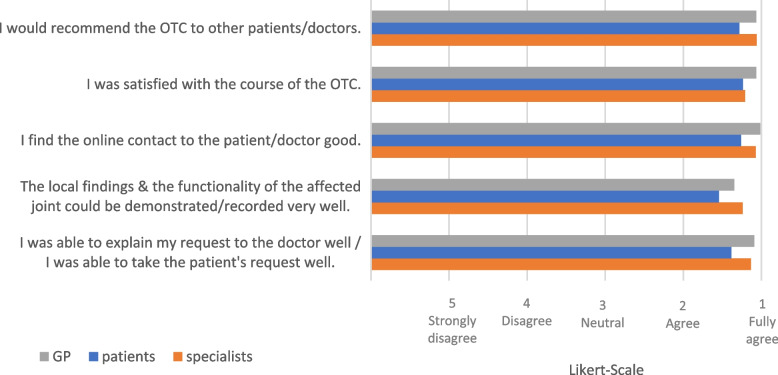
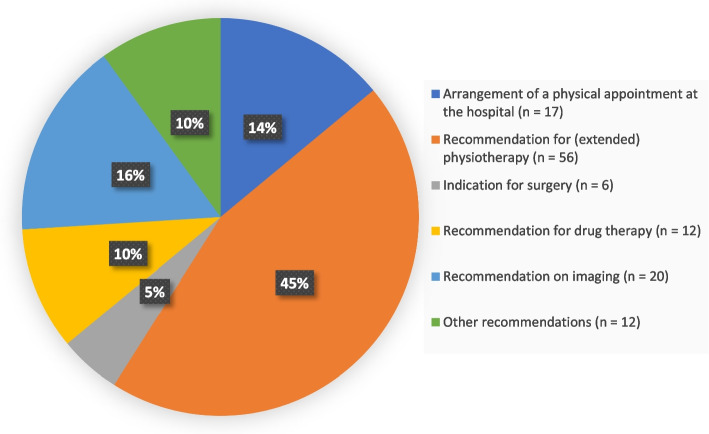
A total of 89 video consultations took place with 76 patients, 16 GPs and six specialists. The average distance between the GPs/patients and the hospital was 141.9 km. The OTCs were rated as pleasant, and the experience was rated as very satisfying (average Likert-Scale rating, with 5 as strong agreement: specialists = 4.8; GPs = 4.9; patients = 4.7). Following the OTC, a LC was not necessary in 76.4% of cases. Patients with a necessary LC after an OTC showed significantly lower satisfaction with the OTC (p = 0.005). Time savings, the elimination of travel and quick contact with orthopedic consultants were positively highlighted by the participants. A total of 123 recommendations for further treatment were given, such as the initiation of physiotherapy/medication and the use of imaging diagnostics. Different technical and organizational challenges could be identified and addressed.
The vast majority of the participants stated they had a very positive impression. In particular, the potential savings in travel and time as well as straightforward contact with specialists were rated positively. However, limitations in the assessment of initial presentations of complex medical conditions were also highlighted. Further studies on OTCs with a consultative health professional may show other fields of use for this mode of interdisciplinary remote communication.
视频咨询已被证明是支持医患互动的有力工具,不仅在 COVID-19 大流行期间如此。本研究分析了在诊所和全科医生界面为骨科患者进行骨科远程医疗咨询(OTC)的可行性和实用性。
该研究于 2020 年 4 月至 2020 年 10 月在德国一家医院的骨科进行。在获得书面知情同意后,大型附属健康区的全科医生(GP)可以通过 OTC 将他们的骨科患者转介给医院的专家,而不是通常的现场咨询(LC)。患者、专家和全科医生对他们的 OTC 体验和态度(5 分李克特量表和开放式问题,19-27 项)进行了评估。
共进行了 89 次视频咨询,涉及 76 名患者、16 名全科医生和 6 名专家。全科医生/患者和医院之间的平均距离为 141.9 公里。OTC 被评为愉快,体验被评为非常满意(平均李克特量表评分,5 表示强烈同意:专家=4.8;全科医生=4.9;患者=4.7)。在 OTC 之后,76.4%的情况下不需要进行 LC。在进行 OTC 后需要进行 LC 的患者对 OTC 的满意度明显较低(p=0.005)。参与者还强调了节省时间、消除旅行和快速联系骨科顾问的优势。共提出了 123 项进一步治疗建议,例如开始物理治疗/药物治疗和使用影像学诊断。还确定并解决了不同的技术和组织挑战。
绝大多数参与者表示印象非常好。特别是,旅行和时间的潜在节省以及与专家的直接联系受到了积极评价。然而,也强调了评估复杂医疗状况初始表现的局限性。关于具有咨询健康专业人员的 OTC 的进一步研究可能会显示这种跨学科远程交流模式的其他用途领域。