Ahmed Fathy S, El-Zomor Mohamed A, Ghazala Magdy S Abo, Elshaer Ramadan N
Tabbin Institute for Metallurgical Studies, Cairo, Egypt.
Faculty of Science, Menofia University, Shebeen El-Koom, Egypt.
Sci Rep. 2022 Nov 10;12(1):19265. doi: 10.1038/s41598-022-23724-6.
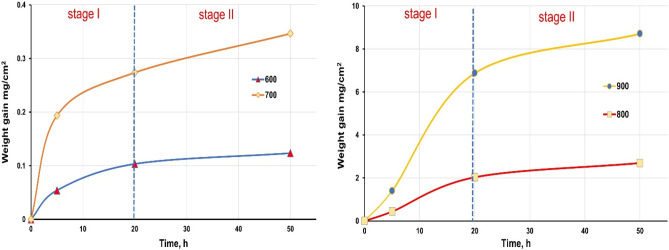
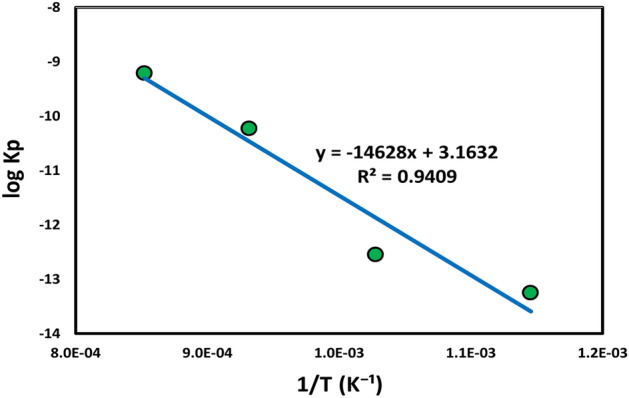
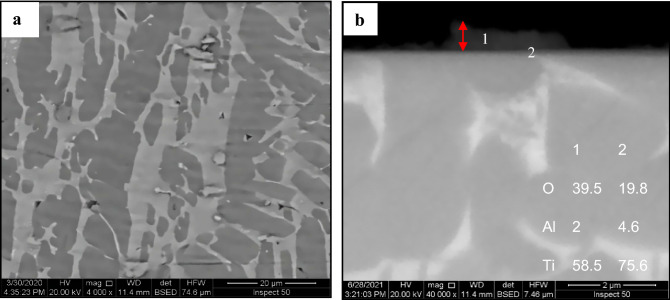
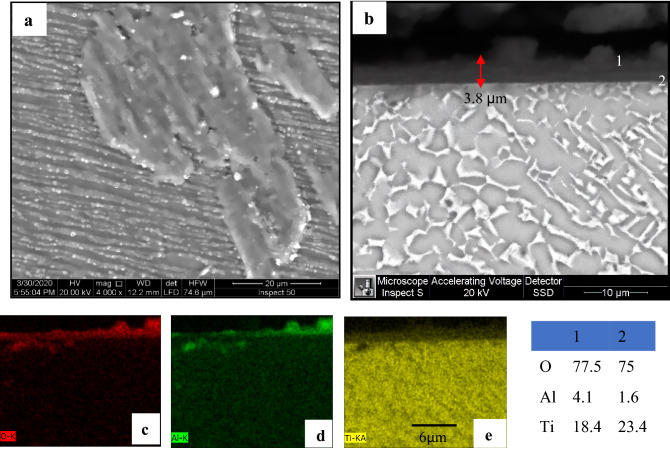
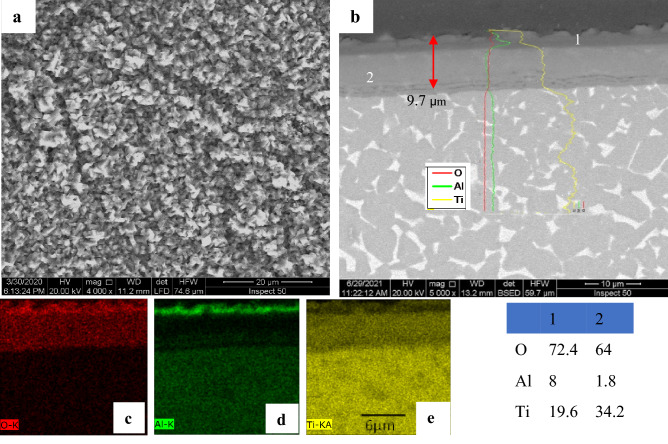
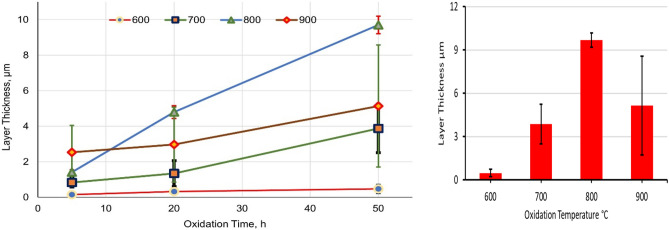
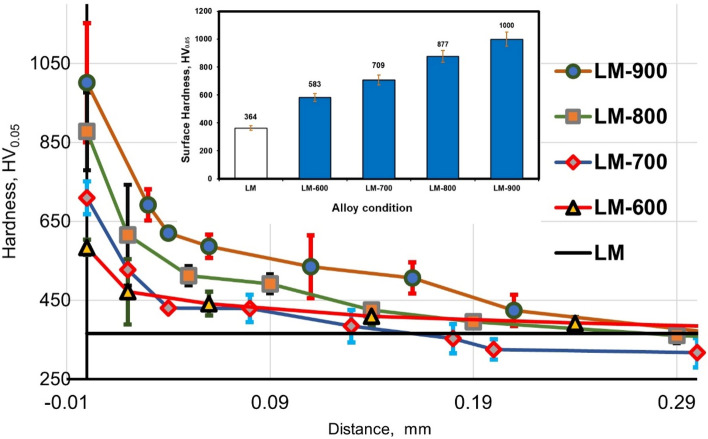
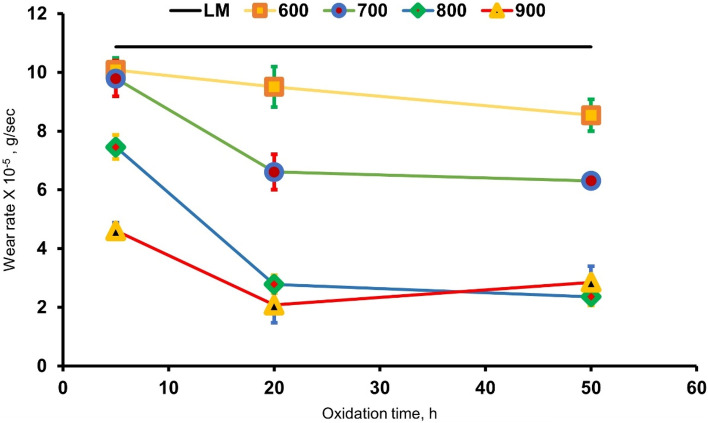
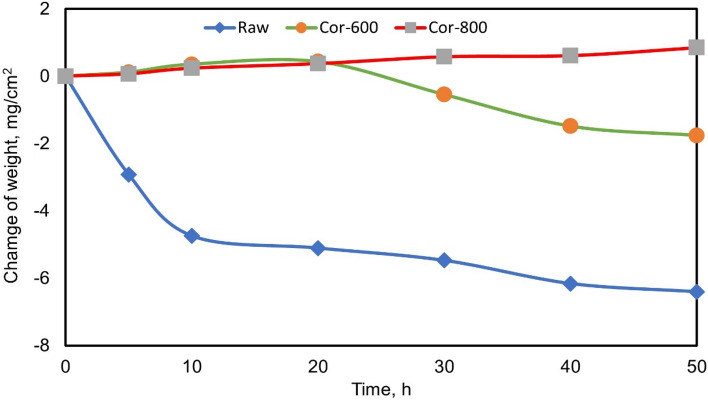
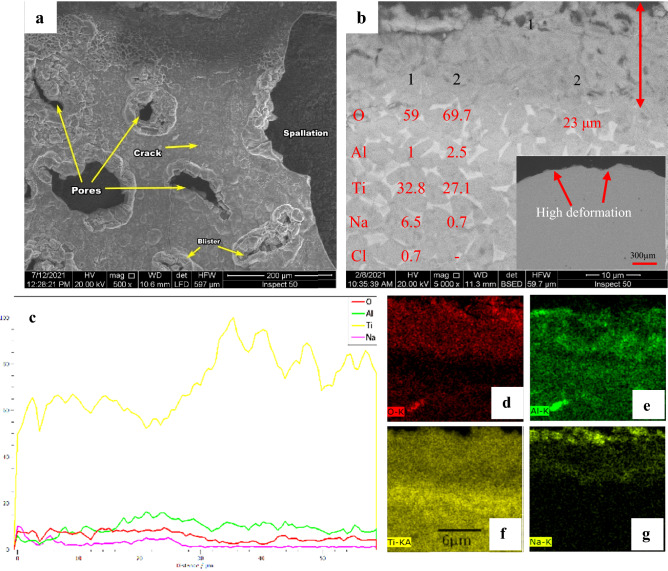
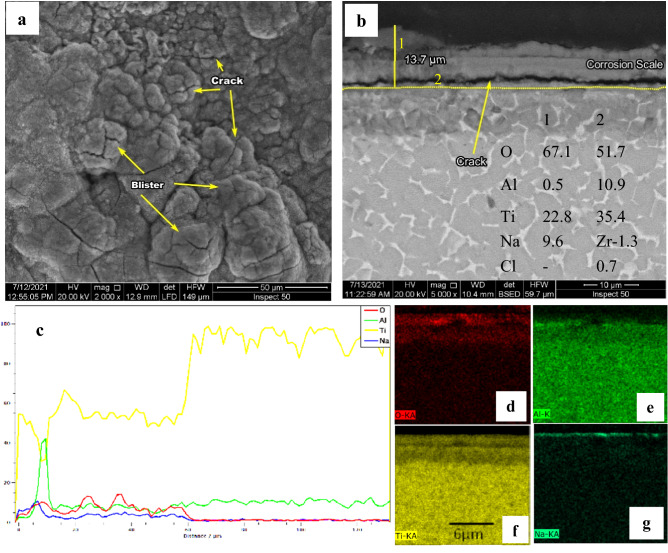
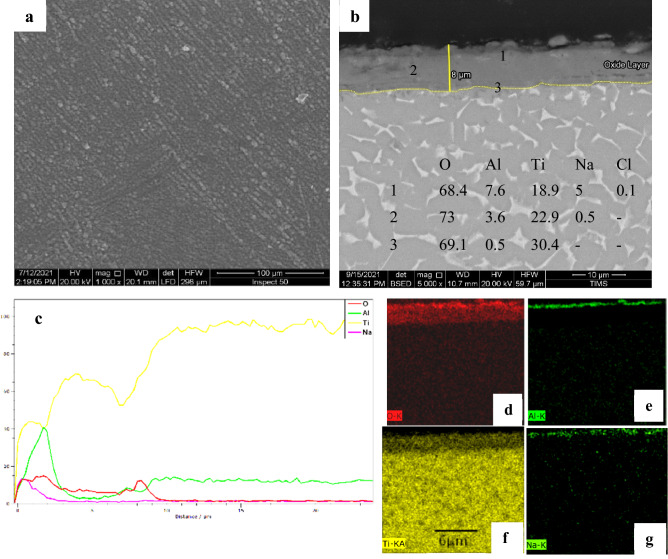
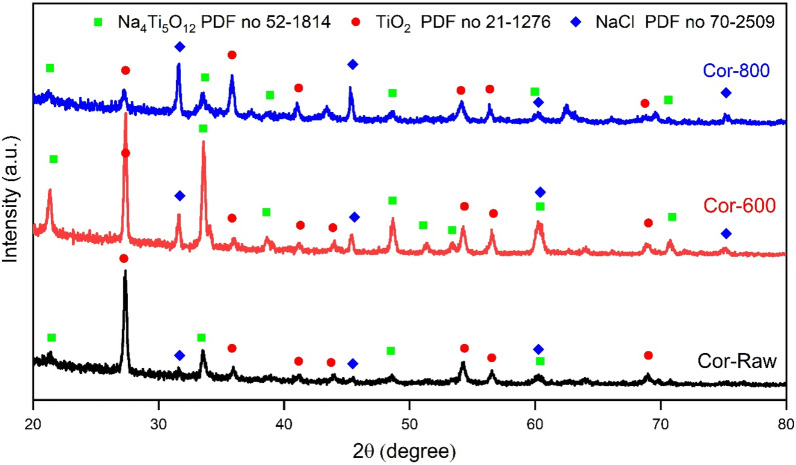
In the current study on TC21 Ti-alloy (6.5Al-3Mo-1.9Nb-2.2Sn-2.2Zr-1.5Cr), the thermal oxidation formed oxide layers that considerably influenced mechanical properties (hardness and wear). TC21 specimens were oxidized at 600, 700, 800, and 900 °C for 5, 20, and 50 h. NaCl-induced hot corrosion testing was carried out on raw (un-oxidized) and oxidized specimens at 600 and 800 °C for 50 h. The cyclic testing was performed at 600 °C for durations of 5, 10, 20, 30, 40, and 50 h. The average thickness of the layer grew with increasing oxidation time and temperature. A thin oxide layer (average 0.16 µm) was generated by oxidation at a temperature of 600 °C for a duration of 5 h, and at 800 °C, a large oxide layer of 10.8 µm thickness was formed. The most significant surface hardness of 1000 ± 150 HV was produced for the layer oxidized at 900 °C. On the other hand, the lowest hardness of 360 ± 150 HV was recorded for the raw materials. Best wear resistance had been achieved for specimens oxidized at 800 °C. During NaCl hot corrosion test, the weight loss of the raw specimen was 6.4 mg/cm due to the flaking off of the corrosion product. However, for specimens oxidized at 600 °C for 50 h, weight loss after corrosion testing was 0.54 mg/cm, less than that of the specimen before corrosion. Oxidized specimens at 800 °C exhibited the best mechanical characteristics and corrosion resistance.
在当前对TC21钛合金(6.5Al - 3Mo - 1.9Nb - 2.2Sn - 2.2Zr - 1.5Cr)的研究中,热氧化形成的氧化层对机械性能(硬度和磨损)有显著影响。TC21试样在600、700、800和900°C下氧化5、20和50小时。对原始(未氧化)和氧化后的试样在600和800°C下进行50小时的NaCl诱导热腐蚀试验。在600°C下进行5、10、20、30、40和50小时的循环试验。氧化层的平均厚度随氧化时间和温度的增加而增加。在600°C温度下氧化5小时生成了平均厚度为0.16μm的薄氧化层,而在800°C时形成了厚度为10.8μm的厚氧化层。在900°C下氧化的层产生了最高的表面硬度,为1000±150 HV。另一方面,原材料的硬度最低,为360±150 HV。在800°C下氧化的试样具有最佳的耐磨性。在NaCl热腐蚀试验中,原始试样因腐蚀产物剥落导致的重量损失为6.4mg/cm²。然而,对于在600°C下氧化50小时的试样,腐蚀试验后的重量损失为0.54mg/cm²,低于腐蚀前试样的重量损失。在800°C下氧化的试样表现出最佳的机械性能和耐腐蚀性。