Chang Jae Chan
Department of Medicine, School of Medicine, University of California Irvine School of Medicine, Irvine, CA 92868, USA.
Biomedicines. 2022 Oct 26;10(11):2706. doi: 10.3390/biomedicines10112706.
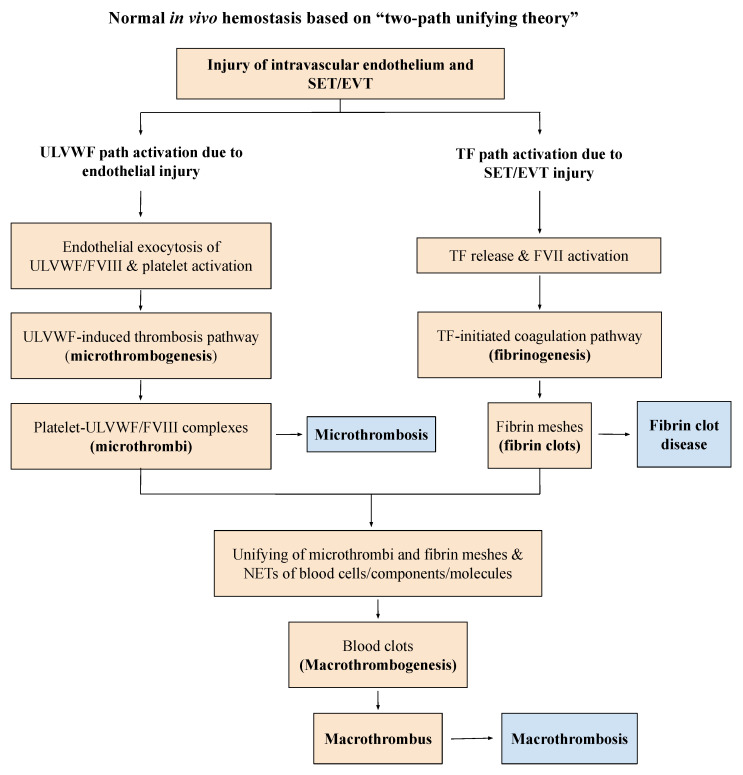
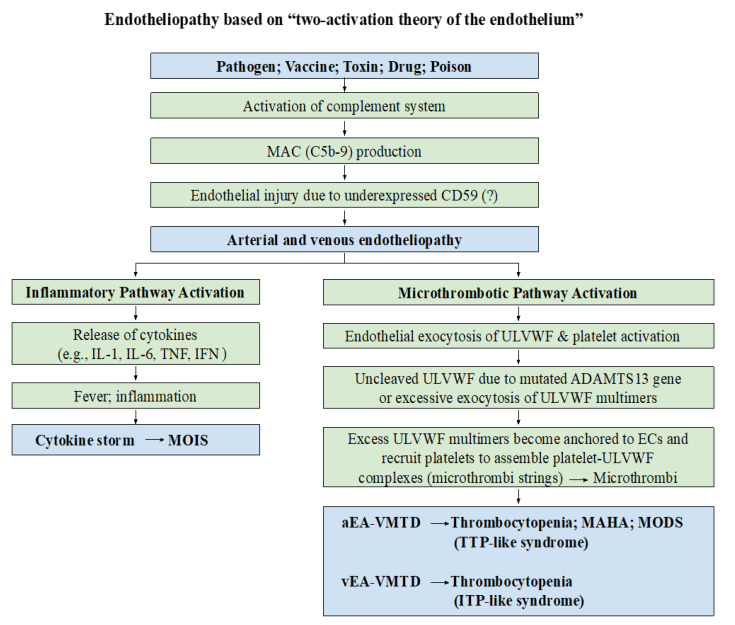
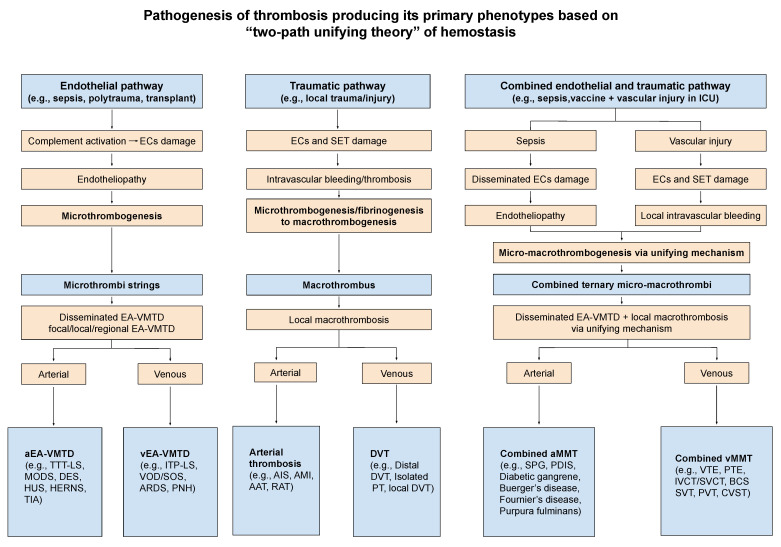
Thrombosis, the common and deadliest disorder among human diseases, develops as a result of the intravascular hemostasis following an intravascular injury, which can be caused by a variety of trauma, non-traumatic insults or clinical illnesses. Thrombosis can occur at any location of the vascular system supplied by blood from the heart to large and smallest arterial and venous systems and may affect the function and anatomy of the organ and tissue. It more commonly occurs in the smaller circulatory system of the vascular tree such as arterioles and capillaries, and venules of the organs, especially in the brain, lungs, heart, pancreas, muscle and kidneys, and sinusoids of the liver. Thrombosis has been referred as the disease of "blood clots", which concept is incompletely defined, but represents many different hemostatic diseases from microthrombosis to fibrin clot disease, macrothrombosis, and combined micro-macrothrombosis. Thrombosis is produced following an intravascular injury via one or more combination of four different mechanisms of thrombogenesis: microthrombogenesis, fibrinogenesis, macrothrombogenesis and micro-macrothrombogenesis initiated by normal physiological hemostasis in vivo. The clinical phenotype expression of thrombosis is determined by: (1) depth of the intravascular wall injury, (2) extent of the injury affecting the vascular tree system, (3) physiological character of the involved vascular system, (4) locality of the vascular injury, and (5) underlying non-hemostatic conditions interacting with hemostasis. Recent acquisition of "two-path unifying theory" of hemostasis and "two-activation theory of the endothelium" has opened a new frontier in science of medicine by identifying the pathophysiological mechanism of different thrombotic disorders and also contributing to the better understanding of many poorly defined human diseases, including different phenotypes of stroke and cardiovascular disease, trauma, sepsis and septic shock, multiorgan dysfunction syndrome, and autoimmune disease, and others. Reviewed are the fundamentals in hemostasis, thrombogenesis and thrombosis based on hemostatic theories, and proposed is a novel classification of thrombotic disorders.
血栓形成是人类疾病中常见且最致命的病症,它是血管内损伤后血管内止血的结果,血管内损伤可由多种创伤、非创伤性损伤或临床疾病引起。血栓可发生在从心脏供血到大小动脉和静脉系统的血管系统的任何部位,并可能影响器官和组织的功能及解剖结构。它更常见于血管树的较小循环系统,如小动脉、毛细血管以及器官的小静脉,尤其是在脑、肺、心脏、胰腺、肌肉和肾脏,以及肝脏的血窦。血栓形成被称为“血凝块疾病”,其概念定义并不完全明确,但涵盖了从微血栓形成到纤维蛋白凝块疾病、大血栓形成以及微 - 大血栓形成组合的许多不同止血疾病。血栓形成是在血管内损伤后,通过血栓形成的四种不同机制中的一种或多种组合产生的:微血栓形成、纤维蛋白形成、大血栓形成以及由体内正常生理止血引发的微 - 大血栓形成。血栓形成的临床表型表达取决于:(1)血管壁损伤的深度,(2)影响血管树系统的损伤范围,(3)受累血管系统的生理特性,(4)血管损伤的部位,以及(5)与止血相互作用的潜在非止血状况。最近获得的止血“双途径统一理论”和内皮“双激活理论”,通过确定不同血栓形成疾病的病理生理机制,为医学科学开辟了新的前沿领域,也有助于更好地理解许多定义不明确的人类疾病,包括中风和心血管疾病的不同表型、创伤、败血症和感染性休克、多器官功能障碍综合征以及自身免疫性疾病等。本文基于止血理论综述了止血、血栓形成和血栓的基本原理,并提出了一种新的血栓形成疾病分类方法。