Gansu Key Laboratory of Herbivorous Animal Biotechnology, College of Animal Science and Technology, Gansu Agricultural University, Lanzhou 730070, China.
Int J Mol Sci. 2022 Nov 5;23(21):13587. doi: 10.3390/ijms232113587.
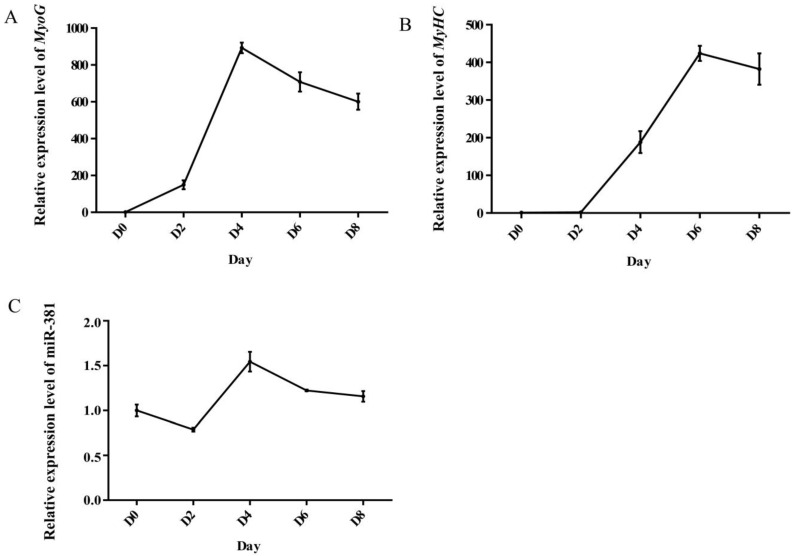
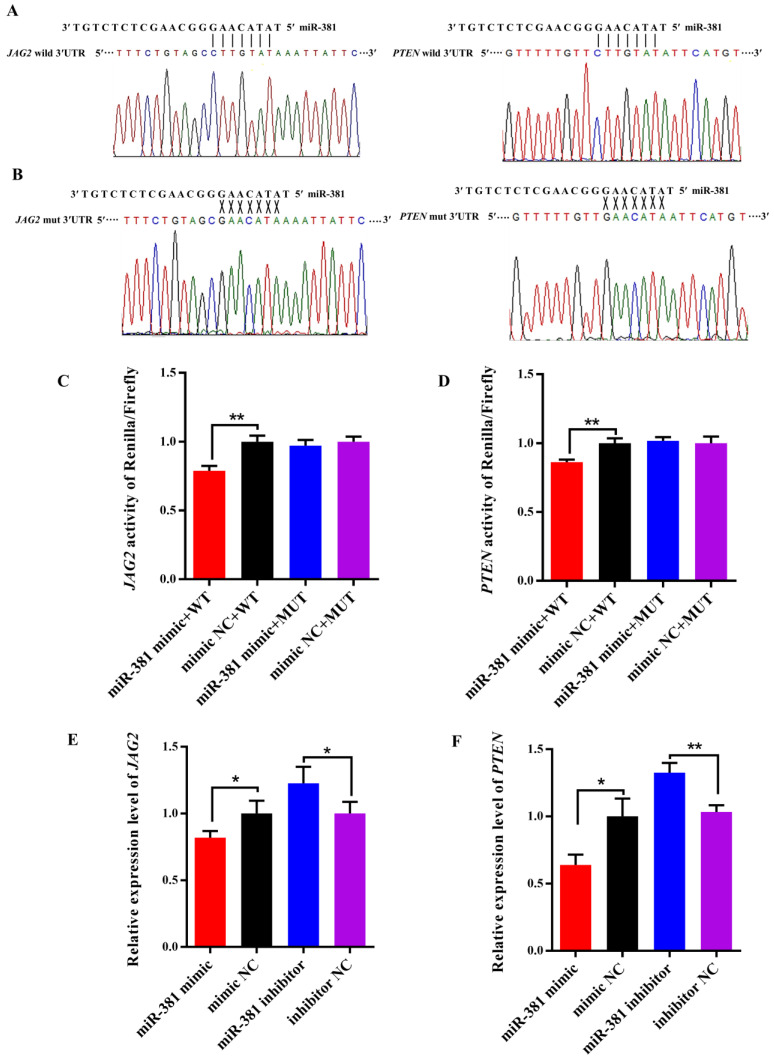
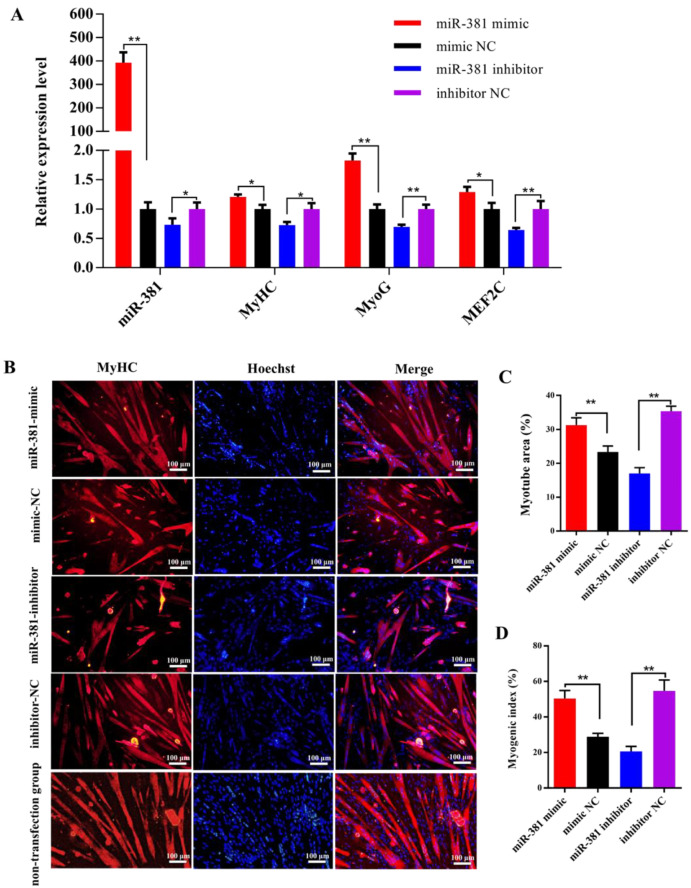
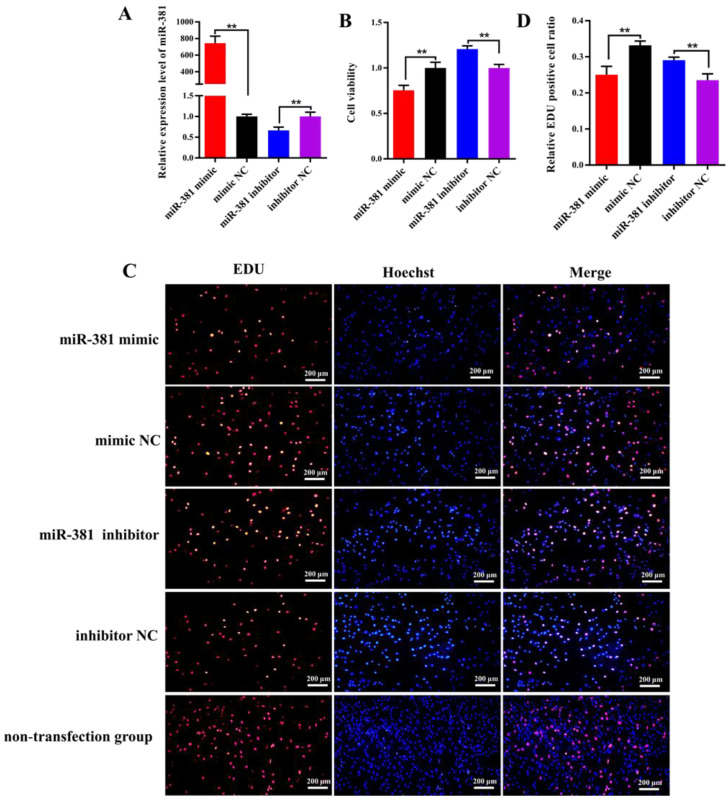
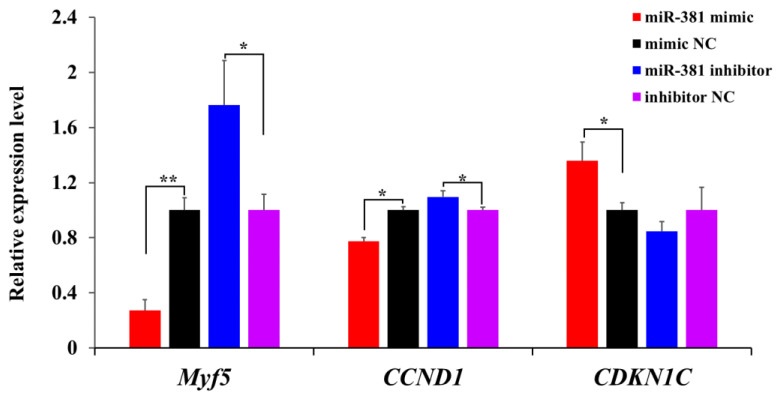
In our previous study, microRNA (miR)-381 was found to be the most down-regulated miRNA in skeletal muscle of Liaoning cashmere goats with higher skeletal muscle mass, but the molecular mechanism involved remains unclear. In this study, primary caprine skeletal muscle satellite cells (SMSCs) were isolated and identified. We investigated the effect of miR-381 on the viability, proliferation and differentiation of caprine SMSCs, and the target relationships of miR-381 with jagged canonical Notch ligand 2 () and phosphatase and tensin homolog (). Cells isolated were positive for SMSC-specific marker protein Pax7. This suggests that purified SMSCs were obtained. The expression level of miR-381 achieved a peak value on day 4 after SMSC differentiation, and miR-381 also significantly increased the expression levels of myogenic differentiation marker genes: myosin heavy chain (), myogenin () and myocyte enhancer factor 2C () in differentiated SMSCs, the area of MyHC-positive myotubes and the myogenic index. These findings suggest that miR-381 promoted myogenic differentiation of caprine SMSCs. The CCK8 assay and EDU staining analysis showed that miR-381 mimic both inhibited the viability of SMSCs and decreased the percentage of EDU-labeled positive SMSCs. In contrast, miR-381 inhibitor had the opposite effect with miR-381 mimic. A dual luciferase reporter assay verified that miR-381 can target and by binding to the 3'-untranslated regions (3'-UTR) of the genes. The transfection of miR-381 mimic into caprine SMSCs resulted in decreases in expression levels of and , while miR-381 inhibitor increased the two target genes in expression. This is the first study to reveal the biological mechanisms by which miR-381 regulates caprine SMSC activities.
在我们之前的研究中,发现 microRNA (miR)-381 是辽宁绒山羊骨骼肌中下调最明显的 miRNA,其骨骼肌质量更高,但涉及的分子机制尚不清楚。在这项研究中,分离和鉴定了原代山羊骨骼肌卫星细胞(SMSCs)。我们研究了 miR-381 对山羊 SMSCs 活力、增殖和分化的影响,以及 miR-381 与锯齿状经典 Notch 配体 2 () 和磷酸酶和张力蛋白同源物 () 的靶关系。分离的细胞对 SMSC 特异性标记蛋白 Pax7 呈阳性。这表明获得了纯化的 SMSC。miR-381 的表达水平在 SMSC 分化后第 4 天达到峰值,并且 miR-381 还显著增加了分化 SMSC 中肌生成分化标记基因的表达水平:肌球蛋白重链 (), myogenin () 和肌细胞增强因子 2C (),MyHC 阳性肌管的面积和肌生成指数。这些发现表明 miR-381 促进了山羊 SMSC 的肌生成分化。CCK8 测定和 EDU 染色分析表明,miR-381 模拟物均抑制 SMSC 的活力并降低 EDU 标记的阳性 SMSC 的百分比。相反,miR-381 抑制剂与 miR-381 模拟物具有相反的作用。双荧光素酶报告基因检测证实 miR-381 可以通过与基因的 3'-非翻译区 (3'-UTR) 结合来靶向 和 。miR-381 模拟物转染山羊 SMSC 导致 和 的表达水平降低,而 miR-381 抑制剂则增加了两个靶基因的表达。这是首次揭示 miR-381 调节山羊 SMSC 活性的生物学机制的研究。