Grupo de Investigación en Neurociencias (NeURos), Centro de Neurociencias Neurovitae-UR, Instituto de Medicina Traslacional (IMT), Escuela de Medicina y Ciencias de la Salud, Universidad del Rosario, Bogotá 111711, Colombia.
Int J Mol Sci. 2022 Nov 7;23(21):13630. doi: 10.3390/ijms232113630.
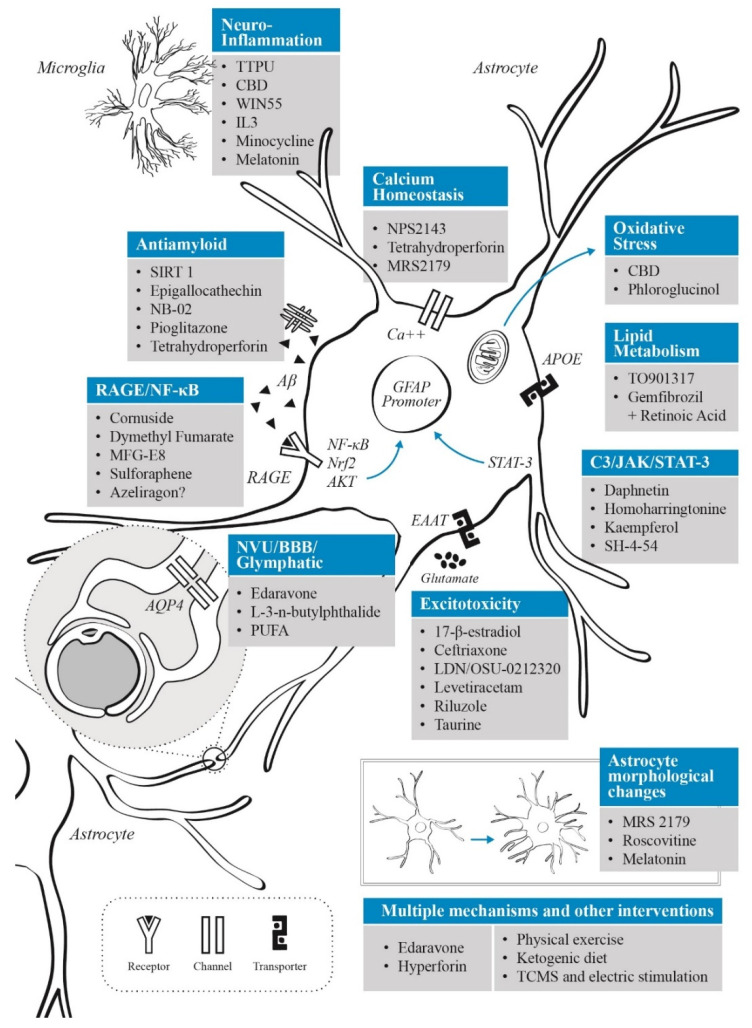
Alzheimer's disease (AD) is a frequent and disabling neurodegenerative disorder, in which astrocytes participate in several pathophysiological processes including neuroinflammation, excitotoxicity, oxidative stress and lipid metabolism (along with a critical role in apolipoprotein E function). Current evidence shows that astrocytes have both neuroprotective and neurotoxic effects depending on the disease stage and microenvironmental factors. Furthermore, astrocytes appear to be affected by the presence of amyloid-beta (Aβ), with alterations in calcium levels, gliotransmission and proinflammatory activity via RAGE-NF-κB pathway. In addition, astrocytes play an important role in the metabolism of tau and clearance of Aβ through the glymphatic system. In this review, we will discuss novel pharmacological and non-pharmacological treatments focused on astrocytes as therapeutic targets for AD. These interventions include effects on anti-inflammatory/antioxidant systems, glutamate activity, lipid metabolism, neurovascular coupling and glymphatic system, calcium dysregulation, and in the release of peptides which affects glial and neuronal function. According to the AD stage, these therapies may be of benefit in either preventing or delaying the progression of the disease.
阿尔茨海默病(AD)是一种常见且使人丧失能力的神经退行性疾病,其中星形胶质细胞参与了包括神经炎症、兴奋毒性、氧化应激和脂质代谢在内的多个病理生理过程(以及在载脂蛋白 E 功能中起着关键作用)。目前的证据表明,星形胶质细胞具有神经保护和神经毒性作用,这取决于疾病阶段和微环境因素。此外,星形胶质细胞似乎受到淀粉样蛋白-β(Aβ)的影响,通过 RAGE-NF-κB 途径改变钙水平、神经传递和促炎活性。此外,星形胶质细胞在通过神经淋巴系统代谢 tau 和清除 Aβ 方面发挥重要作用。在这篇综述中,我们将讨论针对 AD 的新型药理学和非药理学治疗方法,这些方法侧重于星形胶质细胞作为治疗靶点。这些干预措施包括对抗炎/抗氧化系统、谷氨酸活性、脂质代谢、神经血管偶联和神经淋巴系统、钙失调以及影响神经胶质和神经元功能的肽释放的影响。根据 AD 的阶段,这些疗法可能有助于预防或延缓疾病的进展。