Mayo Clinic Vaccine Research Group, Division of General Internal Medicine, Mayo Clinic, Rochester, MN 55905, USA.
Viruses. 2022 Nov 3;14(11):2438. doi: 10.3390/v14112438.
Aging and immunosenescence lead to a gradual decline in immune responses in the elderly and the immunogenicity of influenza vaccines in this age group is sub-optimal. Several approaches have been explored to enhance the immunogenicity of influenza vaccines in the elderly, including incorporating vaccine adjuvant, increasing antigen dosage, and changing the route of vaccine administration.
We systematically compared the immunogenicity and safety of influenza vaccines administered by intradermal (ID) route and either intramuscular (IM) or subcutaneous (SC) routes in older adults aged ≥ 65.
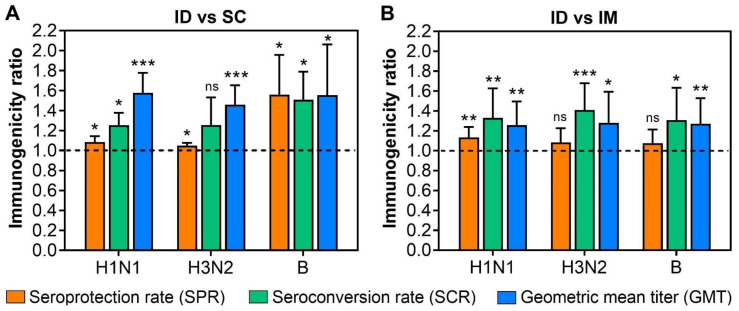
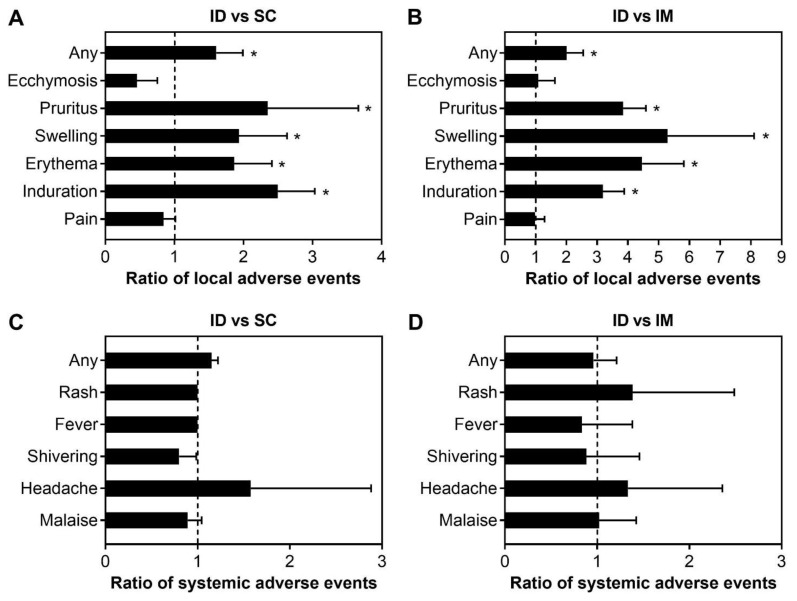
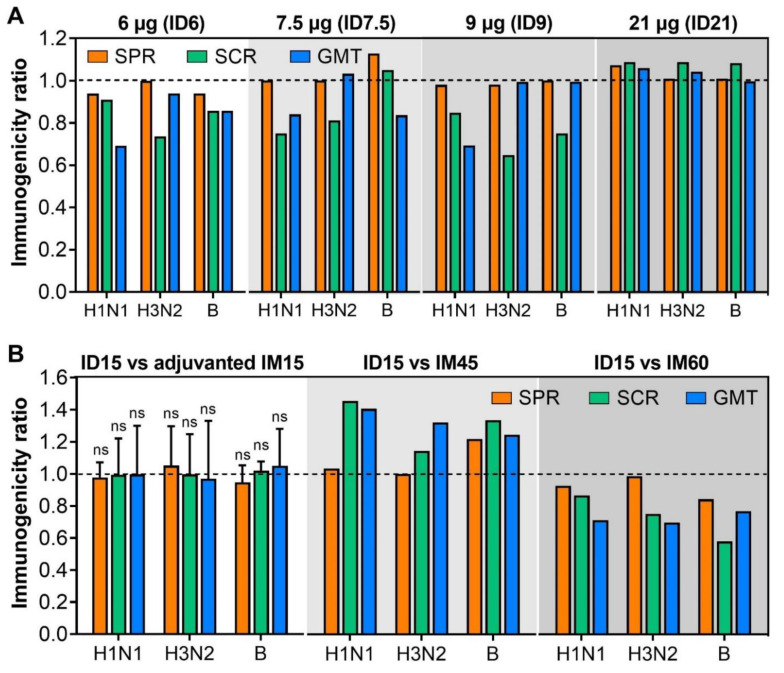
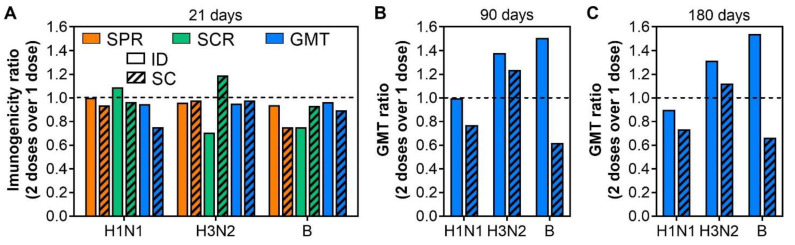
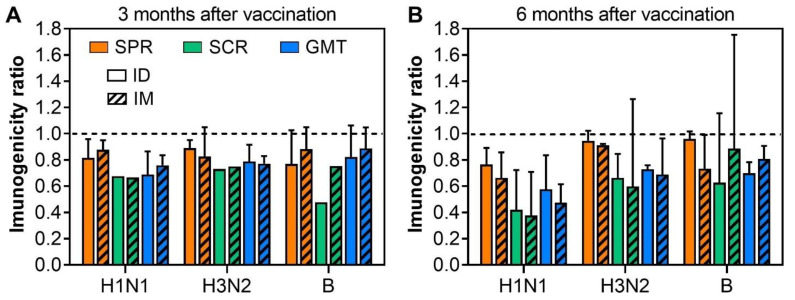
Of 17 studies included in this analysis, 3 studies compared the immunogenicity of ID vaccination to that of SC vaccination and 14 studies compared ID and IM vaccinations. ID vaccination was typically more immunogenic than both IM and SC routes at the same dosage. Importantly, a minimum of 3 µg of hemagglutinin antigen could be formulated in an ID influenza vaccine without a significant loss of immunogenicity. ID administration of standard-dose, unadjuvanted influenza vaccine was as immunogenic as IM injection of adjuvanted influenza vaccine. Waning of influenza-specific immunity was significant after 6 months, but there was no difference in waning immunity between vaccinations in ID, IM, or SC routes. While ID vaccination elicited local adverse reactions more frequently than other routes, these reactions were mild and lasted for no more than 3 days.
We conclude that ID vaccination is superior to IM or SC routes and may be a suitable approach to compensate for the reduced immunogenicity observed in elderly adults. We also conclude that the main benefit of ID influenza vaccine lies in its dose-sparing effect. Additional research is still needed to further develop a more immunogenic ID influenza vaccine.
衰老和免疫衰老导致老年人的免疫反应逐渐下降,而这一年龄组的流感疫苗的免疫原性并不理想。已经探索了几种方法来增强老年人流感疫苗的免疫原性,包括加入疫苗佐剂、增加抗原剂量和改变疫苗接种途径。
我们系统地比较了皮内(ID)途径与肌内(IM)或皮下(SC)途径接种流感疫苗在≥65 岁老年人中的免疫原性和安全性。
在本分析中纳入的 17 项研究中,3 项研究比较了 ID 接种与 SC 接种的免疫原性,14 项研究比较了 ID 和 IM 接种。在相同剂量下,ID 接种通常比 IM 和 SC 途径更具免疫原性。重要的是,在 ID 流感疫苗中可以配制至少 3μg 的血凝素抗原,而不会显著降低免疫原性。标准剂量、无佐剂流感疫苗的 ID 给药与佐剂流感疫苗的 IM 注射具有相同的免疫原性。接种后 6 个月,流感特异性免疫明显减弱,但 ID、IM 或 SC 途径接种的免疫消退无差异。虽然 ID 接种比其他途径更频繁地引起局部不良反应,但这些反应较轻,持续时间不超过 3 天。
我们的结论是,ID 接种优于 IM 或 SC 途径,可能是一种补偿老年人免疫原性降低的合适方法。我们还得出结论,ID 流感疫苗的主要优势在于其节省剂量的作用。还需要进一步研究以进一步开发更具免疫原性的 ID 流感疫苗。