Department of Cell Biology, University of Pittsburgh School of Medicine, Pittsburgh, PA, U.S.A.
Biochem J. 2022 Nov 11;479(21):2311-2325. doi: 10.1042/BCJ20220445.
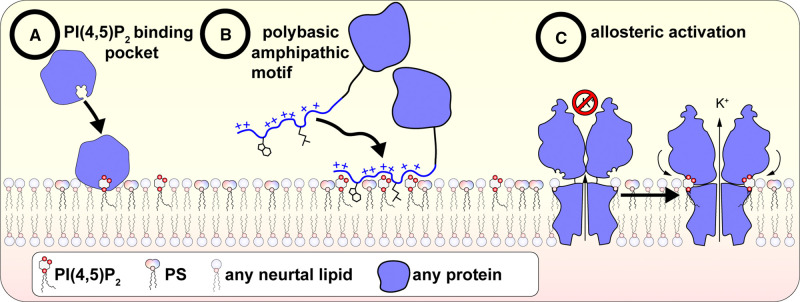
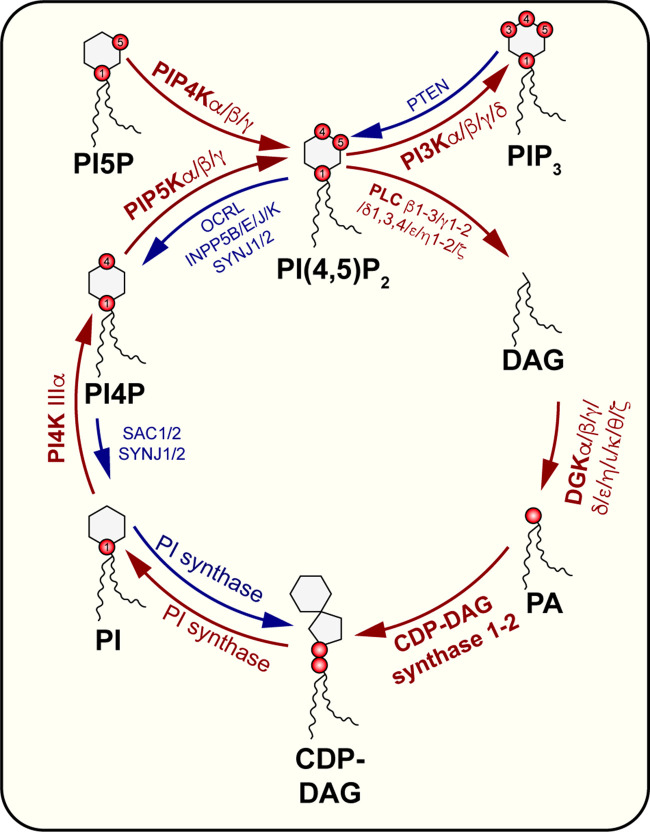
In the almost 70 years since the first hints of its existence, the phosphoinositide, phosphatidyl-D-myo-inositol 4,5-bisphosphate has been found to be central in the biological regulation of plasma membrane (PM) function. Here, we provide an overview of the signaling, transport and structural roles the lipid plays at the cell surface in animal cells. These include being substrate for second messenger generation, direct modulation of receptors, control of membrane traffic, regulation of ion channels and transporters, and modulation of the cytoskeleton and cell polarity. We conclude by re-evaluating PI(4,5)P2's designation as a signaling molecule, instead proposing a cofactor role, enabling PM-selective function for many proteins.
在其存在的近 70 年中,磷酸肌醇,磷脂酰-D-肌醇 4,5-二磷酸被发现是质膜(PM)功能的生物调节的核心。在这里,我们概述了脂质在动物细胞的细胞表面上发挥的信号转导、运输和结构作用。这些作用包括作为第二信使生成的底物,直接调节受体,控制膜运输,调节离子通道和转运蛋白,以及调节细胞骨架和细胞极性。最后,我们重新评估了 PI(4,5)P2 作为信号分子的指定,而是提出了辅助因子的作用,使许多蛋白质具有 PM 选择性功能。