Centre for Liver Research, School of Digestive and Liver Diseases, Institute of Post Graduate Medical Education and Research (I.P.G.M.E.&R.), 244, A.J. C. Bose Road, Kolkata, 700020, India.
Multidisciplinary Research Unit, Institute of Post Graduate Medical Education and Research (I.P.G.M.E.&R.), 244, A. J. C. Bose Road, Kolkata, 700020, India.
J Biomed Sci. 2022 Nov 14;29(1):97. doi: 10.1186/s12929-022-00876-1.
The complement system functions primarily as a first-line host defense against invading microbes, including viruses. However, the interaction of Hepatitis B virus (HBV) with the complement-components during chronic HBV infection remains largely unknown. We investigated the mechanism by which HBV inhibits the formation of cytolytic complement membrane-attack complex (MAC) and studied its impact on MAC-mediated microbicidal activity and disease pathogenesis.
Blood/liver tissues were collected from chronically HBV-infected patients and controls. HepG2 cells were infected with HBV particles and Huh7 cells were transfected with full-length linear HBV-monomer or plasmids containing different HBV-ORFs and expression of complement components or other host genes were evaluated. Additionally, ELISA, Real-time PCR, Western blot, bioinformatics analysis, gene overexpression/knock-down, mutagenesis, chromatin immunoprecipitation, epigenetic studies, immunofluorescence, and quantification of serum HBV-DNA, bacterial-DNA and endotoxin were performed.
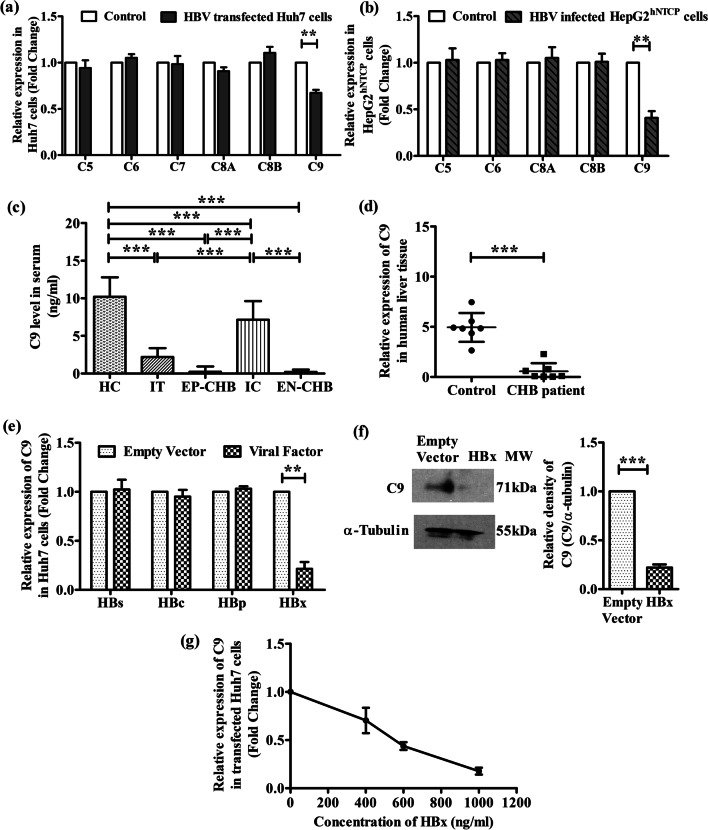
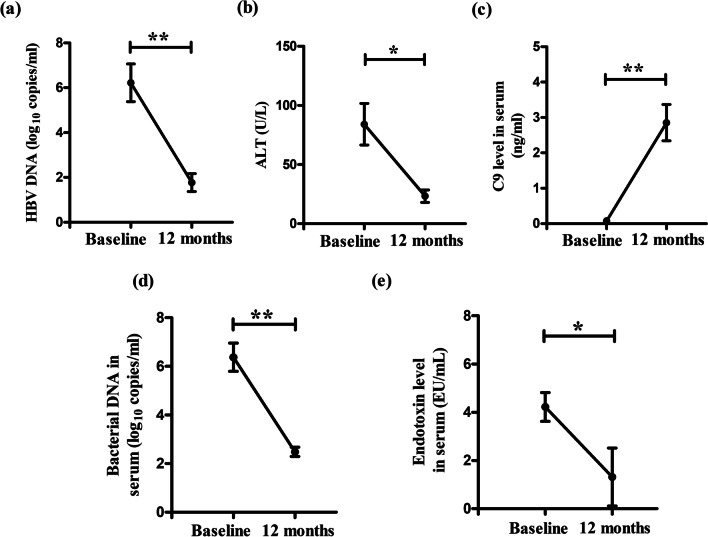
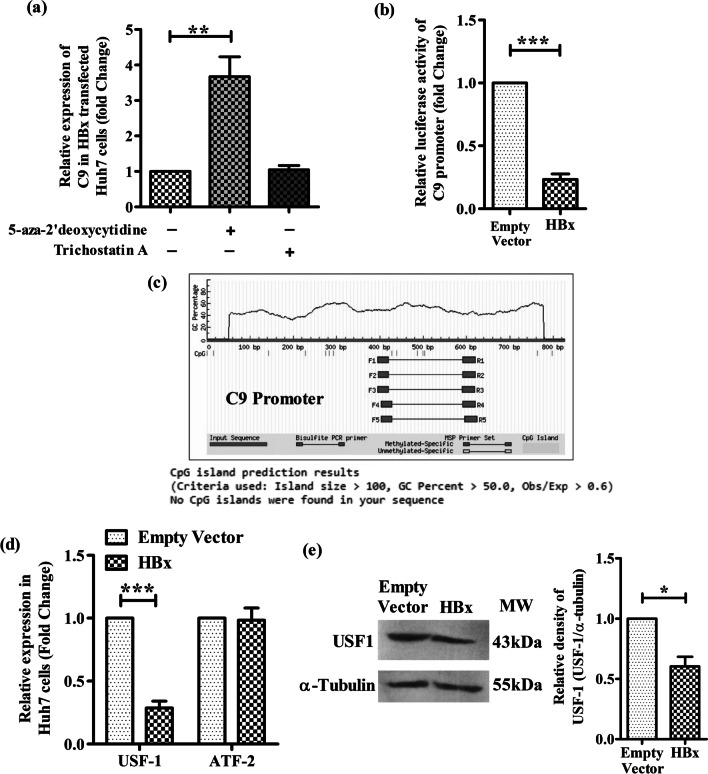
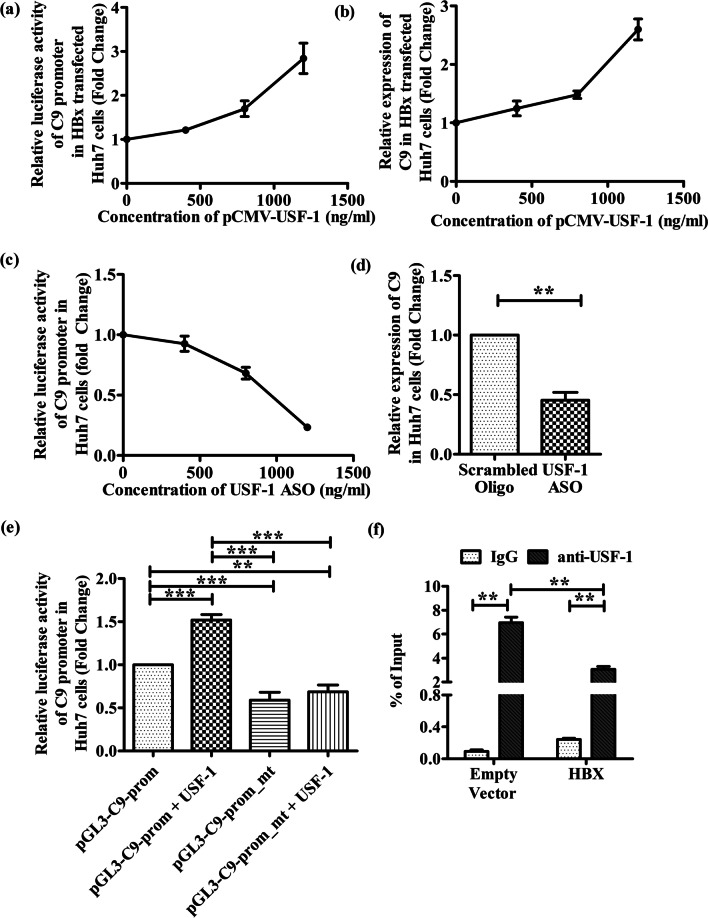
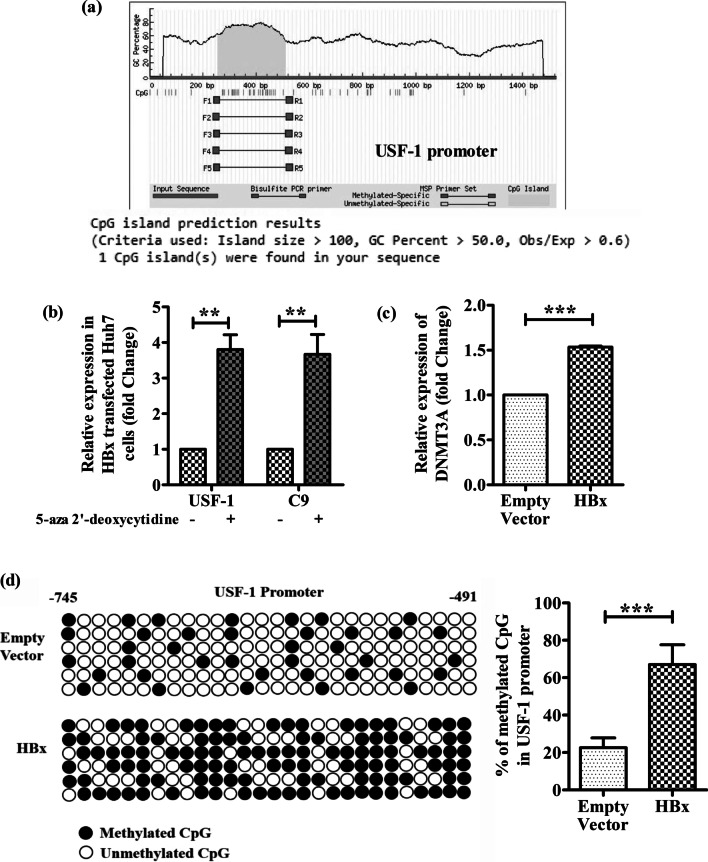
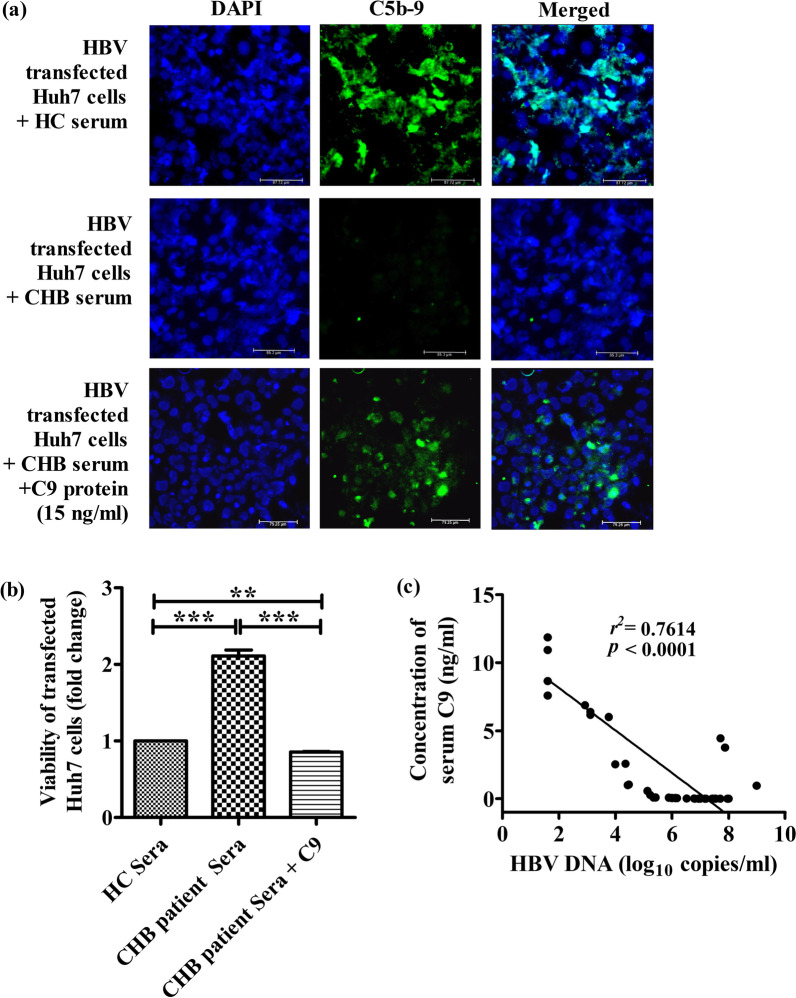
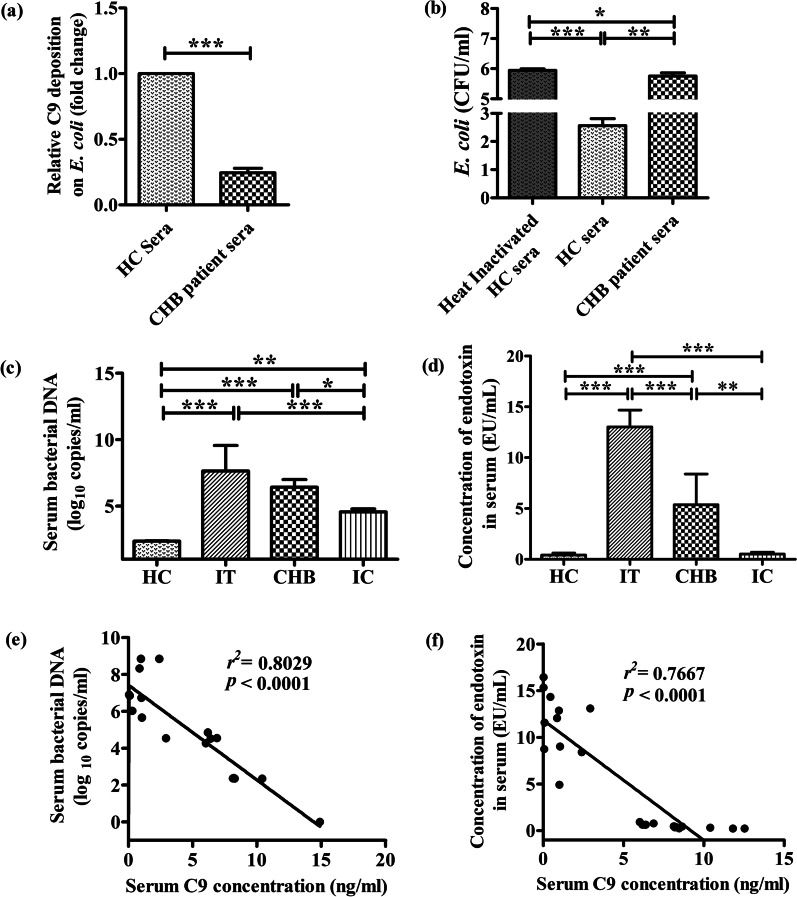
Among the MAC components (C5b-C9), significant reduction was noted in the expression of C9, the major constituent of MAC, in HBV-infected HepG2 cells and in Huh7 cells transfected with full-length HBV as well as HBX. C9 level was also marked low in sera/liver of chronic hepatitis B (CHB) and Immune-tolerant (IT) patients than inactive carriers and healthy controls. HBX strongly repressed C9-promoter activity in Huh7 cells but CpG-island was not detected in C9-promoter. We identified USF-1 as the key transcription factor that drives C9 expression and demonstrated that HBX-induced hypermethylation of USF-1-promoter is the leading cause of USF-1 downregulation that in turn diminished C9 transcription. Reduced MAC formation and impaired lysis of HBV-transfected Huh7 and bacterial cells were observed following incubation of these cells with C9-deficient CHB sera but was reversed upon C9 supplementation. Significant inverse correlation was noted between C9 concentration and HBV-DNA, bacterial-DNA and endotoxin content in HBV-infected patients. One-year Tenofovir therapy resulted in improvement in C9 level and decline in viral/bacterial/endotoxin load in CHB patients.
Collectively, HBX suppressed C9 transcription by restricting the availability of USF-1 through hypermethylation of USF-1-promoter and consequently hinder the formation and lytic functions of MAC. Early therapy is needed for both CHB and IT to normalize the aberrant complement profile and contain viral and bacterial infection and limit disease progression.
补体系统主要作为宿主防御的第一道防线,抵抗包括病毒在内的入侵微生物。然而,乙型肝炎病毒(HBV)在慢性 HBV 感染期间与补体成分的相互作用在很大程度上仍不清楚。我们研究了 HBV 抑制细胞溶解补体膜攻击复合物(MAC)形成的机制,并研究了其对 MAC 介导的杀菌活性和疾病发病机制的影响。
收集慢性 HBV 感染患者和对照者的血液/肝组织。HBV 颗粒感染 HepG2 细胞,全长线性 HBV 单体或包含不同 HBV-ORF 的质粒转染 Huh7 细胞,评估补体成分或其他宿主基因的表达。此外,进行 ELISA、实时 PCR、Western blot、生物信息学分析、基因过表达/敲低、突变、染色质免疫沉淀、表观遗传学研究、免疫荧光和血清 HBV-DNA、细菌-DNA 和内毒素定量。
在 MAC 成分(C5b-C9)中,HBV 感染的 HepG2 细胞和全长 HBV 转染的 Huh7 细胞以及 HBX 中 C9 的表达显著降低,C9 是 MAC 的主要成分。慢性乙型肝炎(CHB)和免疫耐受(IT)患者的血清/肝脏中 C9 水平也明显低于非活动携带者和健康对照者。HBX 强烈抑制 Huh7 细胞中 C9 启动子活性,但 C9 启动子中未检测到 CpG 岛。我们确定 USF-1 是驱动 C9 表达的关键转录因子,并证明 HBX 诱导的 USF-1 启动子超甲基化是 USF-1 下调的主要原因,进而减少 C9 转录。在用 C9 缺乏的 CHB 血清孵育这些细胞后,观察到 C9 形成减少和转染 HBV 的 Huh7 和细菌细胞裂解受损,但在 C9 补充后恢复。HBV 感染患者的 C9 浓度与 HBV-DNA、细菌-DNA 和内毒素含量呈显著负相关。替诺福韦治疗 1 年后,CHB 患者的 C9 水平改善,病毒/细菌/内毒素负荷下降。
总的来说,HBX 通过 USF-1 启动子的超甲基化限制 USF-1 的可用性来抑制 C9 转录,从而阻碍 MAC 的形成和裂解功能。需要对 CHB 和 IT 进行早期治疗,以正常化异常的补体谱,控制病毒和细菌感染,并限制疾病进展。