Faria Sara Socorro, Fernando Anuruddika Jayawanthi, de Lima Vladmir Cláudio Cordeiro, Rossi Adriano Giorgio, de Carvalho Juliana Maria Andrade, Magalhães Kelly Grace
Laboratory of Immunology and Inflammation, Department of Cell Biology, University of Brasilia, DF, Brasilia, Brazil.
Edinburgh BioQuarter, University of Edinburgh Centre for Inflammation Research, Queen's Medical Research. Institute, University of Edinburgh, Edinburgh, UK.
J Inflamm (Lond). 2022 Nov 14;19(1):19. doi: 10.1186/s12950-022-00316-9.
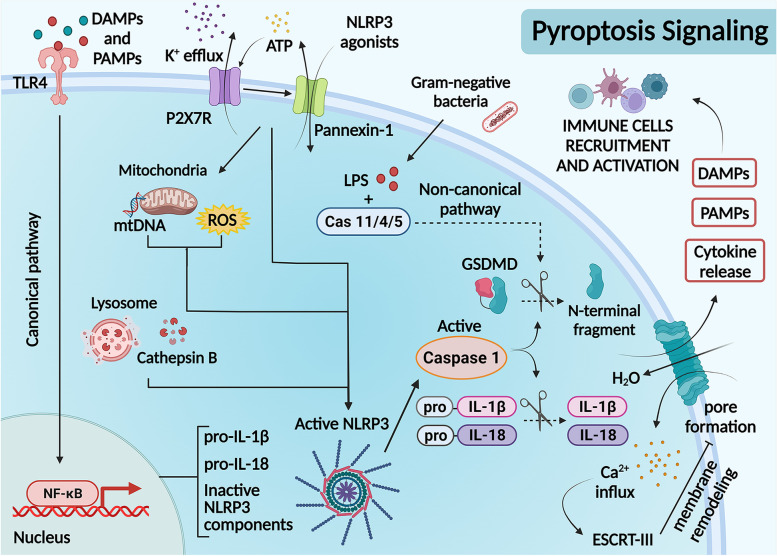
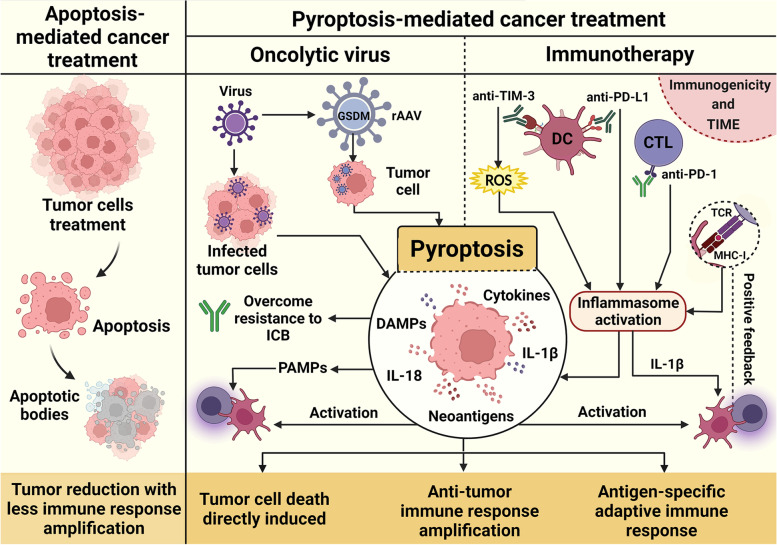
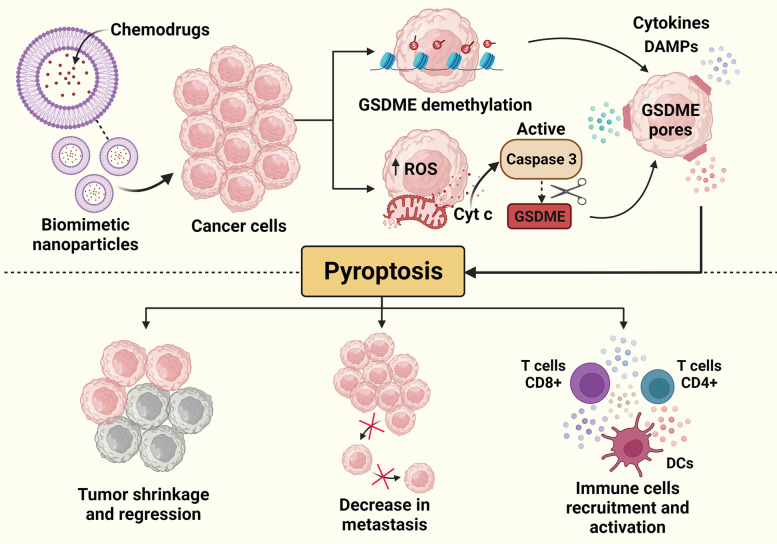
Cancer is a complex pathological disease and the existing strategies for introducing chemotherapeutic agents have restricted potential due to a lack of cancer cell targeting specificity, cytotoxicity, bioavailability, and induction of multi-drug resistance. As a prospective strategy in tackling cancer, regulating the inflammatory pyroptosis cell death pathway has been shown to successfully inhibit the proliferation and metastasis of various cancer cell types. Activation of inflammasomes such as the NLRP3 results in pyroptosis through cleavage of gasdermins, which forms pores in the cell membranes, inducing membrane breakage, cell rupture, and death. Furthermore, pyroptotic cells release pro-inflammatory cytokines such as IL-1β and IL-18 along with various DAMPs that prime an auxiliary anti-tumor immune response. Thus, regulation of pyroptosis in cancer cells is a way to enhance their immunogenicity. However, immune escape involving myeloid-derived suppressor cells has limited the efficacy of most pyroptosis-based immunotherapy strategies. In this review, we comprehensively summarize the cellular and molecular mechanisms involved in the inflammasome-mediated pyroptosis pathways in cancer cells, exploring how it could modulate the tumor microenvironment and be beneficial in anti-cancer treatments. We discuss various existing therapeutic strategies against cancer, including immunotherapy, oncolytic virus therapy, and nanoparticle-based therapies that could be guided to trigger and regulate pyroptosis cell death in cancer cells, and reduce tumor growth and spread. These pyroptosis-based cancer therapies may open up fresh avenues for targeted cancer therapy approaches in the future and their translation into the clinic.
癌症是一种复杂的病理疾病,由于缺乏癌细胞靶向特异性、细胞毒性、生物利用度以及多药耐药性的诱导,现有的引入化疗药物的策略潜力有限。作为应对癌症的一种前瞻性策略,调节炎性焦亡细胞死亡途径已被证明能成功抑制各种癌细胞类型的增殖和转移。诸如NLRP3等炎性小体的激活通过gasdermin的切割导致焦亡,gasdermin在细胞膜上形成孔道,诱导膜破裂、细胞裂解和死亡。此外,焦亡细胞会释放促炎细胞因子,如IL-1β和IL-18,以及各种可引发辅助性抗肿瘤免疫反应的损伤相关分子模式。因此,调节癌细胞中的焦亡是增强其免疫原性的一种方式。然而,涉及髓源性抑制细胞的免疫逃逸限制了大多数基于焦亡的免疫治疗策略的疗效。在这篇综述中,我们全面总结了癌细胞中炎性小体介导的焦亡途径所涉及的细胞和分子机制,探讨其如何调节肿瘤微环境以及在抗癌治疗中的益处。我们讨论了各种现有的抗癌治疗策略,包括免疫疗法、溶瘤病毒疗法和基于纳米颗粒的疗法,这些疗法可被引导触发和调节癌细胞中的焦亡细胞死亡,并减少肿瘤生长和扩散。这些基于焦亡的癌症疗法可能为未来的靶向癌症治疗方法及其临床转化开辟新途径。